
肽-药物偶联物:癌症治疗的新希望。
Peptide-Drug Conjugates: A New Hope for Cancer.
作者信息
Armstrong Amy, Coburn Fleur, Nsereko Yanyamba, Al Musaimi Othman
机构信息
School of Pharmacy, Newcastle University, Newcastle upon Tyne, UK.
Department of Chemical Engineering, Imperial College London, London, UK.
出版信息
J Pept Sci. 2025 Aug;31(8):e70040. doi: 10.1002/psc.70040.
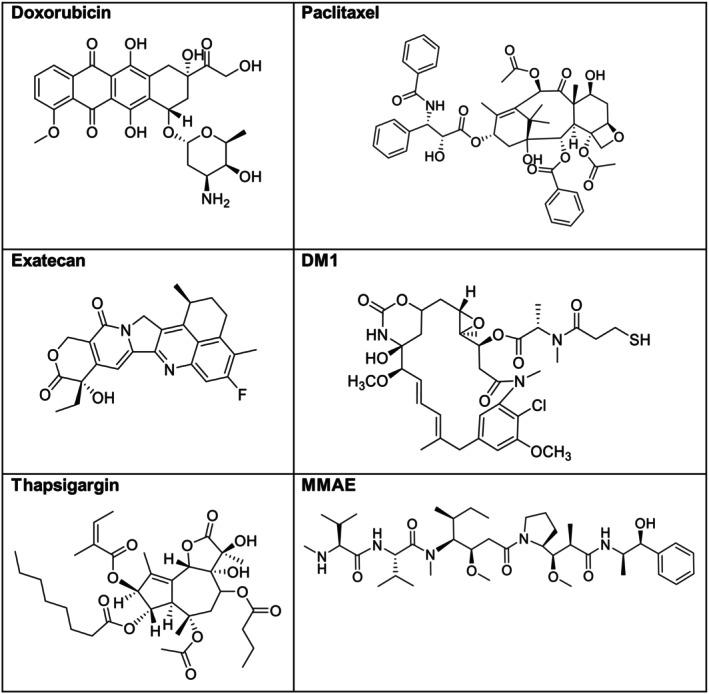
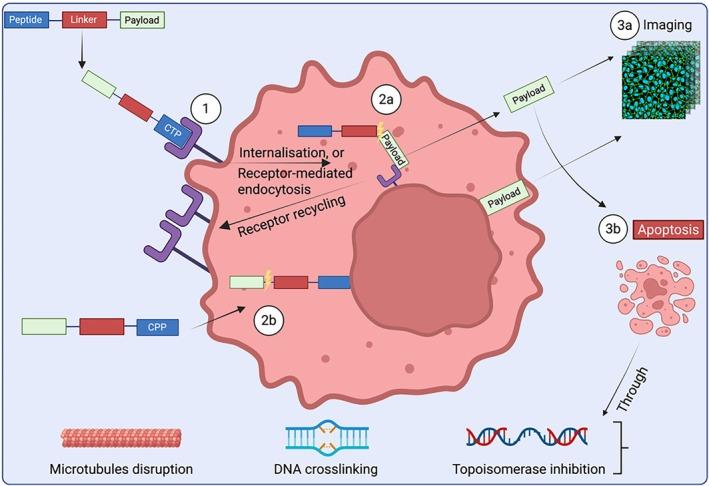
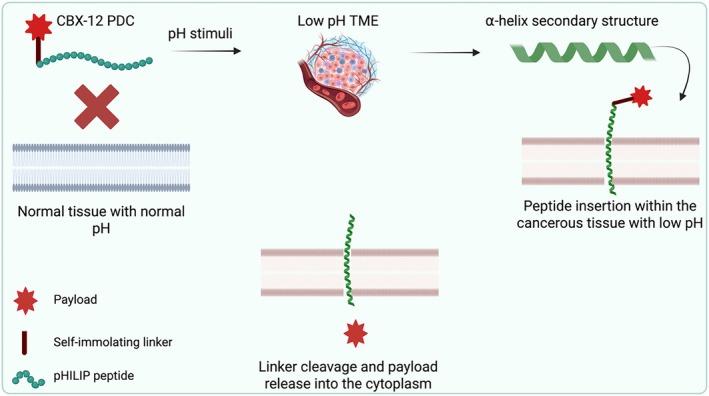
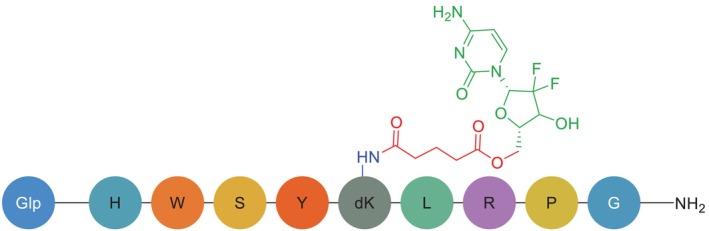
Peptide-drug conjugates (PDCs) are advancing as targeted cancer therapies, leveraging lessons from antibody-drug conjugates (ADCs) to improve tumour specificity. These molecules combine a homing peptide with a cytotoxic payload via a linker, enabling precise drug delivery while sparing healthy tissue. Despite their potential, PDCs face challenges including metabolic instability, premature payload release and rapid clearance, limiting clinical success. Only Lutathera remains FDA-approved after Pepaxto's withdrawal, though Pepaxto retains EMA and MHRA approval-highlighting regulatory and technical complexities. Most PDCs target overexpressed receptors (e.g., somatostatin and GnRH), though novel designs like CBX-12 employ alternative strategies. Currently, six PDCs are in Phase III trials, with ~96 in development, signalling growing interest. This review explores how ADC research has guided PDC optimisation, particularly in linker chemistry and payload selection. We analyse key structural features governing PDC efficacy, including peptide-receptor binding and intracellular trafficking. Innovations in stable linkers and tumour-selective activation mechanisms are critical to overcoming pharmacokinetic hurdles. Promising candidates in late-stage trials are highlighted, emphasising their potential to address unmet needs in oncology. By refining targeting precision and payload delivery, next-generation PDCs may expand treatment options for resistant cancers, bridging the gap between biologics and small-molecule therapies.
肽-药物偶联物(PDC)作为靶向癌症疗法正在不断发展,借鉴抗体-药物偶联物(ADC)的经验教训以提高肿瘤特异性。这些分子通过连接子将归巢肽与细胞毒性载荷结合,实现精确的药物递送,同时避免对健康组织造成损害。尽管具有潜力,但PDC面临着包括代谢不稳定性、载荷过早释放和快速清除等挑战,限制了其临床应用的成功。在Pepaxto撤回申请后,只有Lutathera仍获美国食品药品监督管理局(FDA)批准,不过Pepaxto仍保留了欧洲药品管理局(EMA)和英国药品和保健品管理局(MHRA)的批准——这凸显了监管和技术的复杂性。大多数PDC靶向过表达的受体(如生长抑素和促性腺激素释放激素),不过像CBX-12这样的新型设计采用了替代策略。目前,有6种PDC正在进行III期试验,约有96种处于研发阶段,这表明人们的兴趣在不断增加。本综述探讨了ADC研究如何指导PDC的优化,特别是在连接子化学和载荷选择方面。我们分析了决定PDC疗效的关键结构特征,包括肽-受体结合和细胞内运输。稳定连接子和肿瘤选择性激活机制的创新对于克服药代动力学障碍至关重要。文中突出了后期试验中有前景的候选药物,强调了它们满足肿瘤学未满足需求的潜力。通过提高靶向精度和载荷递送,下一代PDC可能会扩大对耐药癌症的治疗选择,弥合生物制剂和小分子疗法之间的差距。






 Zotero 插件