
用于食品包装应用的再生聚苯乙烯安全性评估的食品消费数据与迁移分析
Analyses of Food-Consumption Data and Migration for the Safety Evaluation of Recycled Polystyrene Intended for Food-Packaging Applications.
作者信息
Mittermayr David, Roland Wolfgang, Fischer Jörg
机构信息
Institute of Polymeric Materials and Testing, Johannes Kepler University Linz, Altenbergerstrasse 69, 4040 Linz, Austria.
Next Generation Recyclingmaschinen GmbH, Gewerbepark 22, 4101 Feldkirchen an der Donau, Austria.
出版信息
Polymers (Basel). 2025 Jun 30;17(13):1846. doi: 10.3390/polym17131846.
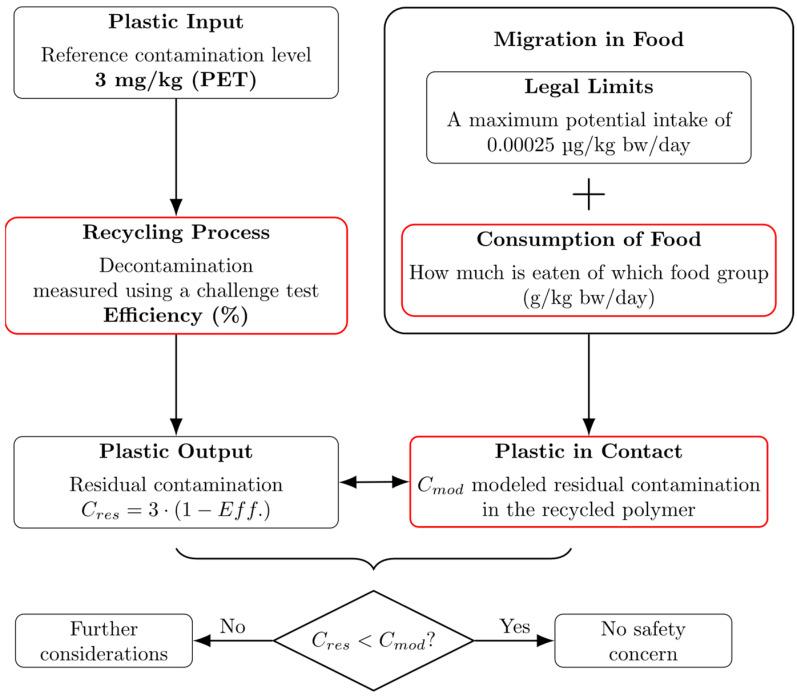
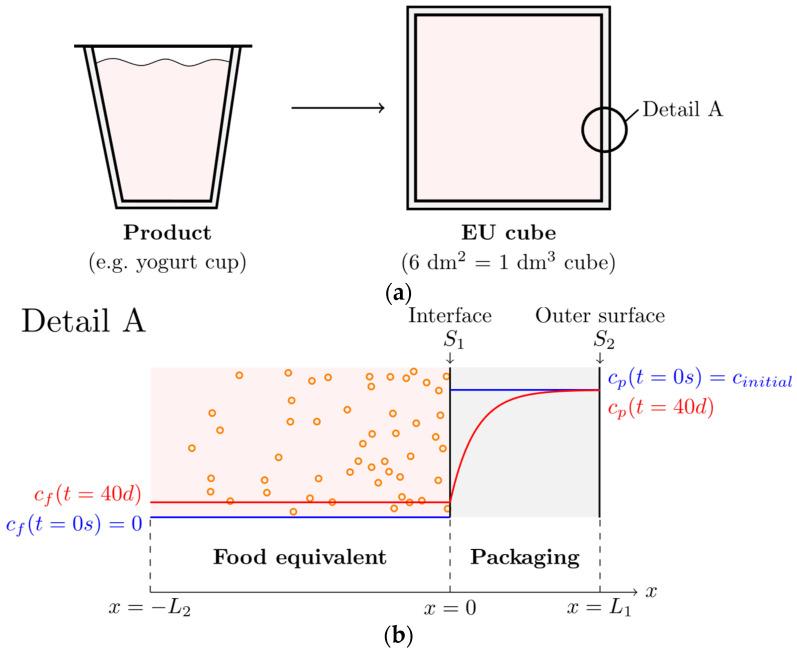
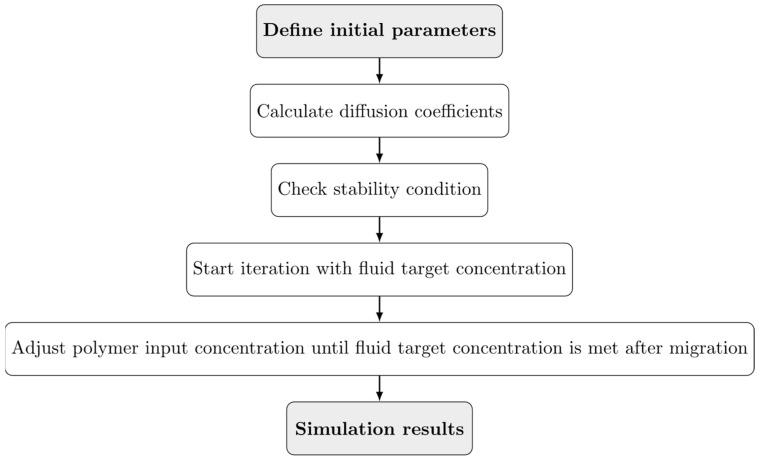
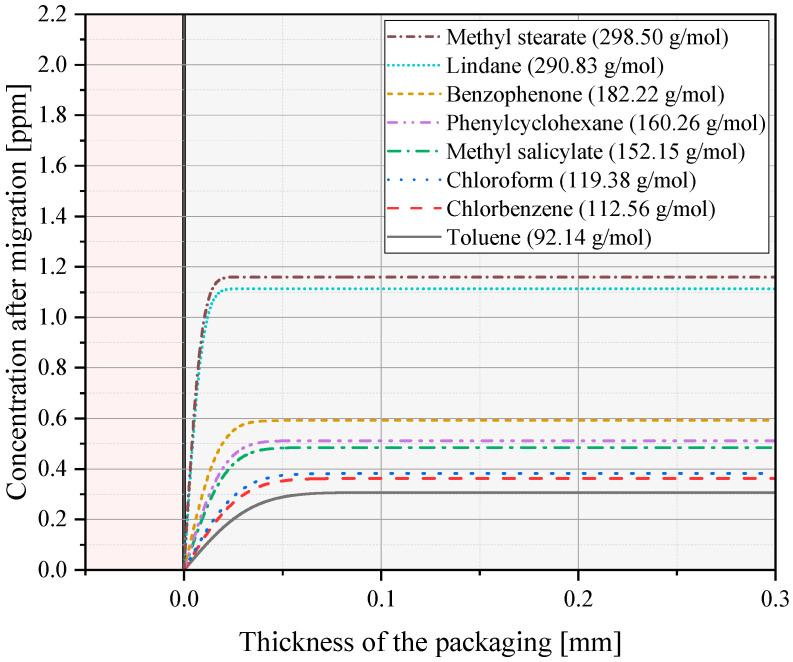
The recycling of post-consumer plastics for food-contact applications is subject to stringent regulatory requirements, particularly with regard to the removal of potentially harmful non-intentionally added substances (NIAS). While polyethylene terephthalate (PET) recycling processes are already approved by the European Food Safety Authority (EFSA), there is a lack of guidance for other polymers like polystyrene (PS). This study aims to provide a scientific basis for assessing the decontamination efficiency required for recycled post-consumer PS in food-contact applications. As one of the first studies to propose a framework for PS decontamination assessment based on EFSA food-consumption data and conservative diffusion modeling, it contributes to filling this regulatory gap. First, European food-consumption data were analyzed to identify critical scenarios of the age-group-dependent intake of PS-packaged food. Based on this, a conservative migration model was applied using a one-dimensional diffusion simulation to determine the maximum allowable initial concentrations of NIAS in PS. The calculated values were then compared with published reference contamination levels to calculate the required cleaning efficiency. The combination of food-consumption values and the migration process showed that trays for fruits and vegetables are the most critical food-contact application for post-consumer PS recycling. The most stringent assumptions resulted in necessary decontamination efficiencies ranging from 92% for the smallest molecule, toluene (92.14 g/mol), to 42% for the largest molecule, methyl stearate (298.50 g/mol). The results provide a methodological basis for regulatory assessments and offer practical guidance for designing safe recycling processes, thereby supporting the circular use of PS in food packaging and building the basis for future regulatory assessments of other polymers, in line with the European Union Plastics Strategy and circular economy objectives.
将消费后塑料回收用于食品接触应用受到严格的监管要求,特别是在去除潜在有害的非故意添加物质(NIAS)方面。虽然聚对苯二甲酸乙二酯(PET)回收工艺已获得欧洲食品安全局(EFSA)的批准,但对于聚苯乙烯(PS)等其他聚合物却缺乏相关指导。本研究旨在为评估回收的消费后PS在食品接触应用中的去污效率提供科学依据。作为首批基于EFSA食品消费数据和保守扩散模型提出PS去污评估框架的研究之一,它有助于填补这一监管空白。首先,分析了欧洲食品消费数据,以确定食用PS包装食品的年龄组依赖性摄入的关键情况。在此基础上,应用一维扩散模拟的保守迁移模型来确定PS中NIAS的最大允许初始浓度。然后将计算值与已发表的参考污染水平进行比较,以计算所需的清洁效率。食品消费值和迁移过程的结合表明,水果和蔬菜托盘是消费后PS回收最关键的食品接触应用。最严格的假设导致所需的去污效率范围从最小分子甲苯(92.14 g/mol)的92%到最大分子硬脂酸甲酯(298.50 g/mol)的42%。研究结果为监管评估提供了方法依据,并为设计安全的回收工艺提供了实际指导,从而支持PS在食品包装中的循环利用,并为未来其他聚合物的监管评估奠定基础,符合欧盟塑料战略和循环经济目标。


 Zotero 插件