
在可见光范围内具有强烈发射的共轭三(咔唑基)和四(咔唑基)薁的合成。
Synthesis of Conjugated Tris- and Tetrakis (Carbazolyl) Azulenes with Intense Emission in the Visible Range.
作者信息
Iskanderov Amantay, Merkhatuly Nurlan, Iskanderov Ablaykhan, Abeuova Saltanat, Vojtisek Pavel
机构信息
Laboratory of Organic Semiconductor Chemistry, Karaganda Buketov University, Karaganda 100028, Kazakhstan.
The Higher School of Natural Sciences, Astana International University, Astana 020000, Kazakhstan.
出版信息
Molecules. 2025 Jun 28;30(13):2797. doi: 10.3390/molecules30132797.
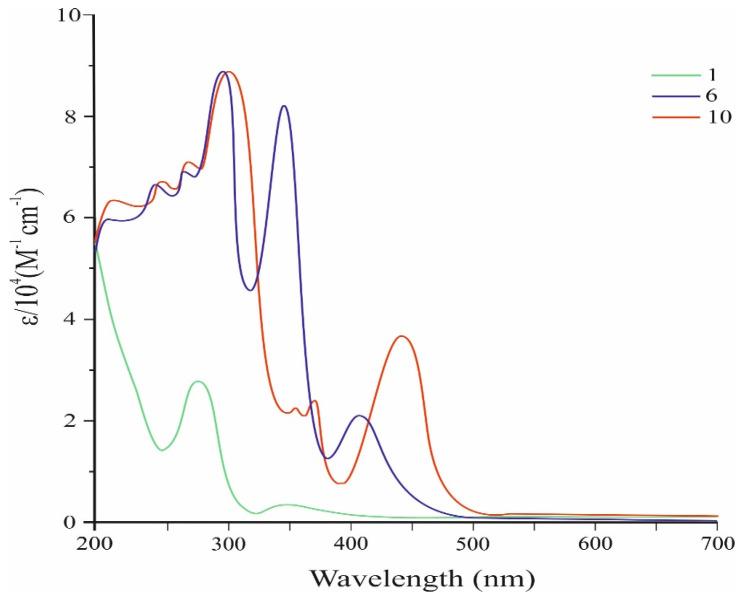
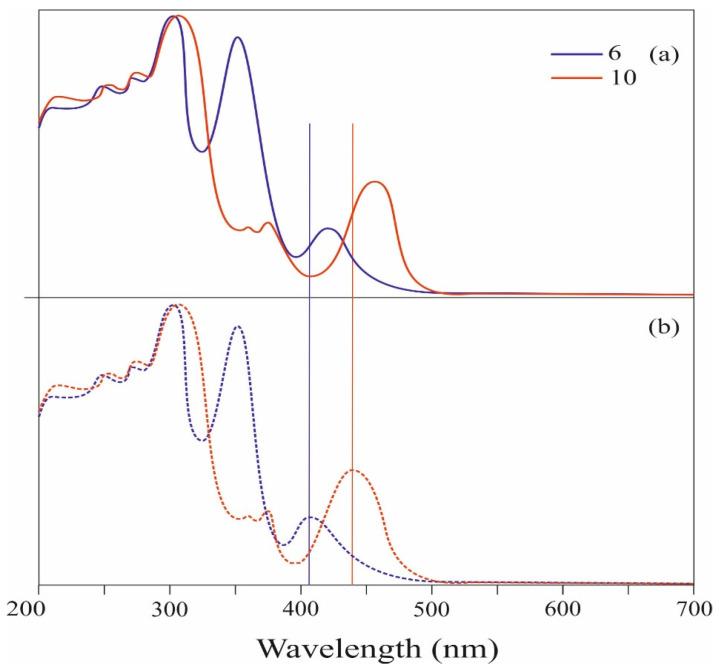
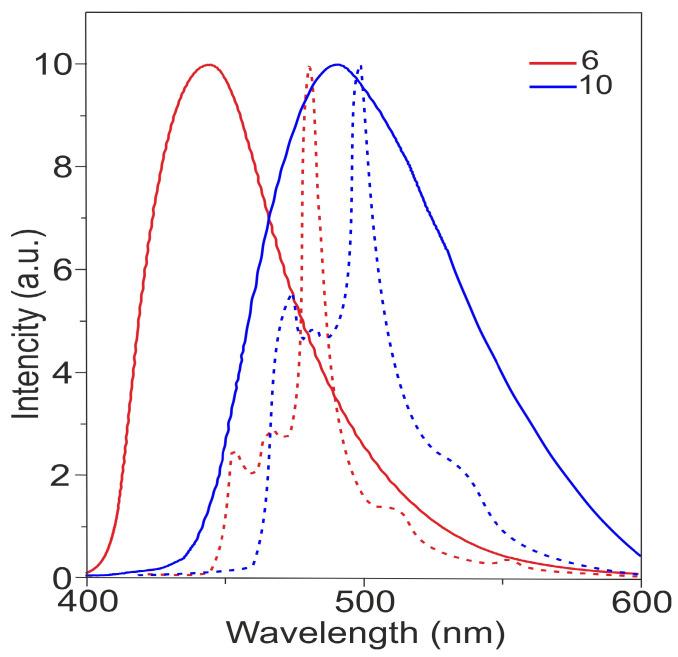
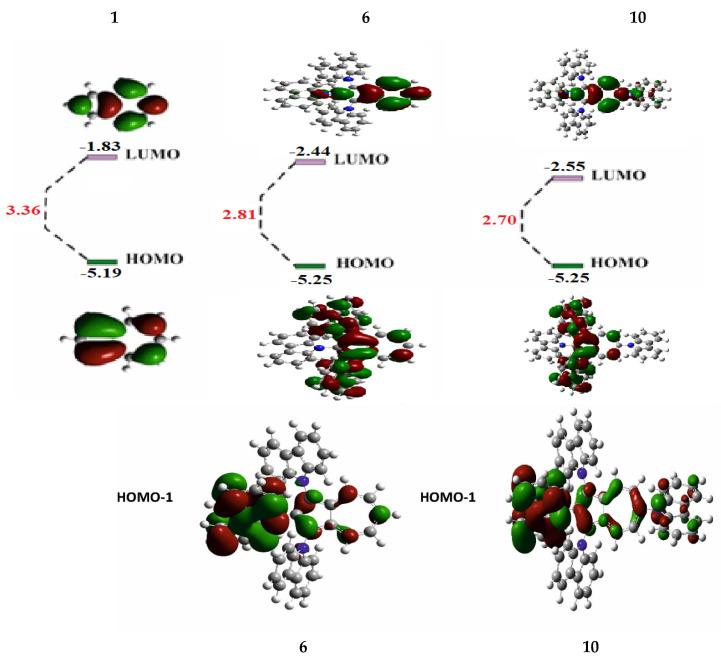
New conjugated carbazolyl-substituted azulenes, such as 1,2,3-tris(carbazolyl)azulene and 1,2,3,6-tetrakis(carbazolyl)azulene, were synthesized via cross-coupling reactions in high yields. The resulting compounds exhibit a significant ability to absorb and emit light in the visible region, in the range of 400 to 600 nanometers. Studies have shown that azulene with carbazolyl substituents at positions 1, 2, 3, and 6 possesses unique photophysical properties, manifested as intense emission in the blue photoluminescence region (λ at 444 and 490 nm), which is not observed in the original azulene. This feature arises due to the donor properties of carbazolyl substituents, which have a strong effect on the electronic structure of azulene, creating the conditions for a permitted HOMO-LUMO electronic transition.
新型共轭咔唑基取代薁,如1,2,3 - 三(咔唑基)薁和1,2,3,6 - 四(咔唑基)薁,通过交叉偶联反应以高产率合成。所得化合物在400至600纳米范围内的可见光区域表现出显著的吸收和发光能力。研究表明,在1、2、3和6位带有咔唑基取代基的薁具有独特的光物理性质,表现为在蓝色光致发光区域(波长为444和490纳米)有强烈发射,这在原始薁中未观察到。这一特性源于咔唑基取代基的供体性质,其对薁的电子结构有强烈影响,为允许的HOMO - LUMO电子跃迁创造了条件。


 Zotero 插件