
天然存在的血管紧张素肽增强严重急性呼吸综合征冠状病毒2刺突蛋白与其受体的结合。
Naturally Occurring Angiotensin Peptides Enhance the SARS-CoV-2 Spike Protein Binding to Its Receptors.
作者信息
Oliveira Katelin X, Bablu Fariha E, Gonzales Emily S, Izumi Taisuke, Suzuki Yuichiro J
机构信息
Department of Pharmacology and Physiology, Georgetown University Medical Center, Washington, DC 20057, USA.
Department of Biology, College of Arts & Sciences, American University, Washington, DC 20016, USA.
出版信息
Int J Mol Sci. 2025 Jun 24;26(13):6067. doi: 10.3390/ijms26136067.
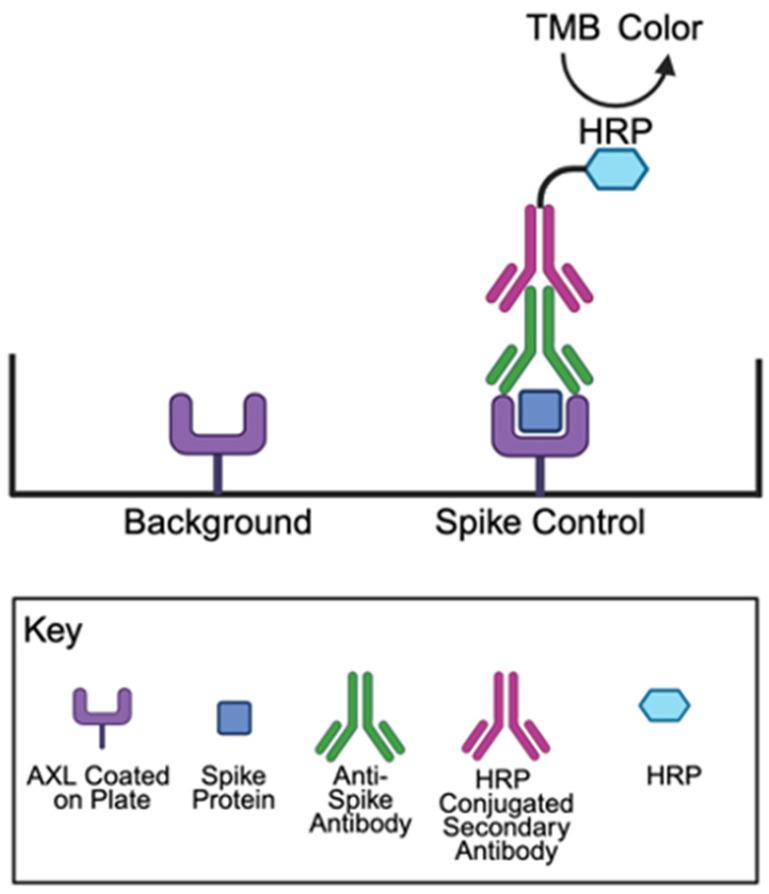
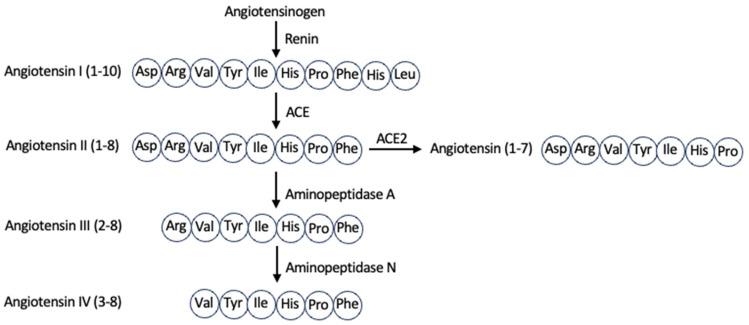
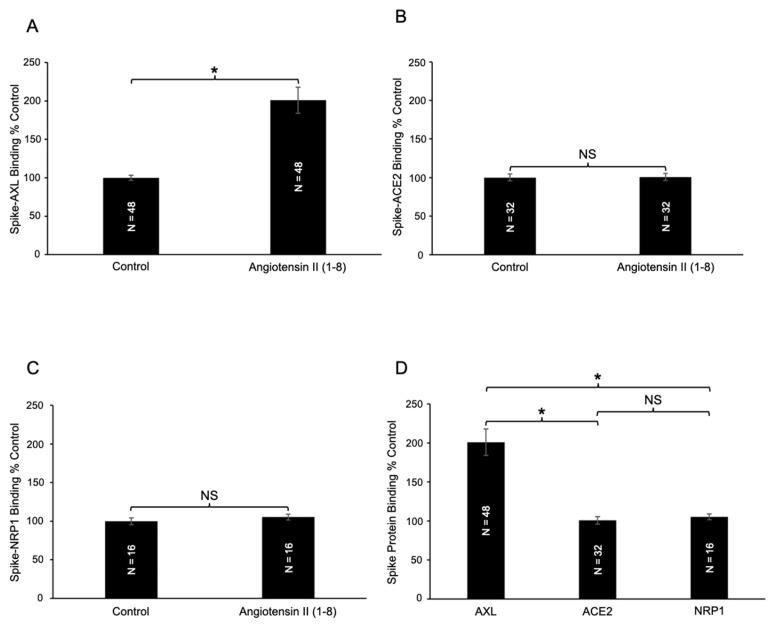
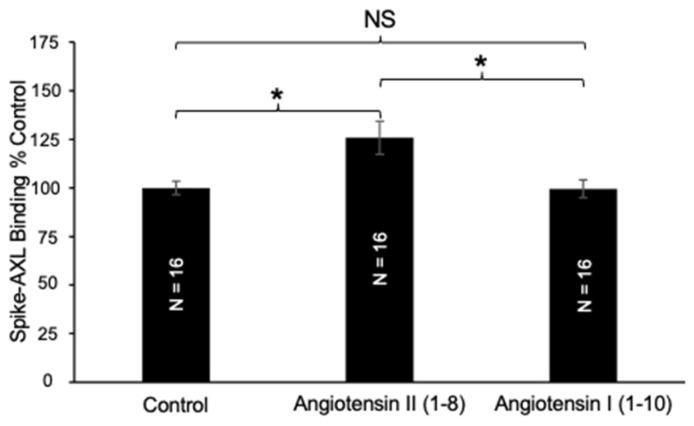
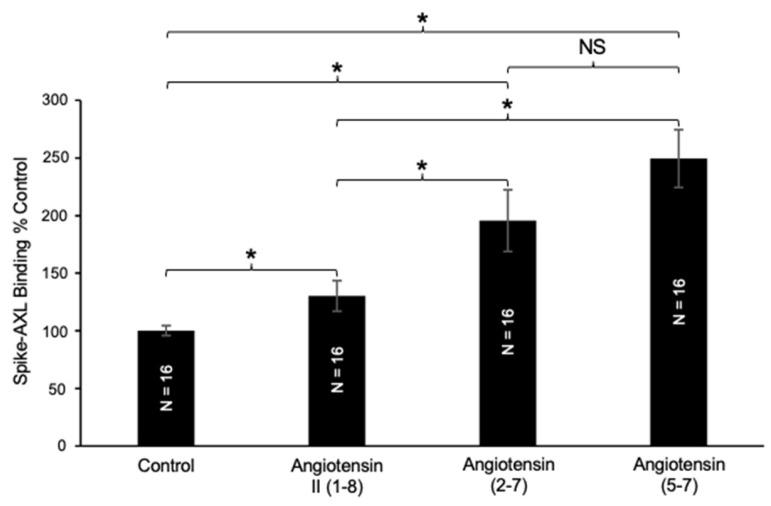
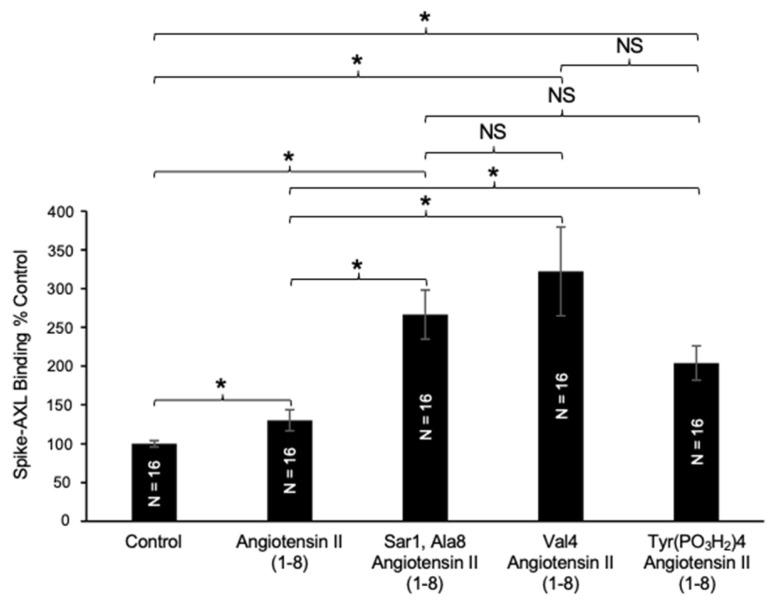
Severe Acute Respiratory Syndrome Coronavirus 2 (SARS-CoV-2), the virus responsible for Coronavirus Disease 2019 (COVID-19), utilizes its spike protein to infect host cells. In addition to angiotensin-converting enzyme 2 (ACE2) and neuropilin-1 (NRP1), AXL acts as a spike protein receptor and mediates infection, especially in respiratory cells with low ACE2 expression. Angiotensin II (1-8) can be cleaved into shorter peptides within the biological system. Antibody-based binding assays showed that angiotensin II causes a two-fold increase in the binding between the spike protein and AXL, but not ACE2 or NRP1. While a longer peptide, angiotensin I (1-10), did not affect the spike-AXL binding, shorter lengths of angiotensin peptides exhibited enhancing effects. The -terminal deletions of angiotensin II to angiotensin (1-7) or angiotensin (1-6) resulted in peptides with enhanced activity toward spike-AXL binding with a similar capacity as angiotensin II. In contrast, the -terminal deletions of angiotensin II to angiotensin III (2-8) or angiotensin IV (3-8) as well as the -terminal deletions of angiotensin (1-7) to angiotensin (2-7) or angiotensin (5-7) produced peptides with a more potent ability to enhance spike-AXL binding (2.7-fold increase with angiotensin IV). When valine was substituted for tyrosine at position 4 in angiotensin II or when tyrosine at position 4 was phosphorylated, spike-AXL binding was increased, suggesting that modifications to tyrosine trigger enhancement. Angiotensin IV also enhances spike protein binding to ACE2 and NRP1. Thus, angiotensin peptides may contribute to COVID-19 pathogenesis by enhancing spike protein binding and thus serve as therapeutic targets.
严重急性呼吸综合征冠状病毒2(SARS-CoV-2)是导致2019冠状病毒病(COVID-19)的病毒,它利用其刺突蛋白感染宿主细胞。除血管紧张素转换酶2(ACE2)和神经纤毛蛋白-1(NRP1)外,AXL作为刺突蛋白受体介导感染,尤其在ACE2表达较低的呼吸道细胞中。血管紧张素II(1-8)可在生物系统中裂解为较短的肽段。基于抗体的结合试验表明,血管紧张素II使刺突蛋白与AXL之间的结合增加两倍,但对ACE2或NRP1无此作用。虽然较长的肽段血管紧张素I(1-10)不影响刺突蛋白与AXL的结合,但较短长度的血管紧张素肽段表现出增强作用。血管紧张素II的C末端缺失为血管紧张素(1-7)或血管紧张素(1-6)后,产生的肽段对刺突蛋白与AXL结合的活性增强,与血管紧张素II的能力相似。相反,血管紧张素II的C末端缺失为血管紧张素III(2-8)或血管紧张素IV(3-8)以及血管紧张素(1-7)的C末端缺失为血管紧张素(2-7)或血管紧张素(5-7)产生的肽段增强刺突蛋白与AXL结合的能力更强(血管紧张素IV增加2.7倍)。当血管紧张素II第4位的缬氨酸替代酪氨酸或第4位的酪氨酸磷酸化时,刺突蛋白与AXL的结合增加,表明酪氨酸修饰引发增强作用。血管紧张素IV还增强刺突蛋白与ACE2和NRP1的结合。因此,血管紧张素肽段可能通过增强刺突蛋白结合而促进COVID-19发病机制,从而可作为治疗靶点。




 Zotero 插件