
可解释的集成学习使用专家分类器预测齿垢密螺旋体中的抗生素耐药性。
Interpretable Ensemble Learning Predicts Antibiotic Resistance in Treponema denticola Using Expert Classifiers.
作者信息
Yadalam Pradeep Kumar, Natarajan Prabhu Manickam, Ardila Carlos M
机构信息
Department of Periodontics, Saveetha Dental College and Hospital, Saveetha Institute of Medical and Technical Sciences, Saveetha University, Chennai, Tamil Nadu, India.
Department of Clinical Sciences, Center of Medical and Bio-allied Health Sciences and Research, College of Dentistry, Ajman University, Ajman, United Arab Emirates.
出版信息
Int Dent J. 2025 Jul 11;75(5):100884. doi: 10.1016/j.identj.2025.100884.
INTRODUCTION AND OBJECTIVES
Antibiotic resistance is a global health concern, contributing to prolonged hospital stays, increased medical costs, and higher mortality rates. Addressing antimicrobial resistance (AMR) in periodontal infections requires targeted therapies and a multifaceted approach. This study aims to predict and classify AMR genomic sequences in Treponema denticola, a key pathogen in periodontal disease, using machine learning (ML).
METHODS
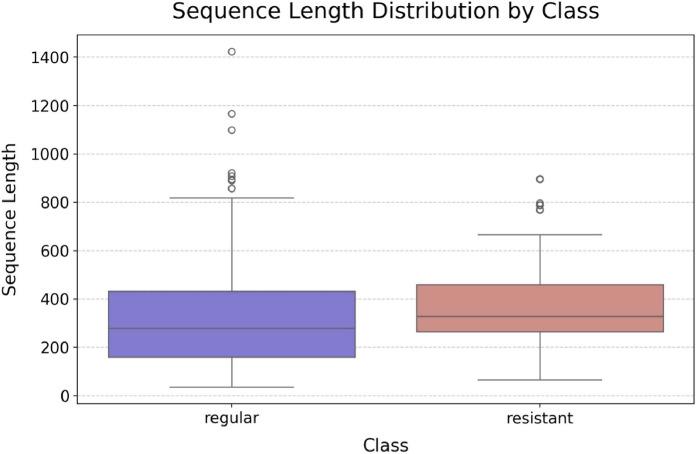
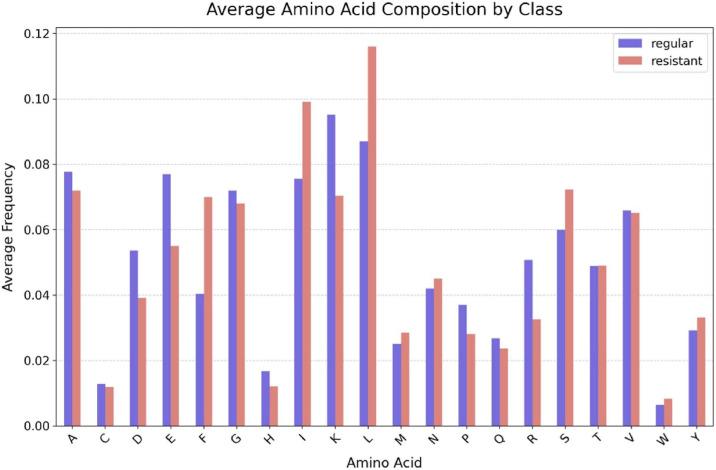
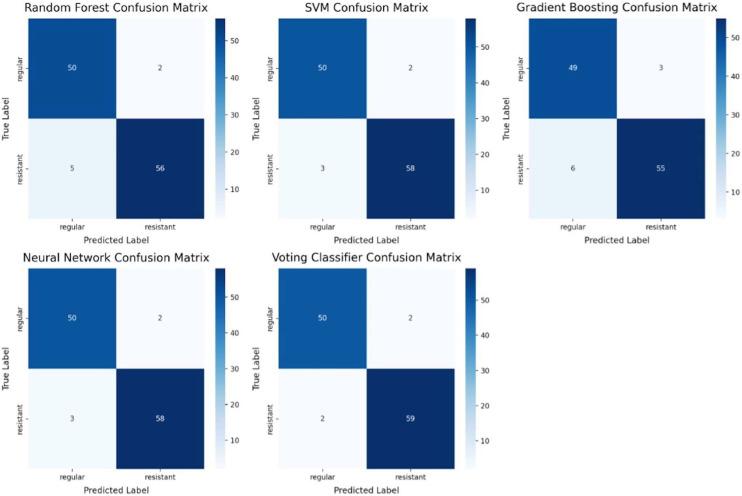
UniProt FASTA sequences were used to investigate AMR in T. denticola. Data were retrieved and preprocessed using the BioPython library in a Jupyter Notebook. A structured approach included data exploration, feature extraction, and visualization. Four classification models - Random Forest, Support Vector Machine (SVM), Gradient Boosting, and Neural Network (Multilayer Perceptron Classifier) - were optimized using specific hyperparameters. Model performance was evaluated using fivefold stratified cross-validation. A Voting Classifier, combining multiple models, was implemented to enhance predictive accuracy.
RESULTS
The Voting Classifier outperformed Random Forest, SVM, Gradient Boosting, and Neural Network models, achieving the highest test accuracy (96.46%) and F1-score (0.9646). High accuracy was also demonstrated by SVM and Neural Networks (95.58%), but the robustness of the Voting Classifier was highlighted by its ability to balance accuracy with low log loss (0.1504).
CONCLUSION
This study highlights the effectiveness of the Voting Classifier in classifying AMR genomic sequences in T. denticola. The findings underscore the potential of interpretable ML approaches for advancing AMR research in periodontal pathogens and informing targeted therapeutic strategies.
CLINICAL RELEVANCE
The ability to accurately predict AMR in T. denticola using ML models like the Voting Classifier can significantly enhance clinical decision-making. By identifying resistance patterns, clinicians can tailor antibiotic therapies more effectively, reducing treatment failures and mitigating the spread of resistance. This approach also supports the development of novel antimicrobial agents and strengthens public health surveillance efforts, particularly in resource-limited settings where periodontal infections are prevalent.
引言与目的
抗生素耐药性是一个全球健康问题,会导致住院时间延长、医疗成本增加和死亡率上升。解决牙周感染中的抗菌药物耐药性(AMR)需要有针对性的治疗方法和多方面的策略。本研究旨在使用机器学习(ML)预测和分类牙周病关键病原体——齿垢密螺旋体中的AMR基因组序列。
方法
使用UniProt FASTA序列研究齿垢密螺旋体中的AMR。在Jupyter Notebook中使用BioPython库检索并预处理数据。一种结构化方法包括数据探索、特征提取和可视化。使用特定超参数对四种分类模型——随机森林、支持向量机(SVM)、梯度提升和神经网络(多层感知器分类器)进行优化。使用五折分层交叉验证评估模型性能。实施了一个组合多个模型的投票分类器以提高预测准确性。
结果
投票分类器的表现优于随机森林、SVM、梯度提升和神经网络模型,实现了最高的测试准确率(96.46%)和F1分数(0.9646)。SVM和神经网络也表现出较高的准确率(95.58%),但投票分类器的稳健性体现在其能够在保持准确率的同时实现较低的对数损失(0.1504)。
结论
本研究突出了投票分类器在分类齿垢密螺旋体中AMR基因组序列方面的有效性。这些发现强调了可解释的ML方法在推进牙周病原体AMR研究和为有针对性的治疗策略提供信息方面的潜力。
临床意义
使用投票分类器等ML模型准确预测齿垢密螺旋体中的AMR的能力可以显著改善临床决策。通过识别耐药模式,临床医生可以更有效地调整抗生素治疗方案,减少治疗失败并减轻耐药性的传播。这种方法还支持新型抗菌药物的开发,并加强公共卫生监测工作,特别是在牙周感染普遍的资源有限环境中。


 Zotero 插件