
合成代谢和抗吸收药物预防绝经后骨质疏松性骨折的有效性:一项系统评价和网状荟萃分析。
Effectiveness of anabolic and anti-resorptive agents for preventing postmenopausal osteoporosis fractures: a systematic review and network meta-analysis.
作者信息
Su Peng, Li Maofu, Xiao Jian, Bai Longbin
机构信息
Department of Hand and Foot Surgery, Shandong Provincial Hospital, Shandong First Medical University, Jingwuweiliu Road, Huaiyin District, Jinan, 250000, China.
Department of Nephrology, Feicheng People's Hospital, 108 Xincheng Road, Taian, 271000, China.
出版信息
J Orthop Surg Res. 2025 Jul 12;20(1):645. doi: 10.1186/s13018-025-06040-3.
BACKGROUND
While anabolic agents are highly effective in stimulating bone formation, their benefits are transient and tend to plateau after prolonged use. This necessitates a transition to anti-resorptive therapies. We aimed to estimate anti-osteoporosis effect and compliance of different anabolic and anti-resorptive agents to explore the optimal cycling strategy.
METHODS
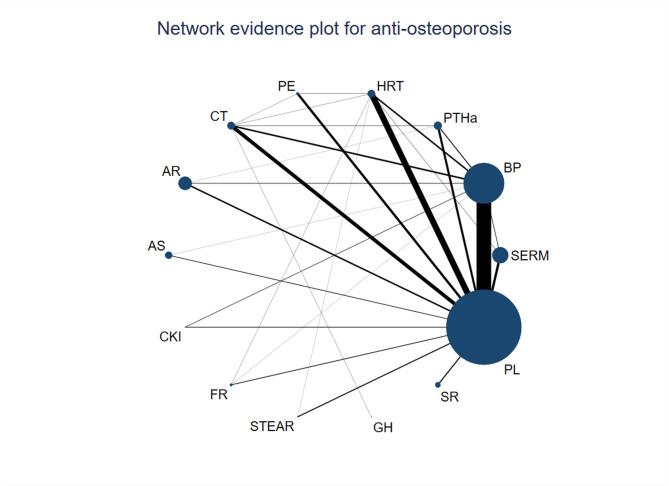
PubMed, Embase, Web of Science, and Cochrane Library were searched for randomized controlled trials comparing anabolic or anti-resorptive agents with placebo or each other in postmenopausal women with osteoporosis or osteopenia, reporting outcomes on bone mineral density (BMD) change, fracture incidence, or treatment discontinuation from inception to February 1, 2024. The frequentist random-effect model for network meta-analysis was performed to summarize the evidence, and the Grading of Recommendations Assessment, Development, and Evaluation frameworks was applied to rate the certainty of evidence.
RESULTS
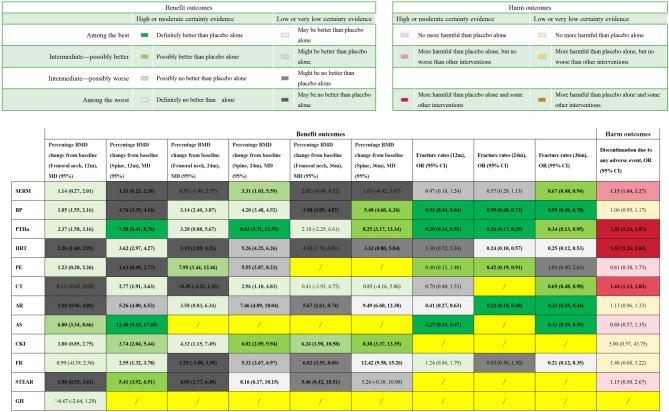
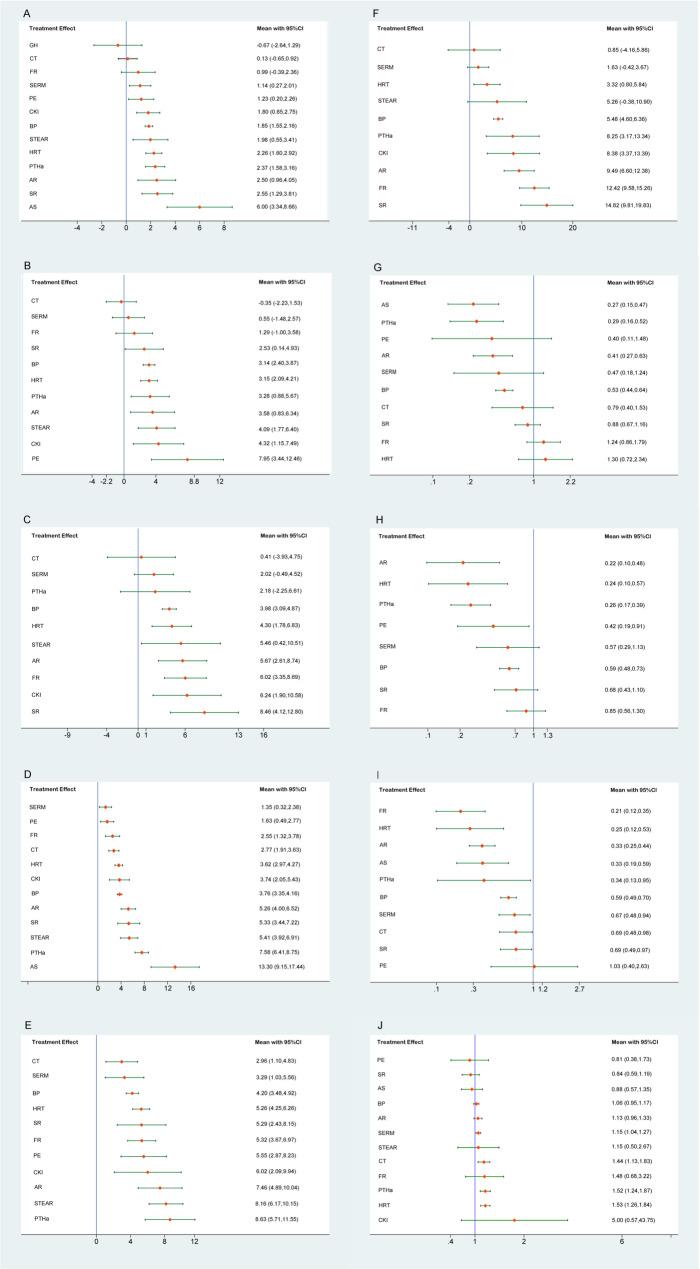
A total of 16,231 citations were identified, and 227 trials with 140,230 participants met the inclusion criteria. The anti-sclerostin (AS) antibody was the most effective anabolic agent, significantly increasing BMD at the femoral neck (Mean difference (MD): 6.00; 95% confidence interval (CI): 3.34-8.66) and spine (MD: 13.30; 95% CI: 9.15-17.45), and reducing spine and hip fracture risk (OR: 0.27; 95% CI: 0.15-0.47) at 12 months without a significant increase in discontinuation (OR: 0.88; 95% CI: 0.57-1.35) compared to placebo. Among anti-resorptive agents, the anti-RANKL (AR) antibody showed the greatest efficacy, improving BMD at the femoral neck (12 m: MD: 2.50, 95% CI: 0.96 to 4.05; 24 m: MD: 3.58, 95% CI: 0.83 to 6.34; 36 m: MD: 5.67, 95% CI: 2.61 to 8.74) and spine (12 m: MD: 5.26, 95% CI: 4.00 to 6.53; 24 m: MD: 7.46, 95% CI: 4.89 to 10.04; 36 m: MD: 9.49, 95% CI: 6.60 to 12.38), while reducing fracture risk (12 m OR: 0.41; 24 m OR: 0.22; 36 m OR: 0.33), with no significant difference in discontinuation (OR: 1.13; 95% CI: 0.96-1.33) compared to placebo. Other agents such as bisphosphonates, parathyroid hormone analogues, and selective estrogen receptor modulators showed moderate benefits with varying tolerability profiles.
CONCLUSIONS
This study identified anti-sclerostin antibody as the most effective anabolic agent for rapid BMD gains and early fracture prevention, followed by anti-RANKL antibody as the most effective anti-resorptive agent for long-term maintenance. This sequential anabolic-to-anti-resorptive therapy may inform treatment guidelines for high-risk postmenopausal populations. Future research should focus on head-to-head trials comparing treatment sequences, long-term safety beyond 36 months, and outcomes in diverse racial or age subgroups. Limitations include potential heterogeneity in study populations and treatment protocols, and limited long-term safety data.
STUDY REGISTRATION
PROSPEROPROSPERO (CRD42023396110).
背景
虽然合成代谢药物在刺激骨形成方面非常有效,但其益处是短暂的,长期使用后往往会趋于平稳。这就需要转向抗吸收疗法。我们旨在评估不同合成代谢和抗吸收药物的抗骨质疏松效果及依从性,以探索最佳的循环治疗策略。
方法
检索了PubMed、Embase、Web of Science和Cochrane图书馆,查找在骨质疏松症或骨量减少的绝经后妇女中,比较合成代谢或抗吸收药物与安慰剂或相互比较的随机对照试验,报告从开始到2024年2月1日的骨密度(BMD)变化、骨折发生率或治疗中断情况。采用网络荟萃分析的频率随机效应模型来总结证据,并应用推荐分级评估、制定和评价框架对证据的确定性进行评级。
结果
共识别出16231条引文,227项试验(140230名参与者)符合纳入标准。抗硬化蛋白(AS)抗体是最有效的合成代谢药物,显著增加股骨颈骨密度(平均差(MD):6.00;95%置信区间(CI):3.34 - 8.66)和脊柱骨密度(MD:13.30;95% CI:9.15 - 17.45),并在12个月时降低脊柱和髋部骨折风险(比值比(OR):0.27;95% CI:0.15 - 0.47),与安慰剂相比,治疗中断率无显著增加(OR:0.88;95% CI:0.57 - 1.35)。在抗吸收药物中,抗核因子κB受体活化因子配体(AR)抗体显示出最大疗效,改善股骨颈骨密度(12个月:MD:2.50,95% CI:0.96至4.05;24个月:MD:3.58,95% CI:0.83至6.34;36个月:MD:5.67,95% CI:2.61至8.74)和脊柱骨密度(12个月:MD:5.26,95% CI:4.00至6.53;24个月:MD:7.46,95% CI:4.89至10.04;36个月:MD:9.49,95% CI:6.60至12.38),同时降低骨折风险(12个月OR:0.41;24个月OR:0.22;36个月OR:0.33),与安慰剂相比,治疗中断率无显著差异(OR:1.13;95% CI:0.96 - 1.33)。其他药物如双膦酸盐、甲状旁腺激素类似物和选择性雌激素受体调节剂显示出中等益处,耐受性各不相同。
结论
本研究确定抗硬化蛋白抗体是快速增加骨密度和早期预防骨折最有效的合成代谢药物,其次是抗RANKL抗体,是长期维持最有效的抗吸收药物。这种序贯的合成代谢 - 抗吸收疗法可能为高危绝经后人群的治疗指南提供参考。未来的研究应侧重于比较治疗顺序的头对头试验、36个月以上的长期安全性以及不同种族或年龄亚组的结果。局限性包括研究人群和治疗方案可能存在的异质性,以及长期安全性数据有限。
研究注册
PROSPERO(CRD42023396110)
 Zotero 插件