
用于减少嵌合抗原受体T细胞制造过程中T细胞耗竭的生物功能水凝胶涂层膜。
Bio-functional hydrogel coated membranes to decrease T-cell exhaustion in manufacturing of CAR T-cells.
作者信息
López Ruiz Aida, Slaughter Eric, Bomb Kartik, Swedzinski Samantha L, LeValley Paige J, Yun Zaining, McCoskey Jacob, Levine Kara, Steen Jonathan, Almasian Joseph, Chatterjee Aparajita, Carbrello Christina, Chang Dustin S, Fuseini Hubaida, Abassi Yama A, Lenhoff Abraham M, Fromen Catherine A, Kloxin April M
机构信息
Department of Chemical and Biomolecular Engineering, University of Delaware, Newark, DE, United States.
Department of Materials Science and Engineering, University of Delaware, Newark, DE, United States.
出版信息
Front Immunol. 2025 Jun 27;16:1513148. doi: 10.3389/fimmu.2025.1513148. eCollection 2025.
INTRODUCTION
Cell therapies have revolutionized cancer treatment, with chimeric antigen receptor (CAR) T-cell therapies at the forefront for the treatment of hematological cancers. However, current manufacturing protocols rely on rapid T-cell activation, which can induce exhaustion and undesirable phenotypes, ultimately reducing the efficacy and persistence of CAR T-cells. Given the importance of T-cell activation as a fundamental step to achieve proliferative phenotypes for cell engineering and expansion, approaches are needed to control activation and increase CAR T-cell quality. To address this need, in this work, we utilized a bioinspired, scalable, tunable platform to direct T-cell activation and decrease exhaustion during CAR T production.
METHODS
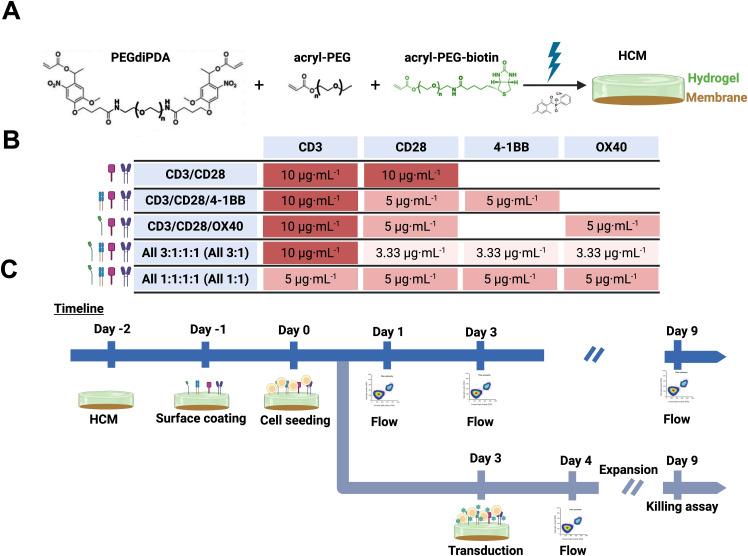
Hydrogel-coated membranes (HCMs) were designed with different co-stimulatory ligands and a physiologically-relevant substrate modulus inspired by the native microenvironment in which T cells are programmed. Phenotype, activation, and exhaustion markers were used to compare T cells cultured with HCMs or industry standard TransAct. Next, transduction with a CD19 CAR lentivirus was performed, and the killing potential of the resulting CAR T product was evaluated using an cytolysis model.
RESULTS
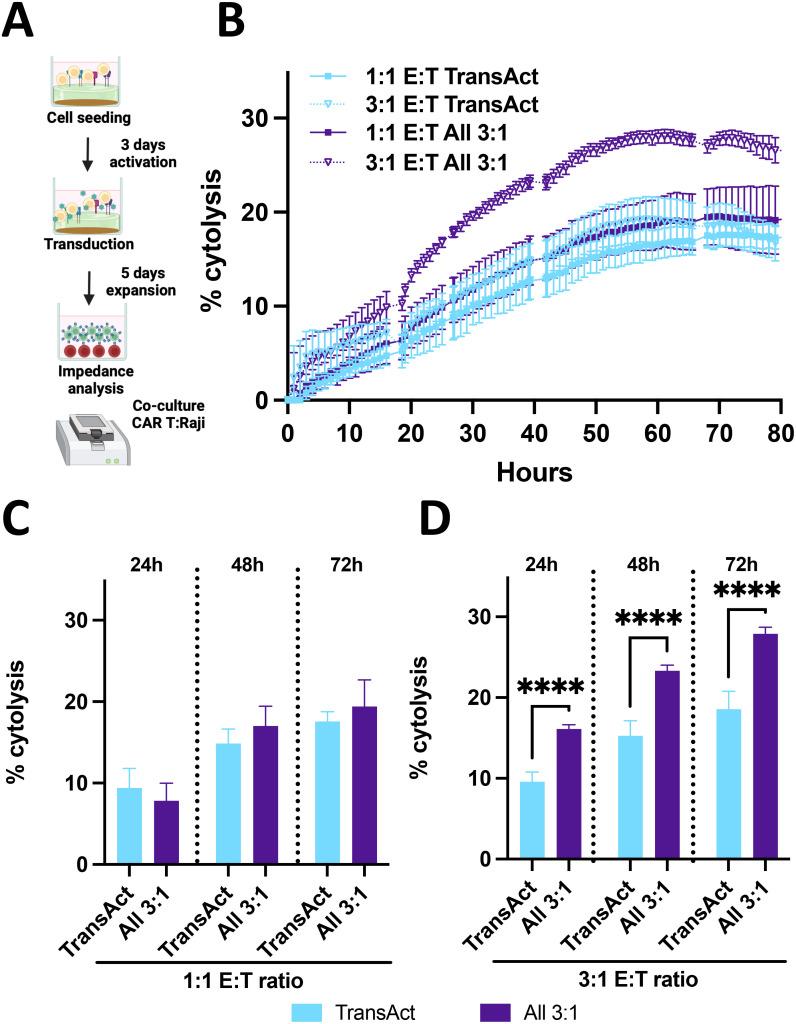
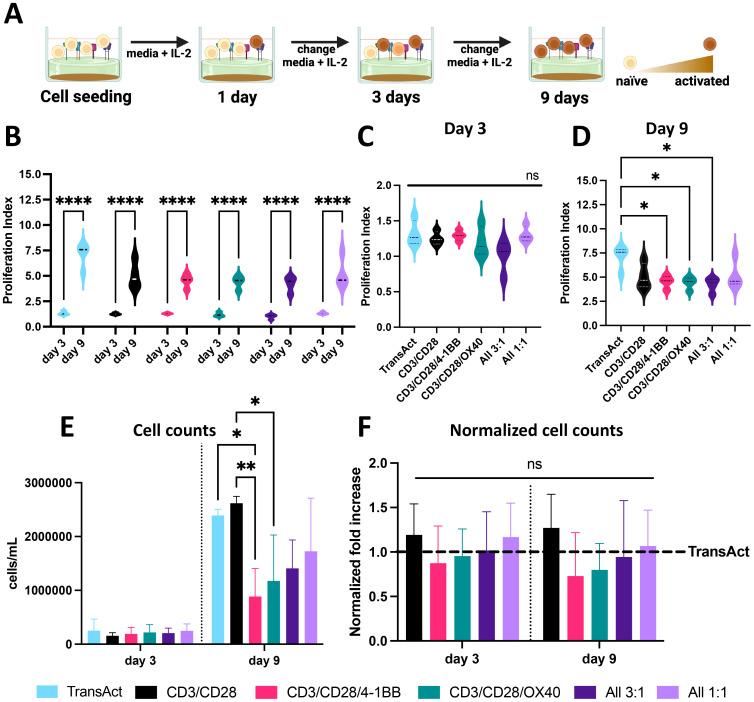
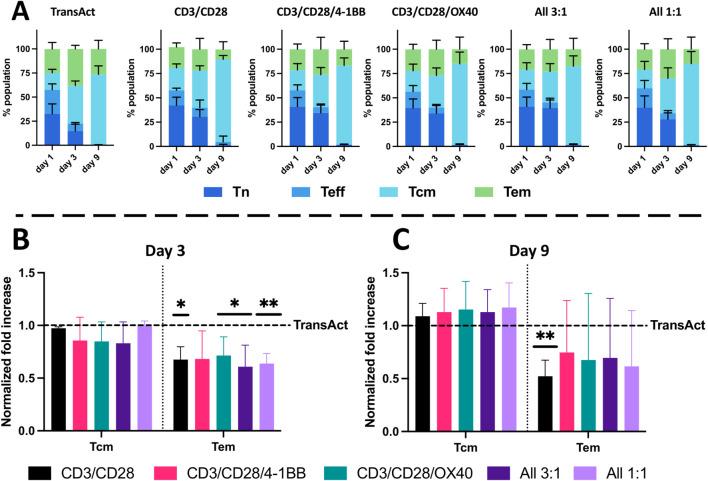
With this controlled and well-defined system, we hypothesized that a combination of ligands inspired by antigen-presenting cells would promote desired T-cell phenotypes with reduced exhaustion and thereby improved killing efficacy. We found memory phenotypes, minimal exhaustion, and similar activation profiles with HCMs. Additionally, increased T-cell transduction and decreased exhaustion for the CAR T population were observed with HCMs. Further, the killing potential of the resulting CAR T product was evaluated, finding improved cytolysis of target cells with lower variability with HCMs.
DISCUSSION
These results demonstrate the importance of lower T-cell exhaustion in CAR T manufacturing and present significant opportunities to modulate T-cell phenotypes for cell therapy applications using engineered bioinspired materials that display combinations of co-stimulatory molecules.
引言
细胞疗法彻底改变了癌症治疗方式,嵌合抗原受体(CAR)T细胞疗法在血液系统癌症治疗中处于前沿地位。然而,目前的生产方案依赖于T细胞的快速激活,这可能会诱导细胞耗竭和不良表型,最终降低CAR T细胞的疗效和持久性。鉴于T细胞激活作为实现细胞工程和扩增增殖表型的基本步骤的重要性,需要采取方法来控制激活并提高CAR T细胞质量。为满足这一需求,在本研究中,我们利用了一个受生物启发、可扩展、可调谐的平台来指导T细胞激活,并在CAR T细胞生产过程中减少细胞耗竭。
方法
设计了涂覆水凝胶的膜(HCM),其具有不同的共刺激配体和受T细胞编程的天然微环境启发的生理相关底物模量。使用表型、激活和耗竭标记物来比较用HCM或行业标准TransAct培养的T细胞。接下来,用CD19 CAR慢病毒进行转导,并使用细胞溶解模型评估所得CAR T产品的杀伤潜力。
结果
通过这个可控且定义明确的系统,我们假设受抗原呈递细胞启发的配体组合将促进所需的T细胞表型,减少细胞耗竭,从而提高杀伤效果。我们发现HCM具有记忆表型、最小的细胞耗竭和相似的激活谱。此外,观察到HCM处理的CAR T细胞群体的T细胞转导增加且细胞耗竭减少。此外,评估了所得CAR T产品的杀伤潜力,发现使用HCM时对靶细胞的细胞溶解得到改善,变异性更低。
讨论
这些结果证明了在CAR T细胞生产中降低T细胞耗竭的重要性,并为使用展示共刺激分子组合的工程化生物启发材料调节T细胞表型以用于细胞治疗应用提供了重大机遇。




 Zotero 插件