
用于高效钙钛矿太阳能电池的芘基空穴传输材料。
Pyrene-based hole transport materials for efficient perovskite solar cells.
作者信息
Irfan Madiha, Saeed Aamer, Tahir Sania, Yaqoob Muhammad Rehman, Zia Sohaib Ahmed, Usama Muhammad, Mukhtar Junaid, Farrukh Usama, Rehman Sara
机构信息
Institute of Chemistry, Khawaja Fareed University of Engineering and Information Technology, Rahim Yar Khan, Pakistan.
Department of Chemistry, Faculty of Natural Sciences, Quaid-i-Azam University, Islamabad, Pakistan.
出版信息
Turk J Chem. 2025 Jan 4;49(3):254-266. doi: 10.55730/1300-0527.3727. eCollection 2025.
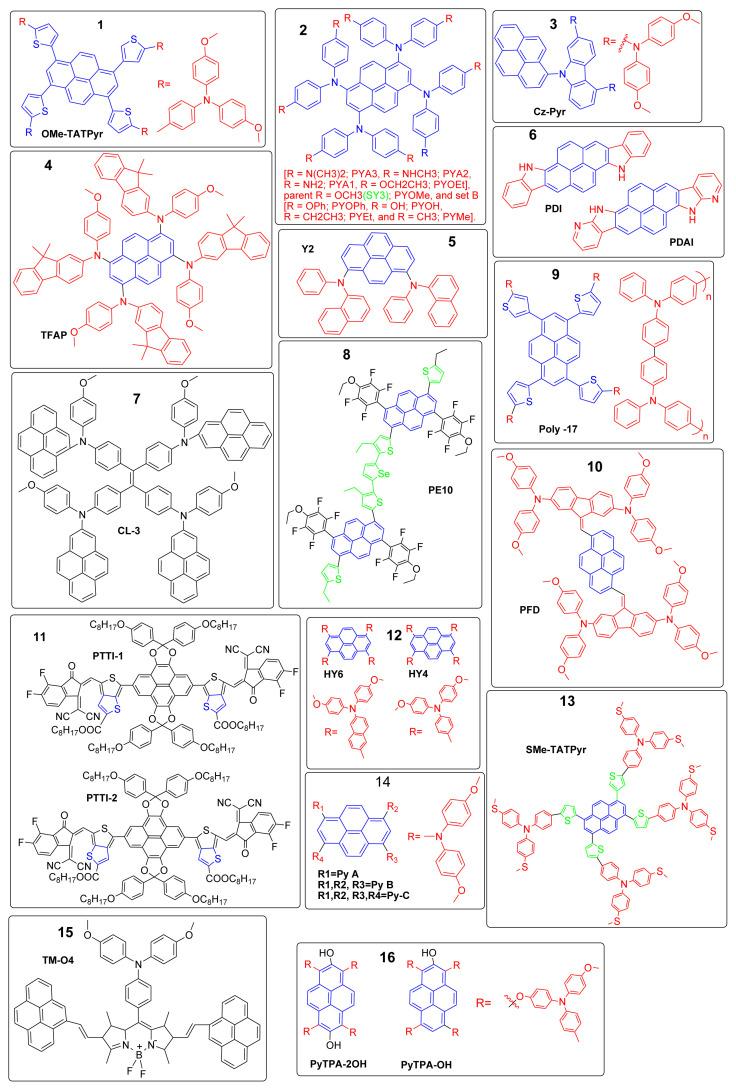
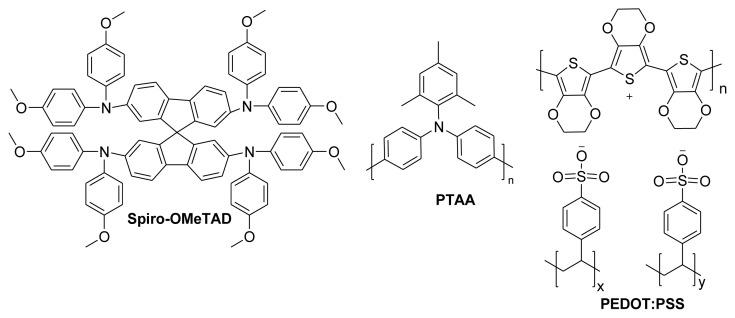
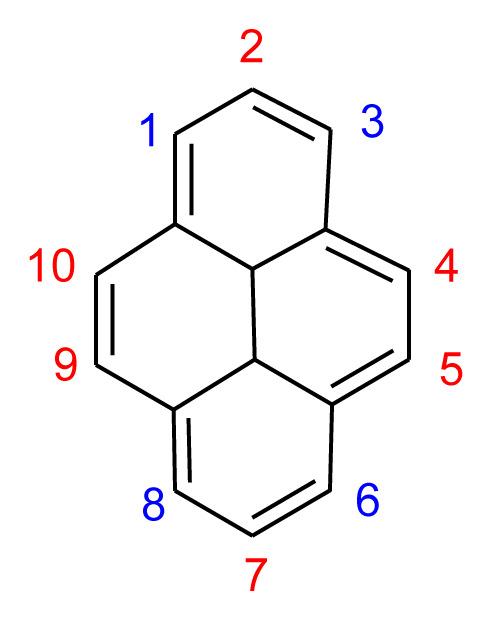
In the past few years, perovskite solar cells (PSCs) have gained a lot of attention and become a well-known topic in solar studies due to their lower manufacturing costs and improved efficiencies. Previously utilized hole transport materials (HTMs), such as poly[bis(4-phenyl)(2,4,6-trimethylphenyl)amine] and 2,2',7,7'-tetrakis(N,N-di-p-methoxyphenylamine)-9,9'-spirobifluorene, are challenging due to their high price, complicated synthesis, limited carrier mobility, and poor device stability. Developing HTMs for PSCs that are inexpensive and high-performance has gained much interest. Currently, many HTMs of organic molecules are used to improve photovoltaic qualities and reduce synthesis costs. Effectively using HTMs is essential for producing the best photovoltaic efficiency in PSCs because they are essential in extracting and transporting charge carriers. Pyrene-based HTMs have excellent device performance, chemical stability, and photovoltaic qualities compared to the other organic moieties. The significant developments made in pyrene-based HTMs over the past five years are reported herein. This review analyzed the relationship between the molecular structure, hole mobility, highest occupied molecular orbital-lowest unoccupied molecular orbital energy levels, power conversion efficiency (PCE), and energy band gap of pyrene-based HTMs. It was revealed that PSC devices fabricated with pyrene-based HTMs have attained a PCE greater than 22%. It is hoped that this review will encourage more researchers to develop HTMs that have good performance, low cost, and high device stability.
在过去几年中,钙钛矿太阳能电池(PSC)因其较低的制造成本和更高的效率而备受关注,并成为太阳能研究中的一个热门话题。以前使用的空穴传输材料(HTM),如聚[双(4-苯基)(2,4,6-三甲基苯基)胺]和2,2',7,7'-四(N,N-二对甲氧基苯胺)-9,9'-螺二芴,由于价格高昂、合成复杂、载流子迁移率有限以及器件稳定性差而颇具挑战性。开发用于PSC的价格低廉且高性能的HTM引起了广泛关注。目前,许多有机分子HTM被用于改善光伏性能并降低合成成本。有效使用HTM对于在PSC中实现最佳光伏效率至关重要,因为它们在提取和传输电荷载流子方面起着关键作用。与其他有机部分相比,芘基HTM具有出色的器件性能、化学稳定性和光伏性能。本文报道了过去五年中芘基HTM取得的重大进展。本综述分析了芘基HTM的分子结构、空穴迁移率、最高占据分子轨道-最低未占据分子轨道能级、功率转换效率(PCE)和能带隙之间的关系。结果表明,用芘基HTM制造的PSC器件的PCE已超过22%。希望本综述能鼓励更多研究人员开发性能良好、成本低廉且器件稳定性高的HTM。

 Zotero 插件