
1990年至2021年因大量饮酒导致的全球中风负担:全球疾病负担研究2021的分析
The global burden of stroke attributable to high alcohol use from 1990 to 2021: An analysis for the global burden of disease study 2021.
作者信息
Qian Nannan, Lu Chengcheng, Wei Taohua, Yang Wenming, Han Hui, Wang Meixia, Shi Qiao, Yang Yulong, Xi Hu, He Wei
机构信息
Department of Neurology, The First Affiliated Hospital of Anhui University of Chinese Medicine, Hefei, Anhui, China.
Anhui University of Chinese Medicine First Clinical Medical College, Hefei, Anhui, China.
出版信息
PLoS One. 2025 Jul 14;20(7):e0328135. doi: 10.1371/journal.pone.0328135. eCollection 2025.
BACKGROUND
Stroke, a leading global cause of death and disability, has high alcohol consumption as a significant modifiable risk factor. Despite the known association, the global spatiotemporal burden and changing relationship between high alcohol use and stroke subtypes remain inadequately characterized. This study quantifies the global, regional, and national burden of stroke attributable to high alcohol intake from 1990 to 2021.
METHODS
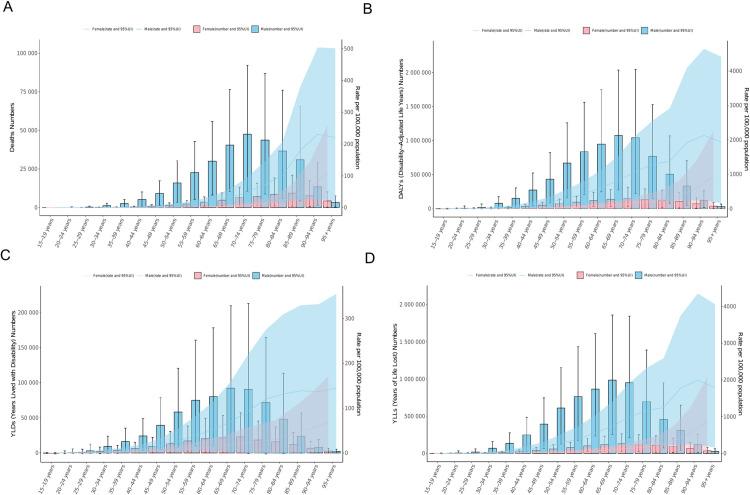
Utilizing data from the Global Burden of Disease (GBD) 2021 study, we analyzed deaths, disability-adjusted life years (DALYs), years lived with disability (YLDs), and years of life lost (YLLs) for stroke attributable to high alcohol use. Metrics were age-standardized rates and stratified by sex, age, sociodemographic index (SDI), GBD region, and stroke subtype (ischemic stroke, intracerebral hemorrhage). Estimated annual percentage change (EAPC) quantified trends. Frontier analysis, decomposition analysis, and cross-country inequality analysis assessed socioeconomic disparities.
RESULTS
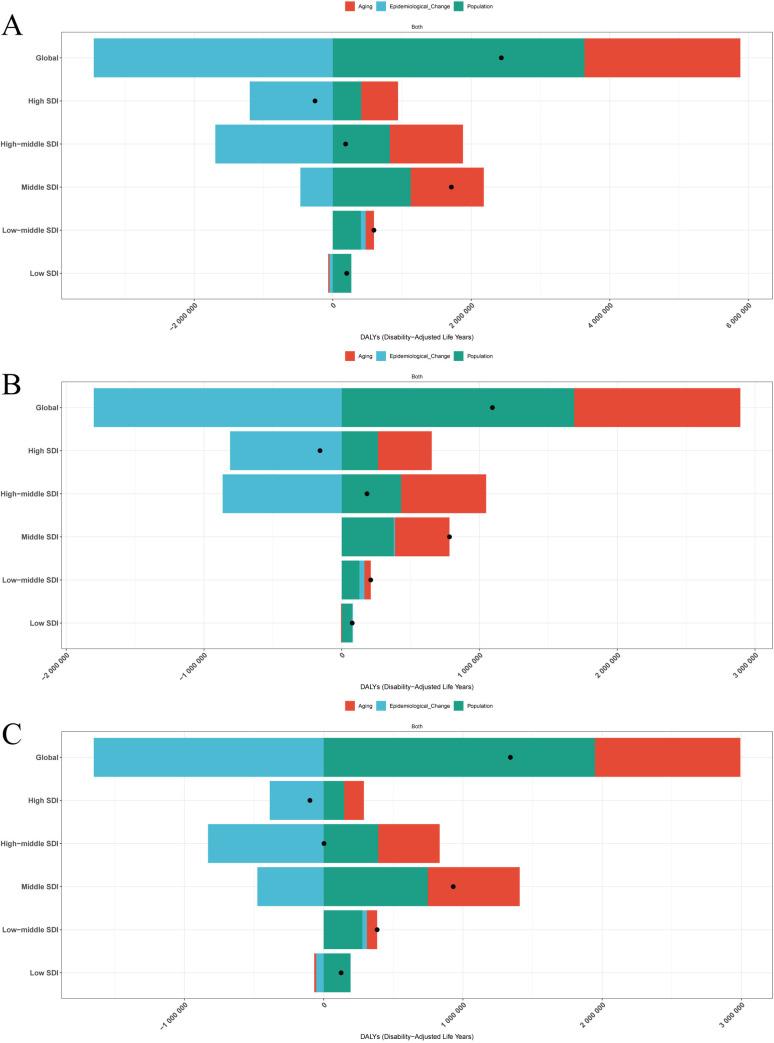
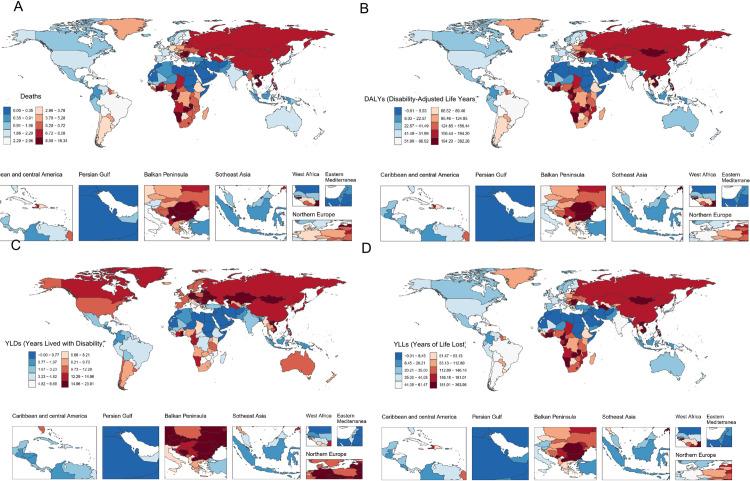
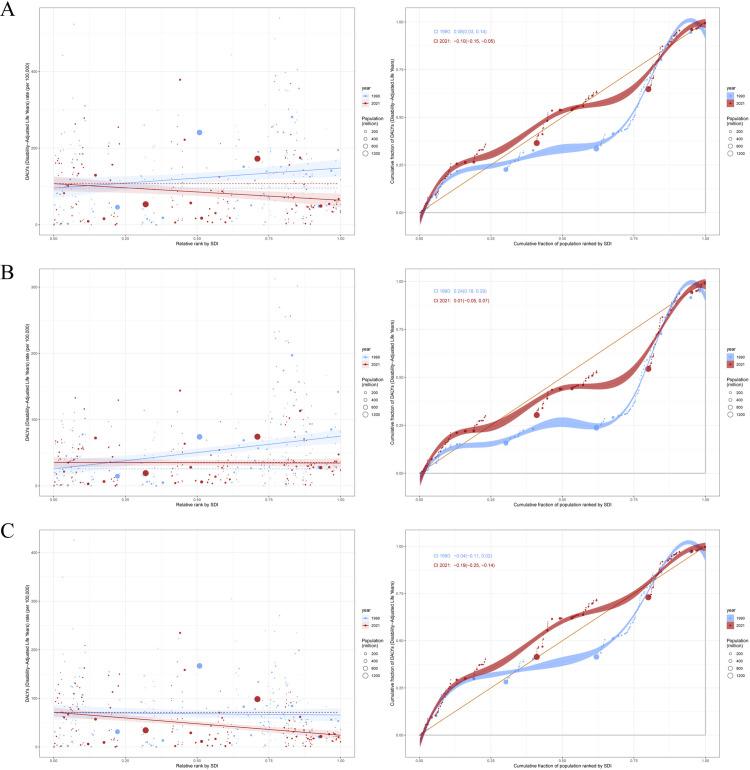
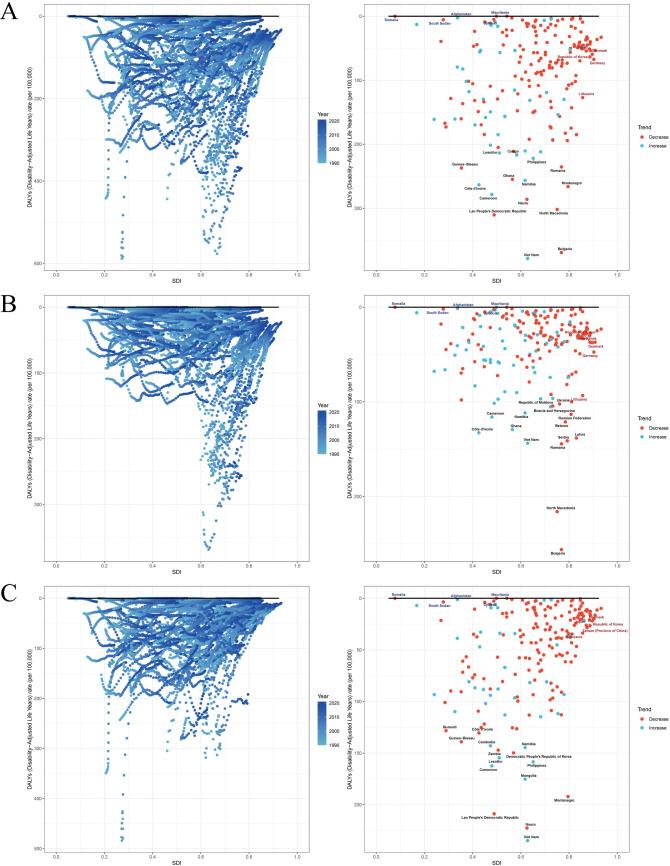
Globally, ASMR decreased by 40.28% (from 7.20 [95% UI 1.40-14.66] to 4.30 [1.00-8.39] per 100,000, EAPC = -1.81) and ASDR declined from 154.83 [33.98-299.48] to 97.89 [23.83-187.71] per 100,000 (EAPC = -1.63). While age-standardized YLL rates markedly improved (EAPC = -1.75), age-standardized YLD rates declined minimally (EAPC = -0.25), indicating persistent long-term disability burden. Significant disparities existed: males consistently bore a higher burden than females, though female ASMR declined more significantly (55.86% vs. 34.25%). High SDI regions showed substantial declines (e.g., ASMR EAPC = -3.28), but low-middle SDI regions experienced increasing ASMR (EAPC = 0.37) and ASDR (EAPC = 0.43), driven by rising YLDs and YLLs. Southeast Asia had the largest ASMR increase (EAPC = 2.86). National burdens were highest in Bulgaria, North Macedonia, and Vietnam. Ischemic stroke burden showed reducing socioeconomic inequality, but intracerebral hemorrhage burden increasingly concentrated in disadvantaged populations (SII = -47.40, CII = -0.19 in 2021). Frontier analysis identified Vietnam, Bulgaria, and Laos with the largest unrealized health potential. Decomposition revealed global DALYs increases were driven by population aging (92.5%) and growth (149.3%), partially offset by reduced age-specific rates (-141.8%).
CONCLUSION
Global stroke mortality attributable to high alcohol use declined significantly from 1990 to 2021, reflecting progress in prevention and acute care. However, minimal improvement in disability burden reveals critical gaps in long-term management and rehabilitation, creating a "survival-disability paradox." Profound disparities persist across genders, regions, SDI levels, and stroke subtypes. Targeted policies addressing excessive alcohol consumption, tailored to regional contexts and focused on both prevention and comprehensive post-stroke care, are urgently needed, particularly in low-middle SDI regions and Southeast Asia, to mitigate disability and health inequities.
背景
中风是全球主要的死亡和残疾原因,高酒精摄入量是一个重要的可改变风险因素。尽管存在已知关联,但高酒精使用与中风亚型之间的全球时空负担及变化关系仍未得到充分描述。本研究量化了1990年至2021年高酒精摄入所致中风的全球、区域和国家负担。
方法
利用全球疾病负担(GBD)2021研究的数据,我们分析了高酒精使用所致中风的死亡、伤残调整生命年(DALYs)、带病生存年数(YLDs)和生命损失年数(YLLs)。指标为年龄标准化率,并按性别、年龄、社会人口指数(SDI)、GBD区域和中风亚型(缺血性中风、脑出血)分层。估计年度百分比变化(EAPC)量化趋势。前沿分析、分解分析和跨国不平等分析评估社会经济差异。
结果
全球范围内,年龄标准化中风死亡率(ASMR)下降了40.28%(从每10万人7.20[95%UI 1.40 - 14.66]降至4.30[1.00 - 8.39],EAPC = -1.81),年龄标准化中风死亡率(ASDR)从每10万人154.83[33.98 - 299.48]降至97.89[23.83 - 187.71](EAPC = -1.63)。虽然年龄标准化YLL率显著改善(EAPC = -1.75),但年龄标准化YLD率下降甚微(EAPC = -o.25),表明长期残疾负担持续存在。存在显著差异:男性负担始终高于女性,不过女性ASMR下降更为显著(55.86%对34.25%)。高SDI地区降幅显著(如ASMR的EAPC = -3.28),但中低SDI地区的ASMR(EAPC = 0.37)和ASDR(EAPC = o.43)上升,这是由YLDs和YLLs增加所致。东南亚的ASMR增幅最大(EAPC = 2.86)。保加利亚、北马其顿和越南的国家负担最高。缺血性中风负担显示社会经济不平等在减少,但脑出血负担越来越集中于弱势群体(2021年SII = -47.40,CII = -0.19)。前沿分析确定越南、保加利亚和老挝的未实现健康潜力最大。分解分析显示,全球DALYs增加是由人口老龄化(92.5%)和增长(149.3%)驱动的,部分被特定年龄率下降(-141.8%)抵消。
结论
1990年至2021年,高酒精使用所致全球中风死亡率显著下降,反映了预防和急性护理方面的进展。然而,残疾负担改善甚微,揭示了长期管理和康复方面的关键差距,形成了“生存 - 残疾悖论”。性别、区域、SDI水平和中风亚型之间存在巨大差异。迫切需要制定针对性政策,解决过度饮酒问题,因地制宜,注重预防和中风后综合护理,特别是在中低SDI地区和东南亚,以减轻残疾和健康不平等状况。


 Zotero 插件