
如何预测转移性黑色素瘤患者的早期死亡率。
How to predict early mortality in patients with metastatic melanoma.
作者信息
Guo Qiusheng, Lv Xianmei, Zheng Zengpai, Lan Gaochen
机构信息
Department of Medical Oncology, Affiliated Jinhua Hospital, Zhejiang University School of Medicine, Jinhua, Zhejiang, China.
Department of Radiotherapy, Jinhua People's Hospital, Jinhua, Zhejiang, China.
出版信息
Sci Rep. 2025 Jul 14;15(1):25395. doi: 10.1038/s41598-025-08669-w.
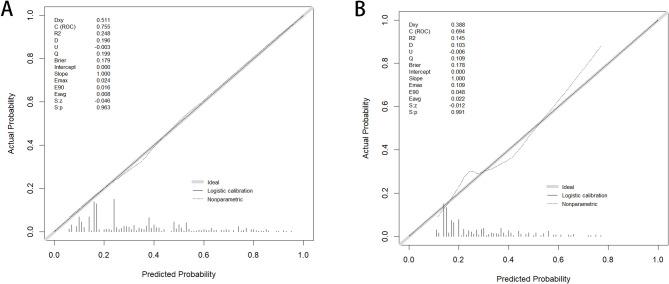
Melanoma is the most common malignant tumor, with a large patient population. Metastatic melanoma typically occurs in sites such as lymph nodes, skin, lungs, liver, brain, and bones. This metastatic spread often indicates advanced disease, with significantly decreased treatment efficacy and patient survival rates. Accurately predicting the early death (six months) rates of patients with metastatic melanoma to guide the selection of optimal treatment strategies is an urgent clinical issue in need of resolution. Patient demographic and clinical information for this study was extracted from the SEER database. Univariate and multivariate logistic regression analyses were used to screen for independent risk factors. Operating Characteristic curve (ROC) and calibration curve were used to validate the accuracy of the model. Decision curve analysis (DCA) was used to assess the model's benefit to patients. Finally, Kaplan-Meier survival curves were plotted to show differences in patient survival across risk groups. A total of 1109 patients were included in the study and randomly allocated to a training cohort (n = 777) and a validation cohort (n = 332). Logistic regression analysis identified six variables as independent factors influencing short-term survival in patients with metastatic melanoma, which were used to construct a nomogram. The Receiver Operating Characteristic (ROC) curve demonstrated good performance of the nomogram in both the training cohort (AUC = 0.755) and the validation cohort (AUC = 0.694). The calibration curve showed good fit. Decision curve analysis (DCA) indicated that patients can derive significant benefit from using this nomogram. We have successfully developed and well validated a nomogram that accurately predicts early death (6 months) in patients with transformational melanoma. This can assist clinicians in choosing better clinical strategies for their patients.
黑色素瘤是最常见的恶性肿瘤,患者群体庞大。转移性黑色素瘤通常发生在淋巴结、皮肤、肺、肝、脑和骨骼等部位。这种转移扩散往往表明疾病已进展至晚期,治疗效果和患者生存率显著降低。准确预测转移性黑色素瘤患者的早期死亡(六个月)率,以指导最佳治疗策略的选择,是一个亟待解决的临床问题。本研究的患者人口统计学和临床信息从监测、流行病学和最终结果(SEER)数据库中提取。采用单因素和多因素逻辑回归分析筛选独立危险因素。使用受试者工作特征曲线(ROC)和校准曲线验证模型的准确性。决策曲线分析(DCA)用于评估模型对患者的益处。最后,绘制Kaplan-Meier生存曲线以显示不同风险组患者的生存差异。本研究共纳入1109例患者,并随机分为训练队列(n = 777)和验证队列(n = 332)。逻辑回归分析确定了六个变量为影响转移性黑色素瘤患者短期生存的独立因素,这些因素用于构建列线图。受试者工作特征(ROC)曲线显示,列线图在训练队列(AUC = 0.755)和验证队列(AUC = 0.694)中均表现良好。校准曲线显示拟合良好。决策曲线分析(DCA)表明,患者使用该列线图可获得显著益处。我们成功开发并充分验证了一种列线图,可准确预测转化型黑色素瘤患者的早期死亡(6个月)情况。这有助于临床医生为患者选择更好的临床策略。



 Zotero 插件