
顶端向外的牛肠道类器官作为……的感染模型
Apical-out bovine intestinal organoids as an infection model for .
作者信息
Varegg Mathilde Svensen, Robertson Lucy J, Hovd Lise Benette Nilsen, Stokstad Maria, Jiménez-Meléndez Alejandro
机构信息
Department of Paraclinical Sciences, Faculty of Veterinary Medicine, Norwegian University of Life Sciences, Elizabeth Stephansens vei 15, Aas, 1433, Norway.
Department of Production Animal Clinical Sciences, Faculty of Veterinary Medicine, Norwegian University of Life Sciences, Elizabeth Stephansens vei 15, Aas, 1433, Norway.
出版信息
Curr Res Parasitol Vector Borne Dis. 2025 Jun 18;8:100284. doi: 10.1016/j.crpvbd.2025.100284. eCollection 2025.
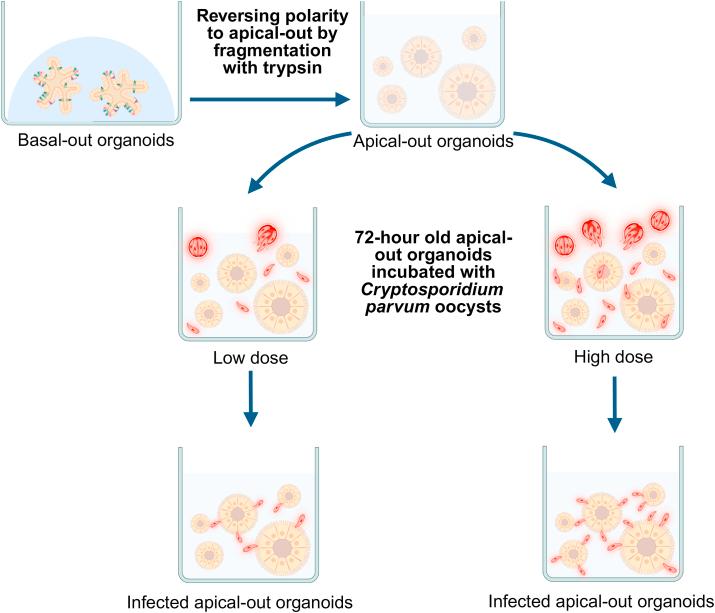
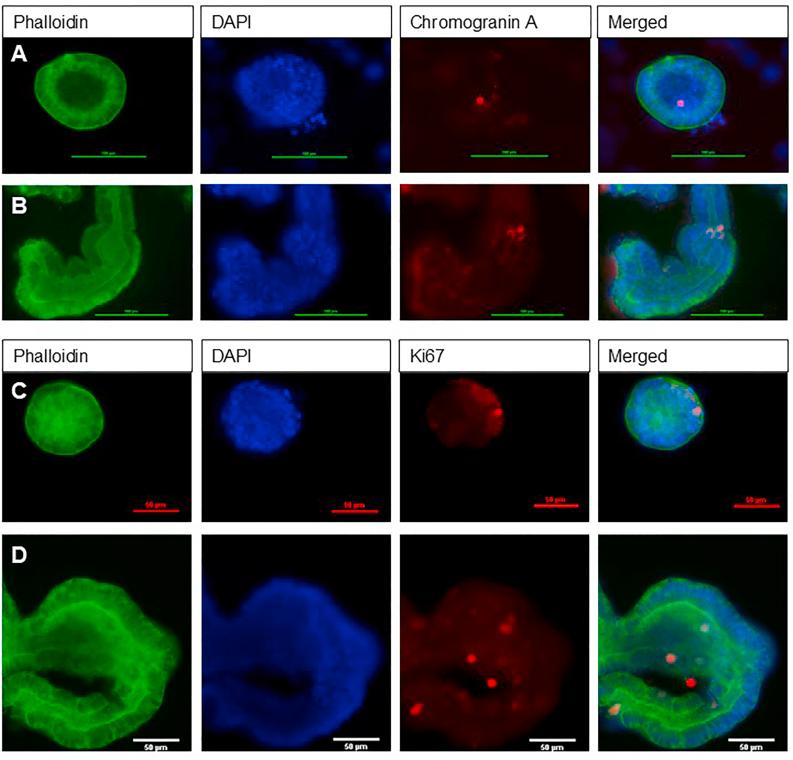
is a major pathogen responsible for neonatal calf diarrhoea, but research has been hampered due to the lack of models that can complete the life cycle. In this scenario, human and murine small intestinal organoids (enteroids) are emerging as new tools. However, models employing bovine cells, relevant for the pathogenesis in the target species, are lacking. Thus, a panel of bovine enteroids was isolated in this study. Enteroids have an enclosed apical lumen, and the parasite must be delivered to the apical side of the cells to facilitate infection. Two different methods of reversing cell polarity were used to generate bovine apical-out enteroids: dissociation in ethylenediaminetetraacetic acid (EDTA), and dissociation in trypsin. Infection of these enteroids with was attempted by incubation of the enteroids with viable, bleach-treated oocysts and subsequent cultivation of the two different enteroid set-ups. Apical-out enteroids dissociated in trypsin supported infection and asexual replication, whilst dissociation in EDTA did not. However, only when a high dose of oocysts was administered, were all enteroids included able to support replication consistently. When the apical-out enteroids were inoculated with a low dose of oocysts, only one isolate supported replication, suggesting enteroid-specific variability. This study reports on infection and asexual replication of . in bovine apical-out ileal organoids.
是导致新生小牛腹泻的主要病原体,但由于缺乏能完成其生命周期的模型,相关研究受到了阻碍。在这种情况下,人和小鼠的小肠类器官(肠小体)正成为新的工具。然而,缺乏使用与目标物种发病机制相关的牛细胞的模型。因此,本研究分离出了一组牛肠小体。肠小体有一个封闭的顶端管腔,寄生虫必须被递送到细胞的顶端一侧以促进感染。使用两种不同的逆转细胞极性的方法来生成牛顶端向外的肠小体:在乙二胺四乙酸(EDTA)中解离,以及在胰蛋白酶中解离。通过将肠小体与经漂白处理的活卵囊一起孵育,随后对两种不同的肠小体设置进行培养,尝试用 感染这些肠小体。在胰蛋白酶中解离的顶端向外的肠小体支持 感染和无性繁殖,而在EDTA中解离则不支持。然而,只有当给予高剂量的卵囊时,所有纳入的肠小体才能够持续支持 繁殖。当用低剂量的卵囊接种顶端向外的肠小体时,只有一个分离株支持 繁殖,这表明肠小体存在特异性差异。本研究报告了 在牛顶端向外的回肠类器官中的感染和无性繁殖情况。





 Zotero 插件