
三种云南野生稻叶绿体全基因组特征分析及其系统发育和密码子使用偏好性比较分析
Characterization of the complete chloroplast genome and comparative analysis of the phylogeny and codon usage bias of three Yunnan wild rice species.
作者信息
Li Rongxin, Wang Bo, Xiao Suqin, Chen Ling, Yin Fuyou, Li Jinlu, Jiang Cong, Zhang Dunyu, Zhong Qiaofang, Zhang Yun, Xing Jiaxin, Cheng Zaiquan, Liu Li
机构信息
Biotechnology and Germplasm Resources Institute, Yunnan Academy of Agricultural Sciences, Kunming, China.
School of Agriculture, Yunnan University, Kunming, China.
出版信息
Front Plant Sci. 2025 Jul 2;16:1555104. doi: 10.3389/fpls.2025.1555104. eCollection 2025.
BACKGROUND
Wild rice species with a rich genetic diversity, wide adaptability, and high photosynthetic rates provide a valuable genetic reservoir for rice breeding.
METHODS
In this study, the chloroplast (cp) genomes of three Yunnan wild rice species, namely , , and , were sequenced using second-generation sequencing technology, followed by assembly and annotation. Phylogeny and codon usage bias were analyzed using MEGA and RStudio.
RESULTS
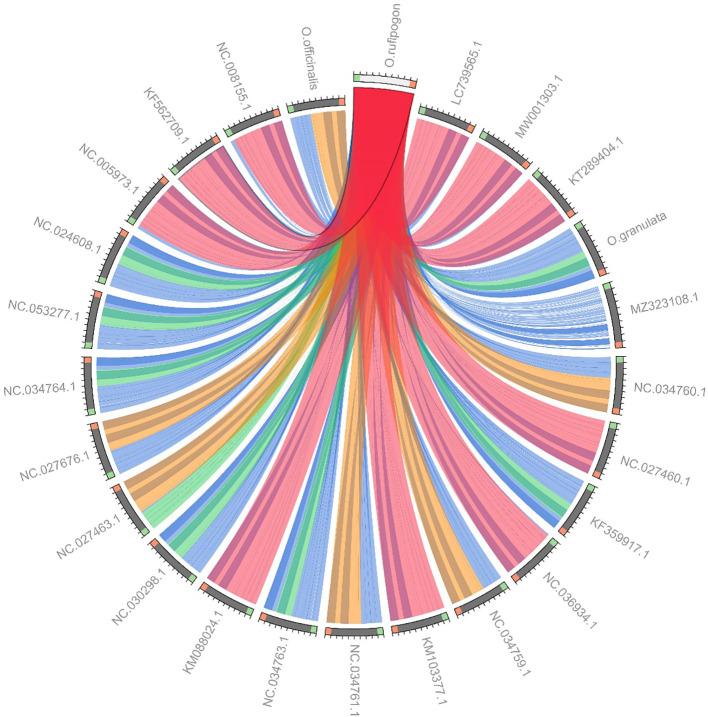
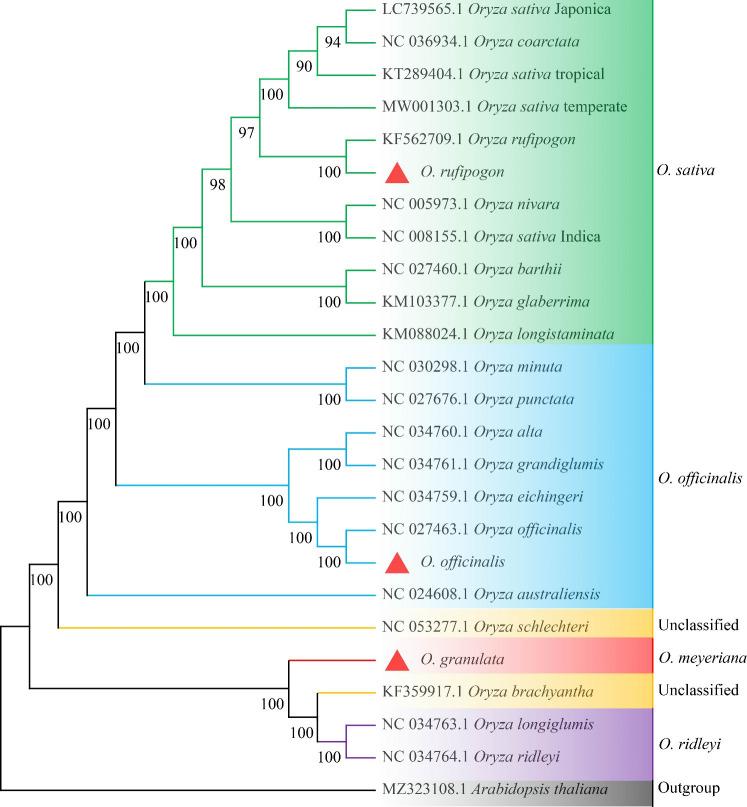
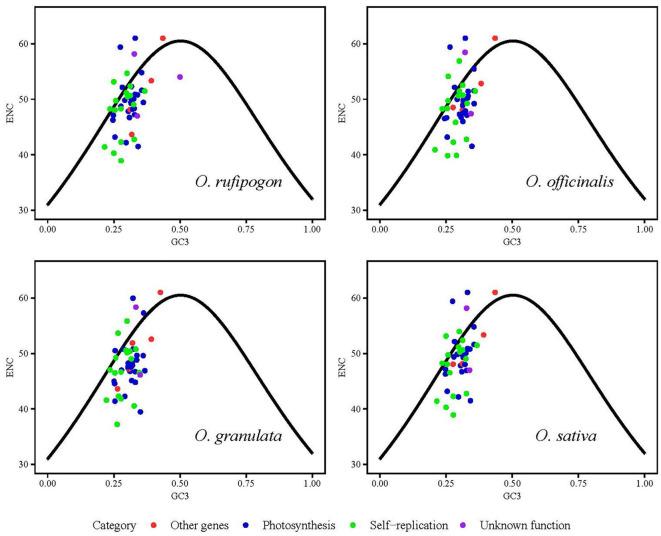
The total lengths of the cp genomes of the three species ranged from 134,556 to 135,937 bp, with a GC content of 39.0%. The large single-copy region of was 2000 bp longer than that of the other two species. In total, 133 genes were identified in the cp genome, including domestication genes , , and . Phylogenetic analysis showed that is distinct from the Indian , evolved from , and shared a closer relationship with . The average effective number of codons of the three species was above 45, indicating weak codon usage bias.
CONCLUSION
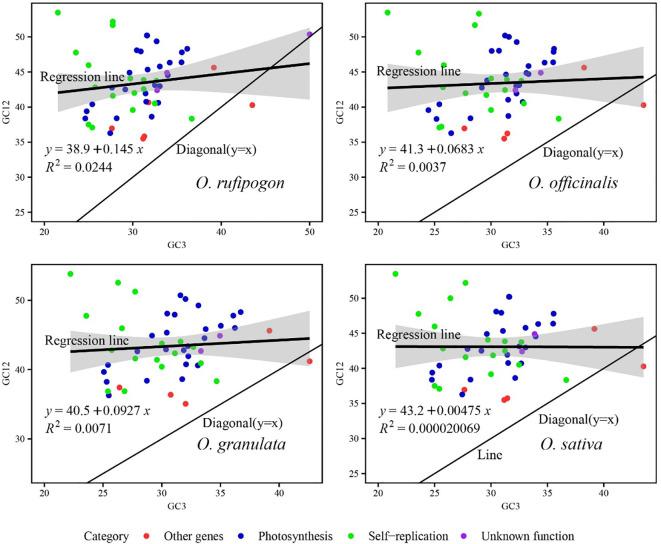
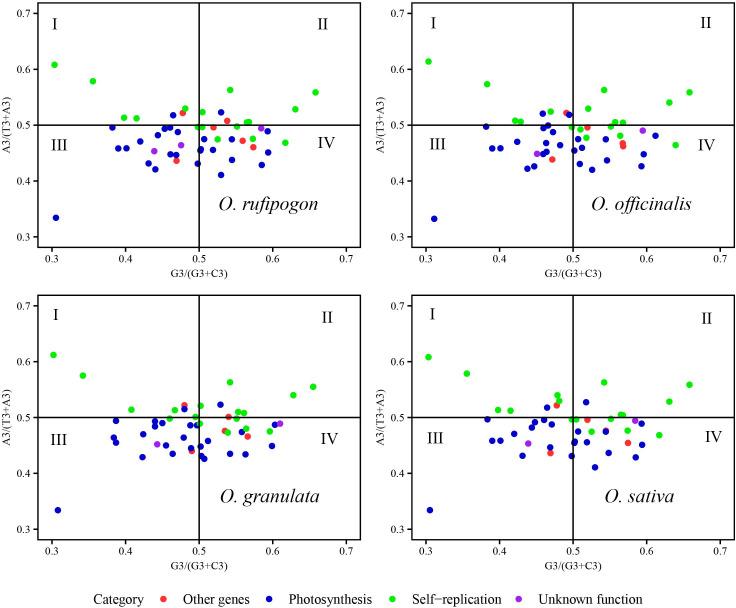
Analysis of the ENC, PR2, and neutrality plots revealed that natural selection played a significant role in the chloroplast codon usage bias of the three species, mainly regulating genes involved in self-replication and photosynthesis. Fourteen optimal codons were identified, with 13 ending in A/U and one ending in C. These results are crucial for mining favorable genes related to photosynthesis and investigating the evolution of wild rice species. Overall, this study provides valuable information on the genomic composition and genetics of three Yunnan wild rice species.
背景
具有丰富遗传多样性、广泛适应性和高光合速率的野生稻物种为水稻育种提供了宝贵的基因库。
方法
在本研究中,利用第二代测序技术对三种云南野生稻物种,即[物种名称1]、[物种名称2]和[物种名称3]的叶绿体(cp)基因组进行测序,随后进行组装和注释。使用MEGA和RStudio分析系统发育和密码子使用偏好。
结果
这三个物种的cp基因组总长度在134,556至135,937 bp之间,GC含量为39.0%。[物种名称1]的大单拷贝区域比其他两个物种长2000 bp。cp基因组中共鉴定出133个基因,包括驯化基因[基因名称1]、[基因名称2]和[基因名称3]。系统发育分析表明,[物种名称1]与印度野生稻[物种名称4]不同,[物种名称2]从[物种名称5]进化而来,[物种名称3]与[物种名称6]关系更密切。这三个物种的平均有效密码子数均高于45,表明密码子使用偏好较弱。
结论
对ENC、PR2和中性绘图的分析表明,自然选择在这三个物种的叶绿体密码子使用偏好中起重要作用,主要调节参与自我复制和光合作用的基因。鉴定出14个最优密码子,其中13个以A/U结尾,1个以C结尾。这些结果对于挖掘与光合作用相关的有利基因以及研究野生稻物种的进化至关重要。总体而言,本研究为三种云南野生稻物种的基因组组成和遗传学提供了有价值的信息。



 Zotero 插件