
使用流式细胞术评估强化混凝去除纳米塑料的效率。
Evaluating the Efficiency of Enhanced Coagulation for Nanoplastics Removal Using Flow Cytometry.
作者信息
Ezugbe Elorm Obotey, Rutten Samuel Benjamin, de Vries-Onclin Bianca, Wagterveld R Martijn, de Vos Wiebe, Lindhoud Saskia
机构信息
Membrane Science and Technology, University of Twente, Drienerlolaan 5, Enschede 7522 NB, The Netherlands.
Wetsus, European Centre of Excellence for Sustainable Water Technology, Oostergoweg 9, Leeuwarden 8911 MA, The Netherlands.
出版信息
ACS ES T Water. 2025 Jun 11;5(7):3908-3919. doi: 10.1021/acsestwater.5c00219. eCollection 2025 Jul 11.
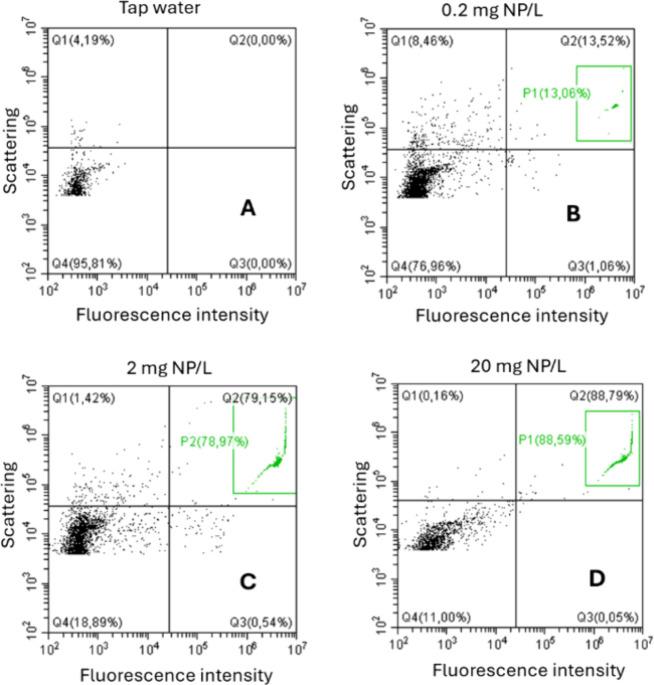
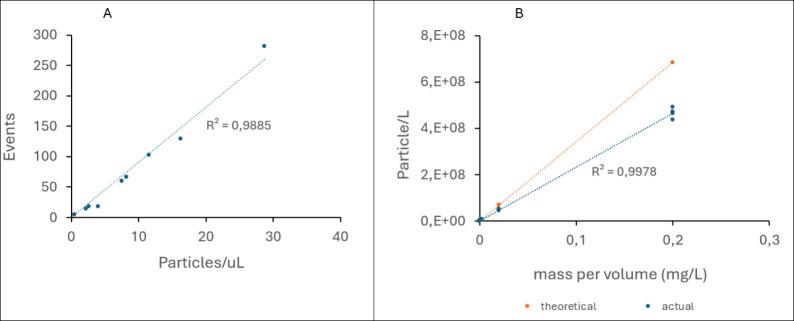
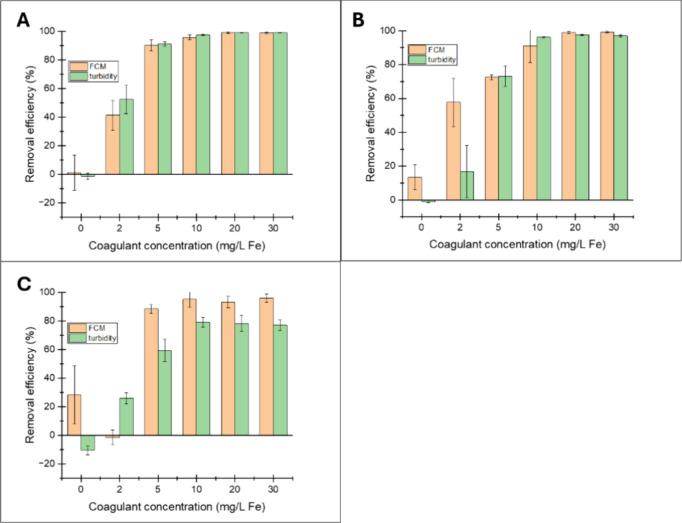
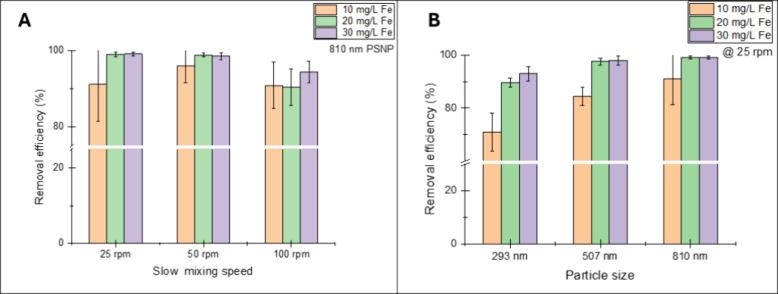
Efficient removal and accurate quantification of nanoplastics in conventional water treatment systems remain closely interconnected challenges. Optimizing removal processes requires robust detection techniques, and the lack of reliable quantification methods hinders process development and validation. In this study, we investigated enhanced coagulation-flocculation techniques for removing fluorescent PS-OSO nanoplastics of different sizes and concentrations from water. Removal efficiency was assessed using flow cytometry (FCM) and compared to a turbidity-based assessment. Coagulation-flocculation was achieved with Fe concentrations ranging from 2 to 30 mg/L and varying slow mixing speeds of 100, 50, and 25 rpm. The results demonstrate that FCM quantifies nanoplastics more reliably and accurately than turbidity measurements at lower nanoplastic concentrations. Enhanced coagulation was achieved at a slow mixing speed of 25 rpm ( = 14 s). Among the factors studied, particle size emerged as the most significant factor influencing the coagulation-flocculation performance. Additionally, sweep coagulation was predominant at low nanoplastic concentrations, while a combination of sweep coagulation and charge neutralization was observed at higher concentrations. These findings provide critical insights into developing effective nanoplastic removal strategies through interconnected advancements in the detection and treatment optimization of conventional water treatment systems.
在传统水处理系统中,高效去除和准确定量纳米塑料仍然是紧密相关的挑战。优化去除过程需要强大的检测技术,而缺乏可靠的定量方法阻碍了工艺的开发和验证。在本研究中,我们研究了强化混凝-絮凝技术,用于从水中去除不同尺寸和浓度的荧光聚苯乙烯磺酸盐纳米塑料。使用流式细胞术(FCM)评估去除效率,并与基于浊度的评估进行比较。通过2至30mg/L的铁浓度和100、50和25rpm的不同慢速混合速度实现混凝-絮凝。结果表明,在较低纳米塑料浓度下,FCM比浊度测量更可靠、准确地定量纳米塑料。在25rpm(=14秒)的慢速混合速度下实现了强化混凝。在所研究的因素中,粒径是影响混凝-絮凝性能的最重要因素。此外,在低纳米塑料浓度下,卷扫絮凝占主导,而在较高浓度下观察到卷扫絮凝和电荷中和的组合。这些发现为通过传统水处理系统检测和处理优化的相互关联进展制定有效的纳米塑料去除策略提供了关键见解。


 Zotero 插件