
心血管疾病中的酮体:以血管系统作为治疗靶点
Ketone Bodies in Cardiovascular Disease: The Vasculature as a Therapeutic Target.
作者信息
Challa Azariyas A, Hill Bradford G, Nystoriak Matthew A, Gouwens Kara R, Kalra Dinesh K
机构信息
Cardiomyopathy Program, Division of Cardiology, University of Louisville, Louisville, Kentucky, USA.
Center for Cardiometabolic Science, Christina Lee Brown Envirome Institute, University of Louisville School of Medicine, Louisville, Kentucky, USA.
出版信息
JACC Basic Transl Sci. 2025 Jul 17;10(8):101328. doi: 10.1016/j.jacbts.2025.101328.
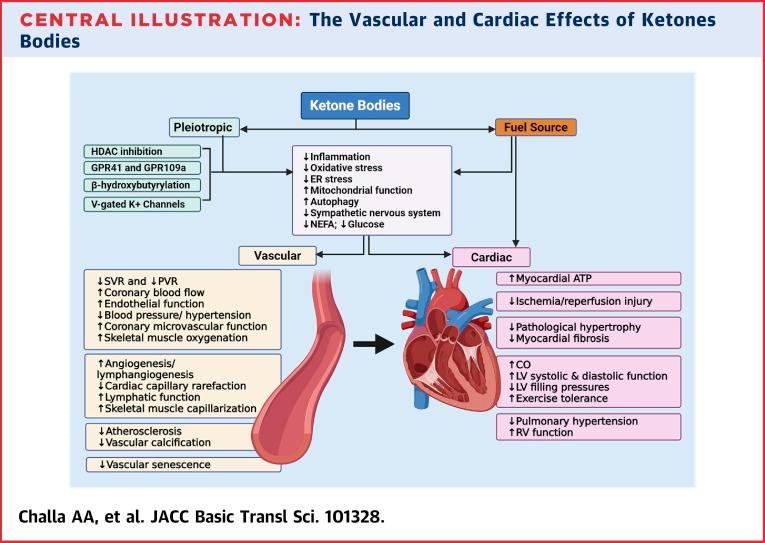
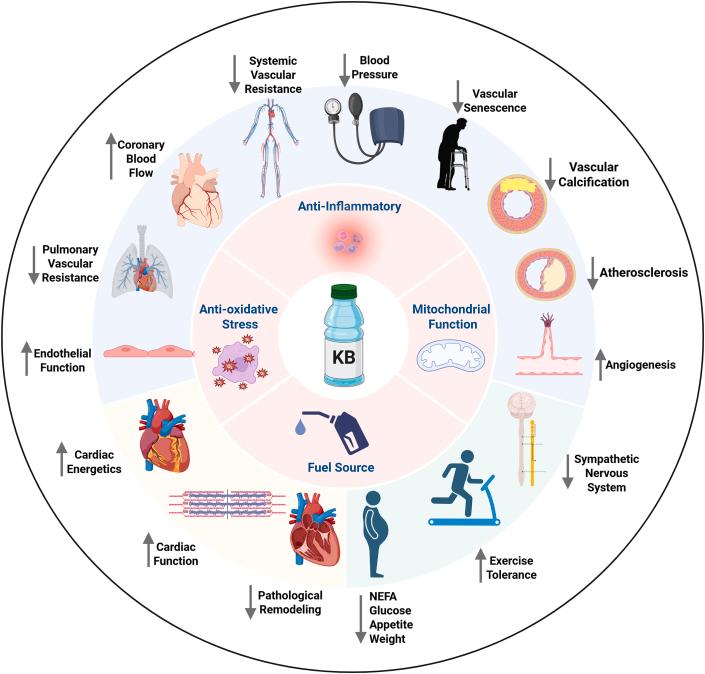
Evidence for the potential of ketone bodies (KBs) in the treatment of cardiovascular disease is growing rapidly. In addition to serving as sources of myocardial fuel, KBs exert an array of pleiotropic activities via multiple mechanisms. The vasculature is emerging as a key target of KBs. Recent small clinical studies have shown that the administration of exogenous KBs to patients with heart failure is associated with a marked reduction in systemic vascular resistance and improvement in myocardial function. Exogenous KBs have also been shown to increase coronary blood flow; decrease pulmonary vascular resistance; promote endothelial function and angiogenesis; increase skeletal muscle oxygenation and capillarization; and inhibit atherosclerosis, vascular calcification, and senescence. These vasculo-protective properties likely contribute to the beneficial effects of exogenous KBs observed in heart failure, pulmonary hypertension, and myocardial ischemia/infarction, and suggest potential wide applications in several other cardiovascular diseases and related conditions. In this review, we will discuss the salutary vascular effects of KBs and their cardioprotective roles.
酮体(KBs)在治疗心血管疾病方面具有潜在作用的证据正在迅速增加。除了作为心肌燃料来源外,KBs还通过多种机制发挥一系列多效性作用。脉管系统正成为KBs的关键靶点。最近的小型临床研究表明,向心力衰竭患者施用外源性KBs与全身血管阻力显著降低和心肌功能改善有关。外源性KBs还被证明可增加冠状动脉血流量;降低肺血管阻力;促进内皮功能和血管生成;增加骨骼肌氧合和毛细血管化;并抑制动脉粥样硬化、血管钙化和衰老。这些血管保护特性可能有助于在外源性KBs在心力衰竭、肺动脉高压和心肌缺血/梗死中观察到的有益作用,并提示其在其他几种心血管疾病及相关病症中具有潜在的广泛应用。在本综述中,我们将讨论KBs有益的血管效应及其心脏保护作用。


 Zotero 插件