
应对成骨细胞衰老:分子途径与抗衰老治疗前沿
Addressing osteoblast senescence: Molecular pathways and the frontier of anti-ageing treatments.
作者信息
Zhang Zhengdong, Liu Pan, Song Yu, Ma Liang, Xu Yan, Lei Jie, Tong Bide, Zhu Dingchao, Liang Huaizhen, Wang Hongchuan, Zhou Xingyu, Ou Zixuan, Wei Junyu, Xu Hanpeng, Wu Di, Peng Shuchang, Du Yifan, Du Zhi, Wang Bingjin, Liao Zhiwei, Ke Wencan, Zhao Kangcheng, Xia Xiqin, Tan Lei, Feng Xiaobo, Liu Gang, Li Shuai, Wang Kun, Yang Cao
机构信息
Department of Orthopaedics, Union Hospital, Tongji Medical College, Huazhong University of Science and Technology, Wuhan, China.
School of Clinical Medicine, Chengdu Medical College, Chengdu, China.
出版信息
Clin Transl Med. 2025 Jul;15(7):e70417. doi: 10.1002/ctm2.70417.
BACKGROUND
Osteoblast senescence is a central driverof age-related osteoporosis. Accumulating evidence shows that counteractingthis senescence can substantially mitigate bone loss. In this review, we summarize the hallmarks of osteoblast senescence, the signaling pathways involved, and therapeutic strategies that target osteoblast senescence tocombat age-related osteoporosis.
METHODS
Chronic diseases associated with ageingpose a significant threat to human health. Studies have shown that osteoporosisis closely linked to the ageing process of the body and the senescence ofosteoblasts within the bone microenvironment. Counteracting the senescence ofosteoblasts and maintaining the balance of differentiation, proliferation andfunction between osteoclasts and osteoblasts has been a key focus in the research of age-related osteoporosis and bone loss. The biological behaviour andfunctionality of the osteoblast lineage related to senescence are modulated bya variety of targets, including signalling pathways, proteins and genes associated with ageing. This review aims to discuss the senescence-related characteristics of the osteoblast lineage, dissect the interplay and mechanisms between it and ageing-associated signalling pathways, proteinsand genes, as well as current strategies for the prevention and treatment ofosteoblast senescence.
CONCLUSION
This review systematically examines the regulatory interactions among markers, therapeutic targets, and signalingpathways associated with osteoblast senescence, alongside current potential strategies for targeting this process. It provides more comprehensive information for future research into the complex mechanisms underlying age-related osteoporosis driven by osteoblast senescence.
KEY POINTS
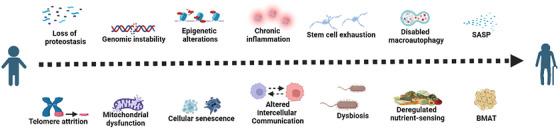
Osteoblast senescence is a key driver of age-related osteoporosis, disrupting bone formation and homeostasis. Aging impacts osteoblasts through multiple pathways, including telomere shortening, genomic instability, SASP secretion, and others. Bone loss related to osteoblast senescence involves the activation and crosstalk of multiple signaling pathways. The options for combating and treating osteoblast senescence toachieve anti-osteoporosis are numerous, but still challenging.
背景
成骨细胞衰老为年龄相关性骨质疏松症的主要驱动因素。越来越多的证据表明,对抗这种衰老可显著减轻骨质流失。在本综述中,我们总结了成骨细胞衰老的特征、相关信号通路以及针对成骨细胞衰老以对抗年龄相关性骨质疏松症的治疗策略。
方法
与衰老相关的慢性疾病对人类健康构成重大威胁。研究表明,骨质疏松症与身体的衰老过程以及骨微环境中成骨细胞的衰老密切相关。对抗成骨细胞衰老并维持破骨细胞与成骨细胞之间分化、增殖和功能的平衡一直是年龄相关性骨质疏松症和骨质流失研究的关键重点。与衰老相关的成骨细胞谱系的生物学行为和功能受到多种靶点的调节,包括与衰老相关的信号通路、蛋白质和基因。本综述旨在讨论成骨细胞谱系与衰老相关的特征,剖析其与衰老相关信号通路、蛋白质和基因之间的相互作用及机制,以及目前预防和治疗成骨细胞衰老的策略。
结论
本综述系统地研究了与成骨细胞衰老相关的标志物、治疗靶点和信号通路之间的调控相互作用,以及目前针对这一过程的潜在策略。它为未来研究成骨细胞衰老驱动的年龄相关性骨质疏松症的复杂机制提供了更全面的信息。
要点
成骨细胞衰老为年龄相关性骨质疏松症的关键驱动因素,破坏骨形成和体内平衡。衰老通过多种途径影响成骨细胞,包括端粒缩短、基因组不稳定、衰老相关分泌表型(SASP)分泌等。与成骨细胞衰老相关的骨质流失涉及多种信号通路的激活和相互作用。对抗和治疗成骨细胞衰老以实现抗骨质疏松的选择众多,但仍具有挑战性。




 Zotero 插件