
利用缺氧相关基因特征预测膀胱癌的预后。
Leveraging hypoxia-related genes signature for predicting the prognosis of bladder cancer.
作者信息
Dong Yang, Chen Yu-Ang, Yu Pei-Ze, Liu Qiang, Zhou Ran, Yu Hui, Shi Zhen-Duo, Hao Lin, Zhao Tong, Ding Jun, Han Cong-Hui
机构信息
Suzhou Medical College of Soochow University, Suzhou, China.
Department of Urology, Xuzhou Central Hospital, Postgraduate Workstation of Soochow University Xuzhou, China.
出版信息
Transl Androl Urol. 2025 Jun 30;14(6):1701-1722. doi: 10.21037/tau-2025-118. Epub 2025 Jun 26.
BACKGROUND
Hypoxia is common in solid tumors, facilitating tumor growth and treatment resistance, and is crucial for optimizing patient outcomes, but research on the mechanism of hypoxia in bladder cancer (BC) remains limited. This study aims to explore the functional role of hypoxia-related genes (HRGs) in BC.
METHODS
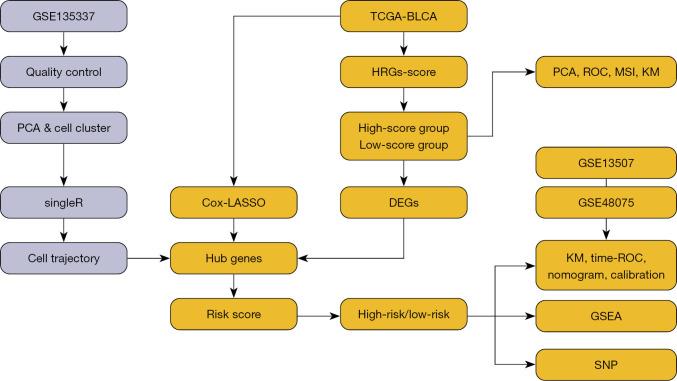
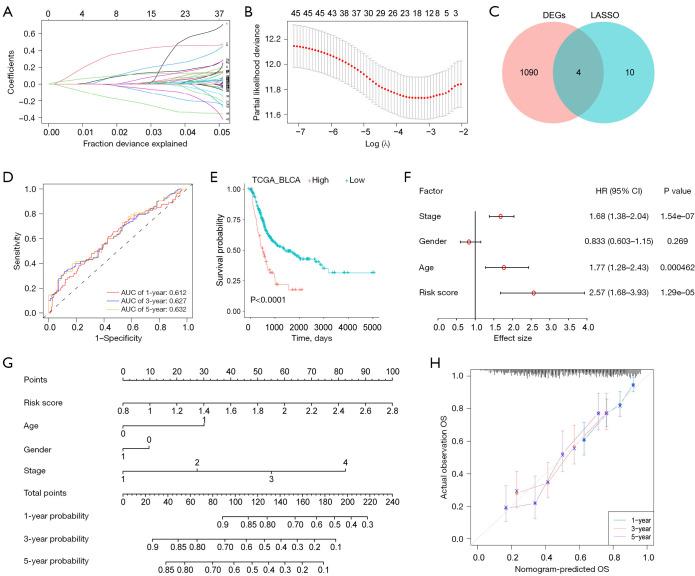
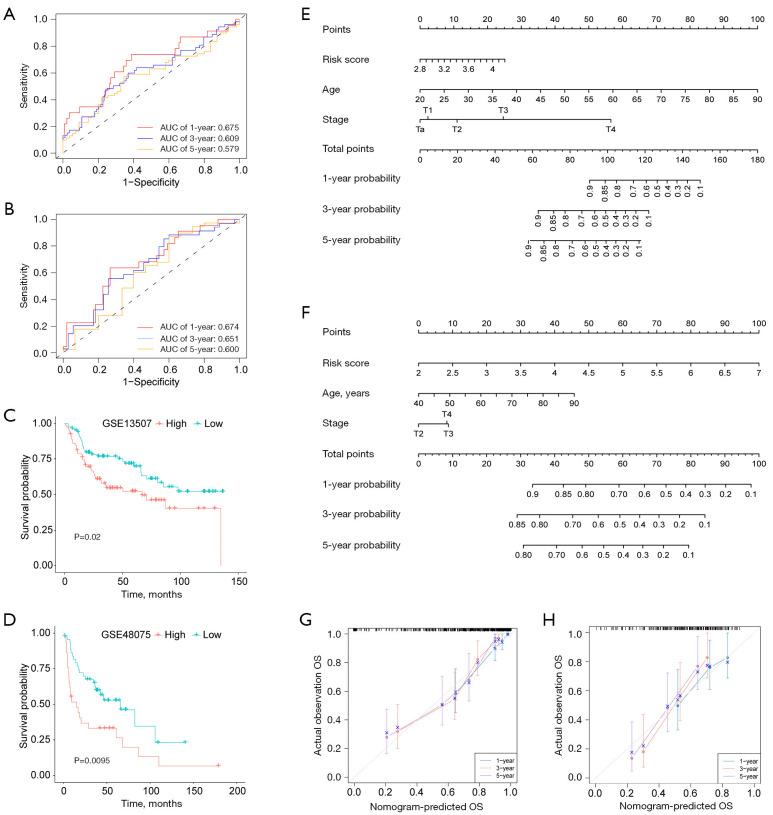
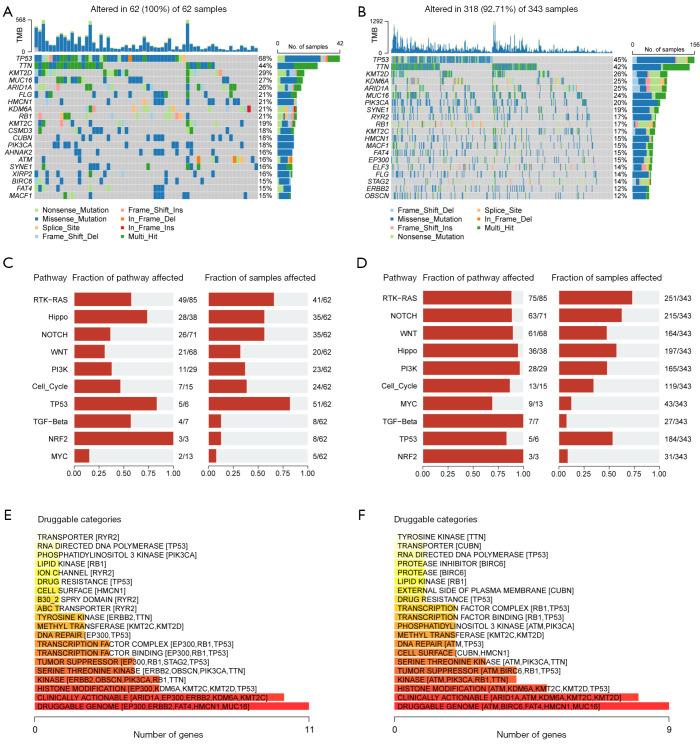
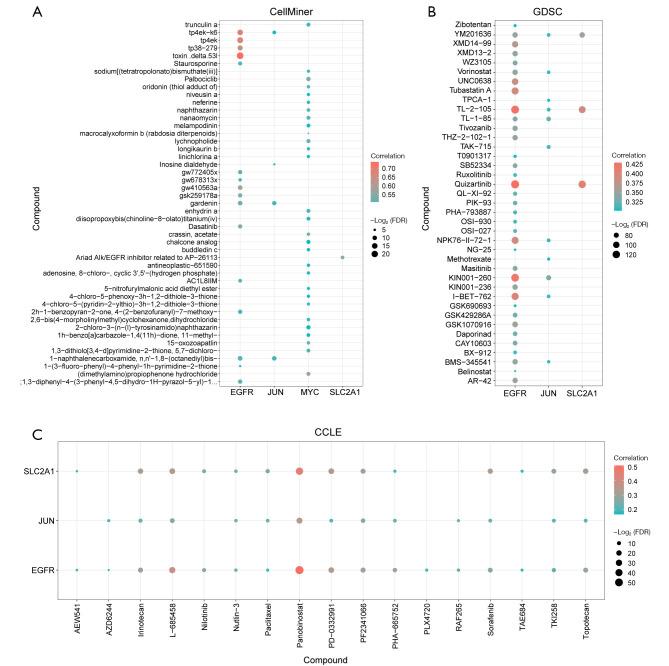
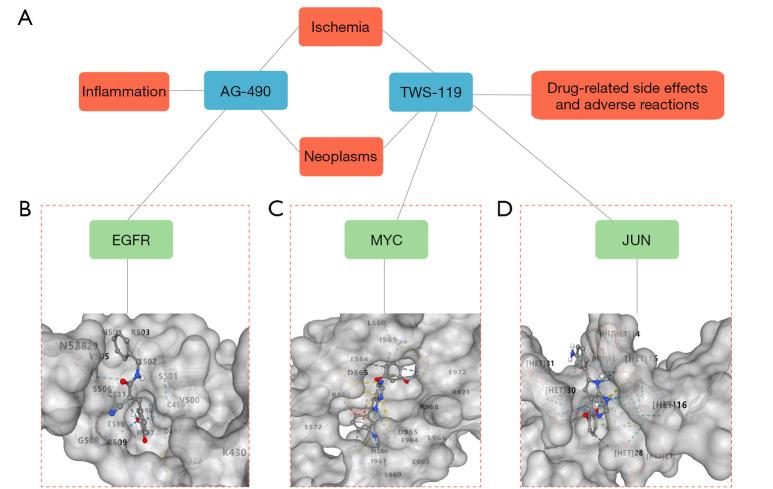
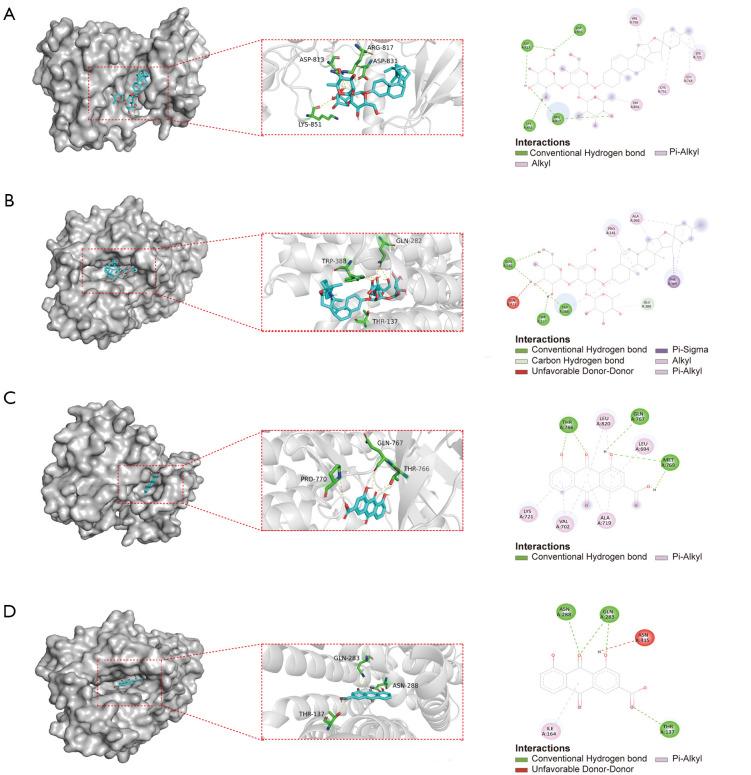
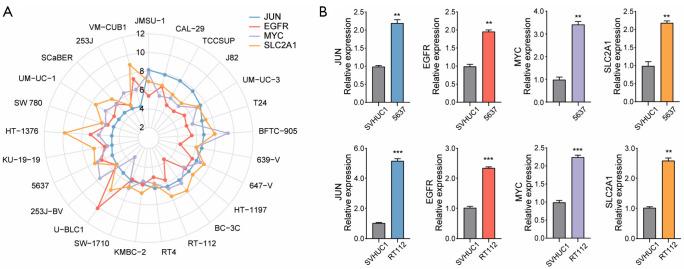
The HRGs were obtained from GeneCards, and the hypoxia score in BC patients was evaluated by single-sample gene set enrichment analysis (ssGSEA). The prognostic risk model was constructed using differentially expressed prognostic HRGs, and assessed via time-dependent receiver operating characteristic (ROC) curves, Kaplan-Meier (KM) curve, and nomogram analysis. Differential features between high- and low-risk groups were analyzed, including clinical characteristics, biological functions, mutation profiles, immune infiltration, and drug sensitivity. We measured the expression of hub genes via quantitative real-time polymerase chain reaction (qRT-PCR), assessed their interactions with special herbal monomers, and evaluated the developmental trajectories using single-cell sequencing data of BC.
RESULTS
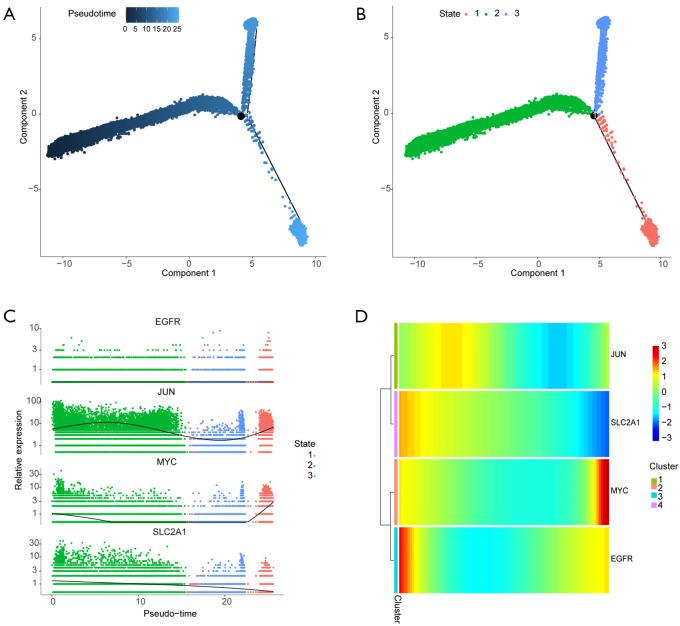
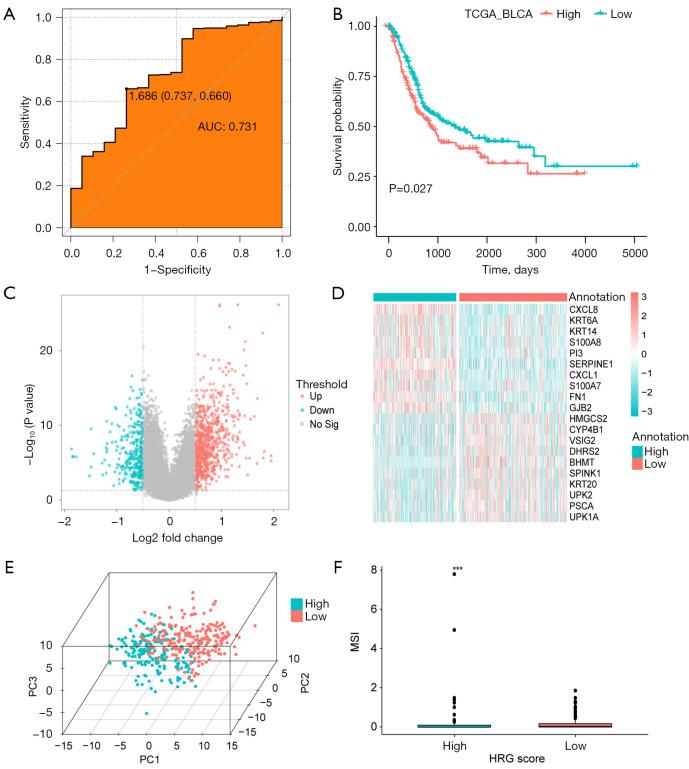
The hypoxia score system was proven effective in BC diagnosis and prognostic prediction based on ROC and KM analyses. The prognostic risk model was constructed with , , , and , and effectively stratified BC risk. Numerous mutations, especially the frequent , occurred in both risk groups. Besides, the high-risk group exhibited more immune cell infiltration. Moreover, solasonine and rhein were predicted to exhibit well binding affinity for hub genes, especially and . Additionally, a predominance of malignant epithelial cells in BC was confirmed using single-cell data, with significant variation in JUN along the developmental trajectory and an increase of at developmental endpoint, highlighting their critical roles in BC progression.
CONCLUSIONS
We developed a novel prognostic risk model as an independent predictor for BC patients, which offers insights into immune microenvironment and carcinogenesis mechanisms of BC. Analyzing mutation patterns, drug sensitivities, and the developmental trajectories of genes within this model would be helpful for refining therapeutic strategies.
背景
缺氧在实体瘤中很常见,它促进肿瘤生长和治疗抗性,对优化患者预后至关重要,但膀胱癌(BC)缺氧机制的研究仍然有限。本研究旨在探讨缺氧相关基因(HRGs)在BC中的功能作用。
方法
从GeneCards获取HRGs,并通过单样本基因集富集分析(ssGSEA)评估BC患者的缺氧评分。使用差异表达的预后HRGs构建预后风险模型,并通过时间依赖的受试者工作特征(ROC)曲线、Kaplan-Meier(KM)曲线和列线图分析进行评估。分析高风险和低风险组之间的差异特征,包括临床特征、生物学功能、突变谱、免疫浸润和药物敏感性。我们通过定量实时聚合酶链反应(qRT-PCR)测量枢纽基因的表达,评估它们与特殊草药单体的相互作用,并使用BC的单细胞测序数据评估发育轨迹。
结果
基于ROC和KM分析,缺氧评分系统在BC诊断和预后预测中被证明是有效的。用 、 、 和 构建了预后风险模型,并有效地对BC风险进行了分层。两个风险组中都出现了大量突变,尤其是频繁的 。此外,高风险组表现出更多的免疫细胞浸润。此外,预测茄碱和大黄酸对枢纽基因具有良好的结合亲和力,尤其是 和 。此外,使用单细胞数据证实了BC中恶性上皮细胞占优势,JUN在发育轨迹上有显著变化,在发育终点增加,突出了它们在BC进展中的关键作用。
结论
我们开发了一种新型的预后风险模型,作为BC患者的独立预测指标,为BC的免疫微环境和致癌机制提供了见解。分析该模型中的突变模式、药物敏感性和基因发育轨迹将有助于完善治疗策略。



 Zotero 插件