
钠-葡萄糖协同转运蛋白2抑制剂在单心室循环衰竭中的超声心动图效应
Echocardiographic effects of sodium-glucose cotransporter 2 inhibitors in single ventricle circulatory failure.
作者信息
Neijenhuis Ralph M L, Regeer Madelien V, Walker Niki L, Hunter Amanda, Kiès Philippine, Holman Eduard R, Jukema J Wouter, Jongbloed Monique R M, Veldtman Gruschen R, Egorova Anastasia D
机构信息
CAHAL, Center for Congenital Heart Disease Amsterdam-Leiden, Leiden University Medical Center, Leiden, the Netherlands.
Department of Cardiology, Leiden University Medical Center, Leiden, the Netherlands.
出版信息
Int J Cardiol Congenit Heart Dis. 2025 Jun 21;21:100603. doi: 10.1016/j.ijcchd.2025.100603. eCollection 2025 Sep.
BACKGROUND
Single ventricle patients are at high risk of developing circulatory failure. There is limited evidence for pharmacological treatment. This study assessed the echocardiographic changes in ventricular function during sodium-glucose cotransporter 2 inhibitor (SGLT2i) therapy in patients with single ventricle failure (SVF).
METHODS
SVF patients with a baseline transthoracic echocardiogram within six months before starting SGLT2i and at least one echocardiographic examination within twelve months follow-up were included from a real-world international registry of adult congenital heart disease patients on SGLT2i. Mixed models were used to evaluate longitudinal changes in ventricular function and differences between patients with SVF with ≥ moderately reduced systolic function (SVFrEF) and with ≤ mildly reduced function (SVFpEF).
RESULTS
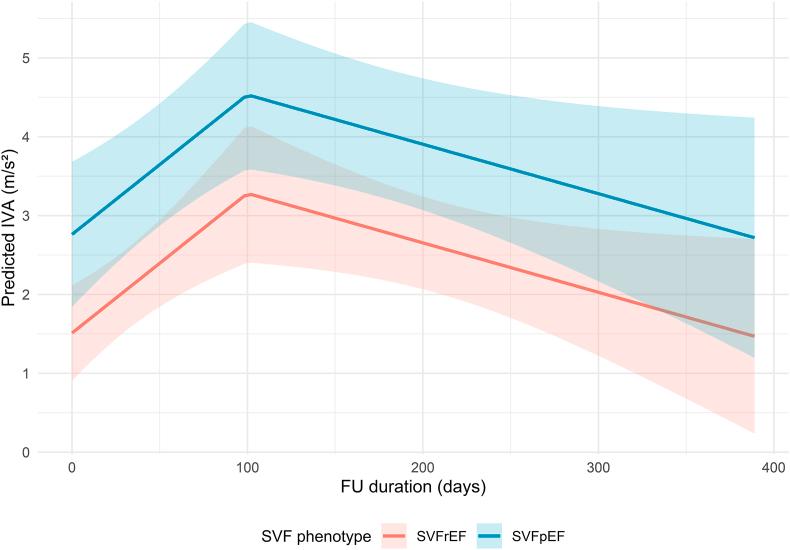
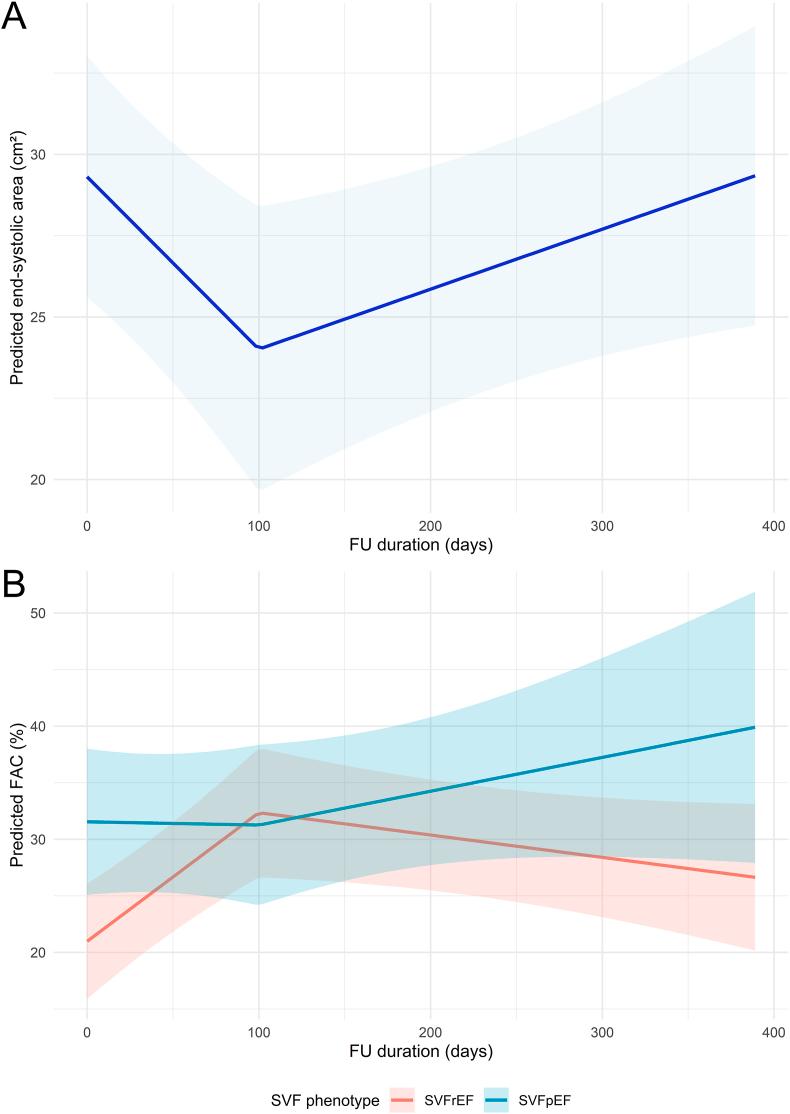
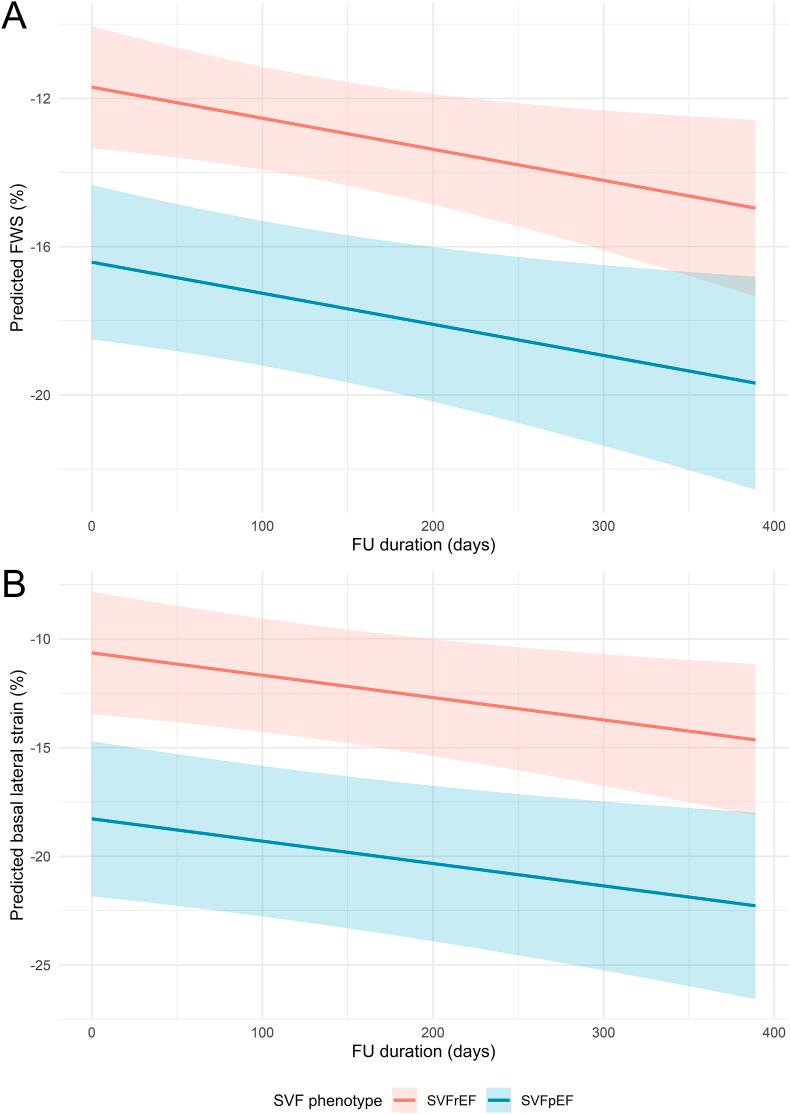
Thirteen patients were included. The median age was 21 [20-42] years, 8 (61.5 %) were female, 10 (76.9 %) had a Fontan circulation, 8 (61.5 %) had SVFrEF, and 5 (38.5 %) SVFpEF at the start of SGLT2i. The mean follow-up was 7.6 ± 3.3 months. End-systolic area decreased significantly in all patients (-1.6 cm per month, p = 0.007) in the first 100 days. Fractional area change improved in the first 100 days in SVFrEF patients (3.5 %-point per month, p < 0.001), while SVFpEF patients remained stable. There was a significant improvement in the free wall strain in all patients (-0.3 %-point per month, p = 0.036) but not in global longitudinal strain (p = 0.087). Isovolumic acceleration also improved in the first 100 days (0.5 m/s per month, p = 0.010).
CONCLUSIONS
Echocardiographic signals of improved ventricular function were observed in the first year of SGLT2i therapy in patients with SVF.
背景
单心室患者发生循环衰竭的风险很高。药物治疗的证据有限。本研究评估了单心室衰竭(SVF)患者在钠-葡萄糖协同转运蛋白2抑制剂(SGLT2i)治疗期间心室功能的超声心动图变化。
方法
从一个关于使用SGLT2i的成人先天性心脏病患者的真实世界国际登记处纳入在开始使用SGLT2i前六个月内有基线经胸超声心动图且在随访十二个月内至少有一次超声心动图检查的SVF患者。使用混合模型评估心室功能的纵向变化以及收缩功能中度降低及以上(SVFrEF)和收缩功能轻度降低及以下(SVFpEF)的SVF患者之间的差异。
结果
纳入了13名患者。中位年龄为21[20 - 42]岁,8名(61.5%)为女性,10名(76.9%)有Fontan循环,在开始使用SGLT2i时,8名(61.5%)有SVFrEF,5名(38.5%)有SVFpEF。平均随访时间为7.6±3.3个月。在开始的100天内,所有患者的收缩末期面积均显著减小(每月-1.6平方厘米,p = 0.007)。SVFrEF患者在开始的100天内心肌面积变化分数有所改善(每月3.5个百分点,p < 0.001),而SVFpEF患者保持稳定。所有患者的游离壁应变有显著改善(每月-0.3个百分点,p = 0.036),但整体纵向应变无改善(p = 0.087)。等容加速在开始的100天内也有所改善(每月0.5米/秒,p = 0.010)。
结论
在SVF患者使用SGLT2i治疗的第一年观察到心室功能改善的超声心动图信号。


 Zotero 插件