
肝移植后肝细胞癌复发的预后列线图,用于术后辅助治疗的决策制定。
Prognostic nomogram for recurrence of hepatocellular carcinoma after liver transplantation for decision making on postoperative adjuvant therapy.
作者信息
Gao Chen-Hao, Yu Qi-Jian, Luo Xing-Yu, Shang Zhao-Xin, Chang Kai-Wun, Wang Shuo, Liu Jian-Peng, Li Jian-Hua, Wang Ji-Zhou, Zheng Shu-Sen, Yang Zhe
机构信息
Department of Hepatobiliary and Pancreatic Surgery, Key Laboratory of Artificial Organs and Computational Medicine in Zhejiang Province, Shulan(Hangzhou)Hospital,Shulan International Medical College,Zhejiang Shuren University, Hangzhou, 310022, P. R. China.
Department of General Surgery, Zhejiang Medical & Health Group Hangzhou Hospital, Hangzhou, Zhejiang, China.
出版信息
Sci Rep. 2025 Jul 23;15(1):26792. doi: 10.1038/s41598-025-12178-1.
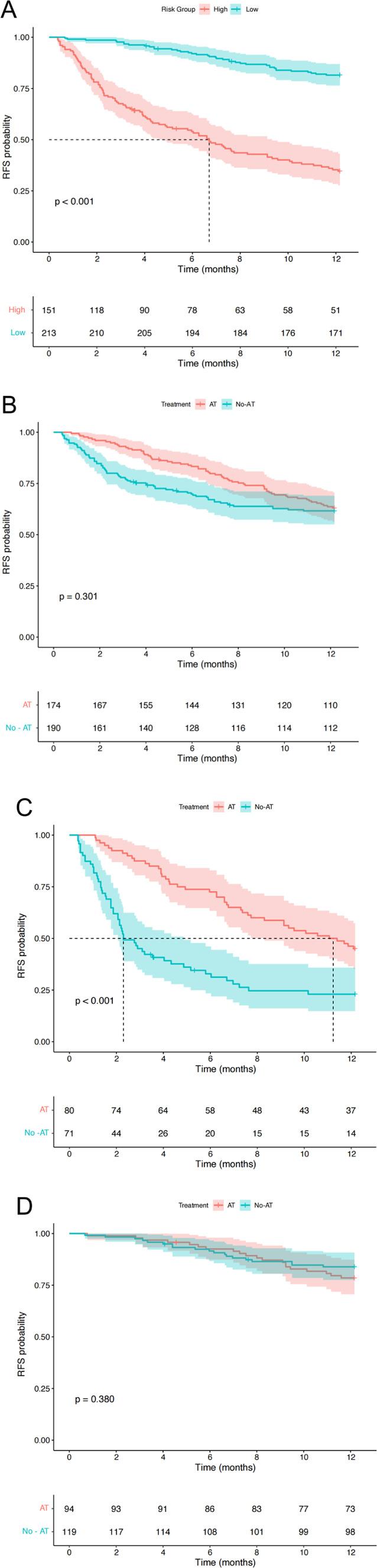
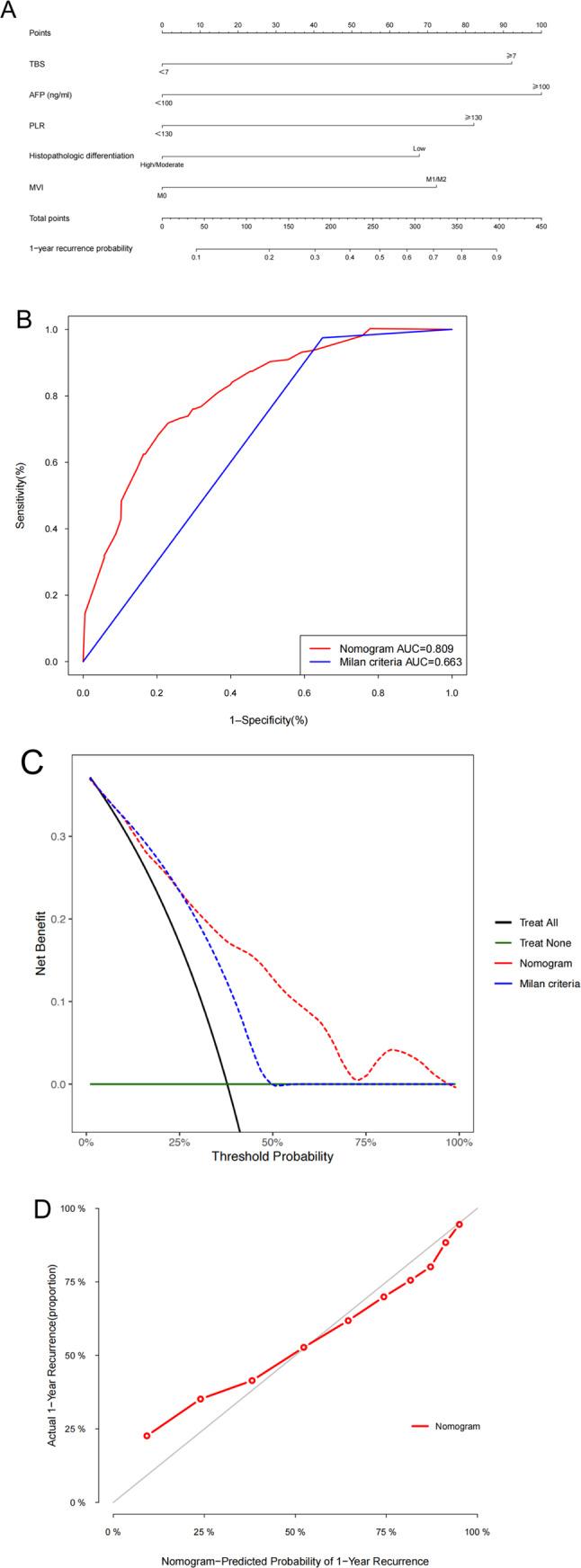
It is well-documented that early recurrence of hepatocellular carcinoma following liver transplantation can markedly impact patient survival. Accurately identifying patients at risk for early recurrence, followed by timely interventions, could greatly improve the long-term efficacy of liver transplantation. The Milan criteria, the clinical gold standard for selecting patients with a low risk of post-transplant recurrence, fails to exclude high-risk patients with biologically aggressive hepatocellular carcinoma. Accordingly, there is an urgent need to develop and validate an improved model for predicting hepatocellular carcinoma post-liver transplantation. Herein, we established a new model to stratify the risk of early hepatocellular carcinoma recurrence following liver transplantation and facilitate decision-making regarding adjuvant therapy. Our newly established nomogram could predict early recurrence post-liver transplantation more effectively than the Milan criteria. Importantly, we found that adjuvant therapy could significantly benefit high-risk recipients but did not significantly affect low-risk recipients. Based on the new stratification criteria, adjuvant therapy should be actively considered for high-risk patients post-liver transplantation, whereas postoperative follow-up and observation are recommended for low-risk patients. Early recurrence of hepatocellular carcinoma (HCC) following liver transplantation (LT) can adversely affect long-term patient survival. The Milan criteria (MC) have limited capacity to predict early HCC recurrence, and no consensus regarding prophylactic adjuvant therapy (AT) after LT has been established. Herein, we developed an accurate model for predicting early HCC recurrence following LT to guide decision-making on AT. Overall, 364 patients with HCC from three transplantation centers in China were included and followed up for one-year post-LT. Baseline data were used to construct a nomogram, comparing performance with the MC. The efficacy of AT was compared between patients stratified into low- and high-risk subgroups based on nomogram scores.The nomogram included tumor burden score, alpha-fetoprotein level, platelet-to-lymphocyte ratio, pathological differentiation, and microvascular invasion as independent predictive factors. The concordance index and the area under the curve of the nomogram were 0·768 (95% confidence interval, 0·753-0·781) and 0·809, respectively, exceeding those of the MC. The results of the calibration curve and decision curve analysis were also satisfactory. Considering the high-risk subgroups, the AT group considerably outperformed the No-AT group in terms of 1-year recurrence-free survival (45·0 vs. 23·0%, P < 0·001). However, the low-risk AT and No-AT groups did not significantly differ (78·5 vs. 83·9%). In patients with HCC, the new nomogram predicted early recurrence post-LT more effectively than the MC. Based on the new stratification criteria, high-risk patients may benefit from AT, whereas AT is not recommended for low-risk patients.
有充分文献记载,肝移植后肝细胞癌的早期复发会显著影响患者生存。准确识别有早期复发风险的患者,随后进行及时干预,可大大提高肝移植的长期疗效。米兰标准作为选择移植后复发风险低的患者的临床金标准,无法排除具有生物学侵袭性肝细胞癌的高风险患者。因此,迫切需要开发并验证一种改进的模型来预测肝移植后肝细胞癌。在此,我们建立了一种新模型,以对肝移植后早期肝细胞癌复发风险进行分层,并促进辅助治疗的决策制定。我们新建立的列线图比米兰标准能更有效地预测肝移植后的早期复发。重要的是,我们发现辅助治疗可使高风险受者显著获益,但对低风险受者无显著影响。基于新的分层标准,肝移植后的高风险患者应积极考虑辅助治疗,而低风险患者建议术后进行随访观察。肝移植(LT)后肝细胞癌(HCC)的早期复发会对患者长期生存产生不利影响。米兰标准(MC)预测早期HCC复发的能力有限,并且对于LT后的预防性辅助治疗(AT)尚未达成共识。在此,我们开发了一种准确的模型来预测LT后早期HCC复发,以指导AT的决策制定。总体而言,纳入了来自中国三个移植中心的364例HCC患者,并在LT后进行了一年的随访。基线数据用于构建列线图,并与MC的性能进行比较。根据列线图评分将患者分为低风险和高风险亚组,比较两组AT的疗效。列线图将肿瘤负荷评分、甲胎蛋白水平、血小板与淋巴细胞比值、病理分化和微血管侵犯作为独立预测因素。列线图的一致性指数和曲线下面积分别为0·768(95%置信区间,0·753 - 0·781)和0·809,超过了MC。校准曲线和决策曲线分析的结果也令人满意。考虑高风险亚组,AT组在1年无复发生存率方面显著优于非AT组(45·0%对23·0%,P < 0·001)。然而,低风险AT组和非AT组之间无显著差异(78·5%对83·9%)。在HCC患者中,新的列线图比MC能更有效地预测LT后的早期复发。基于新的分层标准,高风险患者可能从AT中获益,但不建议低风险患者进行AT。

 Zotero 插件