
抗菌治疗会影响接受治疗和未接受治疗的康复港湾海豹(港海豹,学名Phoca vitulina)的微生物组和耐药基因组。
Antimicrobial treatment affects the microbiome and resistome of both treated and untreated rehabilitating harbour seals (Phoca vitulina).
作者信息
Rubio-Garcia Ana, E C Luiken Roosmarijn, Marcelino Inês, W A Rossen John, H van Zeijl Jan, A Wagenaar Jaap, L Zomer Aldert
机构信息
Veterinary and Research Department, Sealcentre Pieterburen, Pieterburen, The Netherlands.
Division of Infectious Diseases and Immunology, Utrecht University Faculty of Veterinary Medicine, Utrecht, the Netherlands.
出版信息
Anim Microbiome. 2025 Jul 23;7(1):77. doi: 10.1186/s42523-025-00449-1.
BACKGROUND
Antimicrobial use has contributed to the alarming rise of antimicrobial resistance (AMR), posing a significant global health threat. Effective AMR control requires a One Health approach. The presence of AMR in the environment can challenge wildlife conservation, as resistance may reduce treatment success. This study investigates the impact of antimicrobial treatment on the gut microbiome and resistome of harbour seals () undergoing rehabilitation at the Sealcentre Pieterburen, the Netherlands. A longitudinal cohort study was conducted with 200 seals, from which 127 were treated with antimicrobials and 73 were not treated. Samples were collected before and during rehabilitation, including before and after treatment and analysed using 16 S rRNA gene sequencing, shotgun metagenomics, and targeted qPCR.
RESULTS
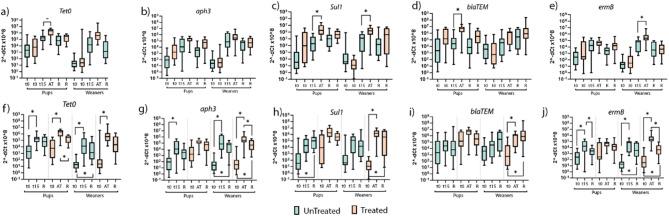
We observed a significant but transient decrease in gut microbiome alpha diversity following antimicrobial treatment, with a recovery observed by the time of release. Beta diversity analysis indicated persistent changes in microbial composition post-treatment. An increase in antimicrobial resistance gene load was observed in treated seals, with some resistance genes remaining high at release. Untreated seals cohabiting with treated seals also exhibited increased resistance gene loads, suggesting exposure through environmental transmission.
CONCLUSIONS
Antimicrobial treatments in rehabilitation settings alter the gut microbiome and enhance AMR gene persistence in seals. The potential risk of antimicrobial resistance transmission among rehabilitating seals suggests the need for antimicrobial stewardship as the risk of antimicrobial resistance contamination by seals returning to the wild is currently unknown.
SUPPLEMENTARY INFORMATION
The online version contains supplementary material available at 10.1186/s42523-025-00449-1.
背景
抗菌药物的使用导致了抗菌药物耐药性(AMR)的惊人上升,对全球健康构成了重大威胁。有效的AMR控制需要采取“同一健康”方法。环境中AMR的存在可能对野生动物保护构成挑战,因为耐药性可能会降低治疗成功率。本研究调查了抗菌治疗对在荷兰皮特布尔恩海豹中心接受康复治疗的港湾海豹肠道微生物群和耐药组的影响。对200只海豹进行了一项纵向队列研究,其中127只接受了抗菌治疗,73只未接受治疗。在康复前和康复期间采集样本,包括治疗前后的样本,并使用16S rRNA基因测序、鸟枪法宏基因组学和靶向定量PCR进行分析。
结果
我们观察到抗菌治疗后肠道微生物群的α多样性显著但短暂下降,在放归时观察到恢复。β多样性分析表明治疗后微生物组成持续变化。在接受治疗的海豹中观察到抗菌耐药基因负荷增加,一些耐药基因在放归时仍处于高位。与接受治疗的海豹同居的未治疗海豹也表现出耐药基因负荷增加,这表明通过环境传播发生了暴露。
结论
康复环境中的抗菌治疗会改变海豹的肠道微生物群,并增强AMR基因在海豹中的持久性。康复海豹之间抗菌药物耐药性传播的潜在风险表明需要进行抗菌药物管理,因为目前尚不清楚放归野外的海豹对抗菌药物耐药性污染的风险。
补充信息
在线版本包含可在10.1186/s42523-025-00449-1获取的补充材料。


 Zotero 插件