
自身免疫性疾病中外周髓系细胞的单细胞转录图谱
Single-cell transcriptional landscape of peripheral myeloid cells in autoimmune diseases.
作者信息
Wang Frank Qingyun, Dang Xiao, Zhang Caicai, Su Huidong, Lei Yao, Chen Xinxin, Yang Jing, Yang Wanling
机构信息
Department of Paediatrics and Adolescent Medicine, The University of Hong Kong, Hong Kong, China.
出版信息
iScience. 2025 Jul 1;28(8):113026. doi: 10.1016/j.isci.2025.113026. eCollection 2025 Aug 15.
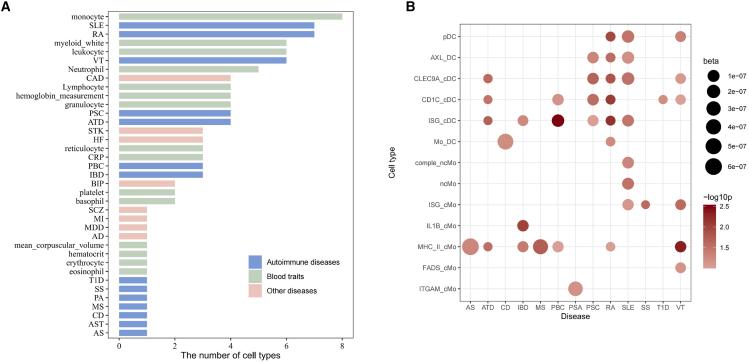
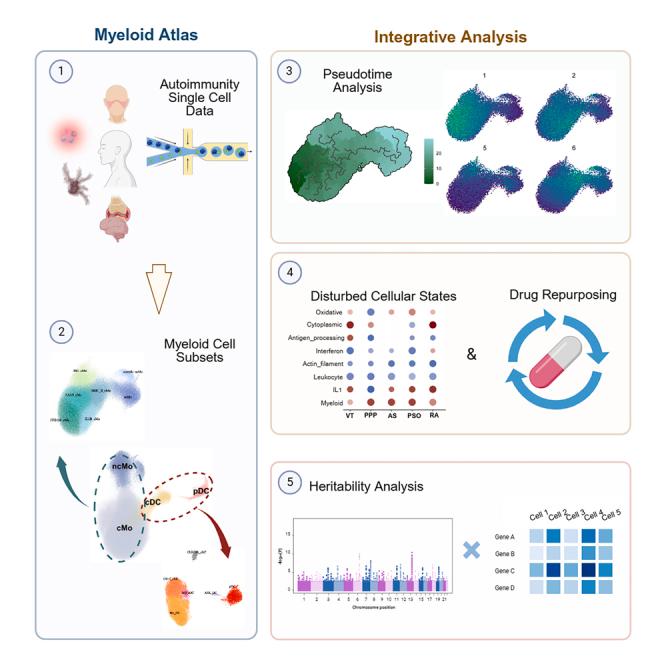
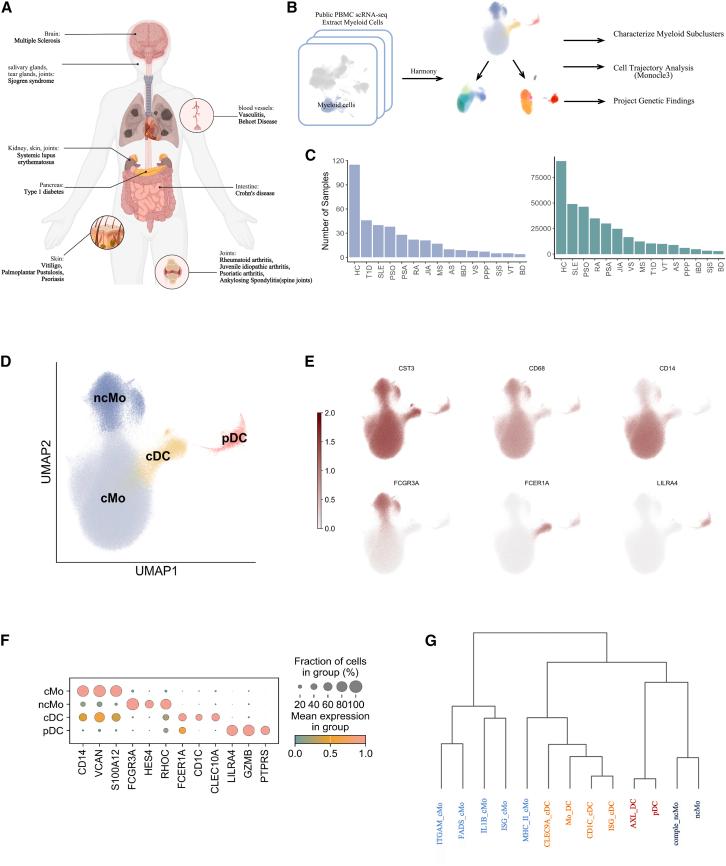
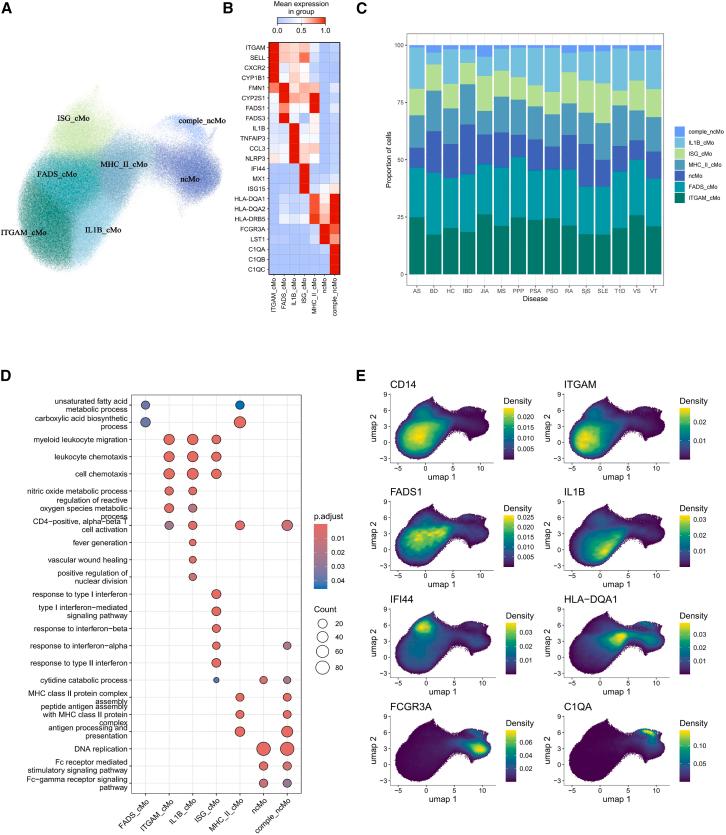
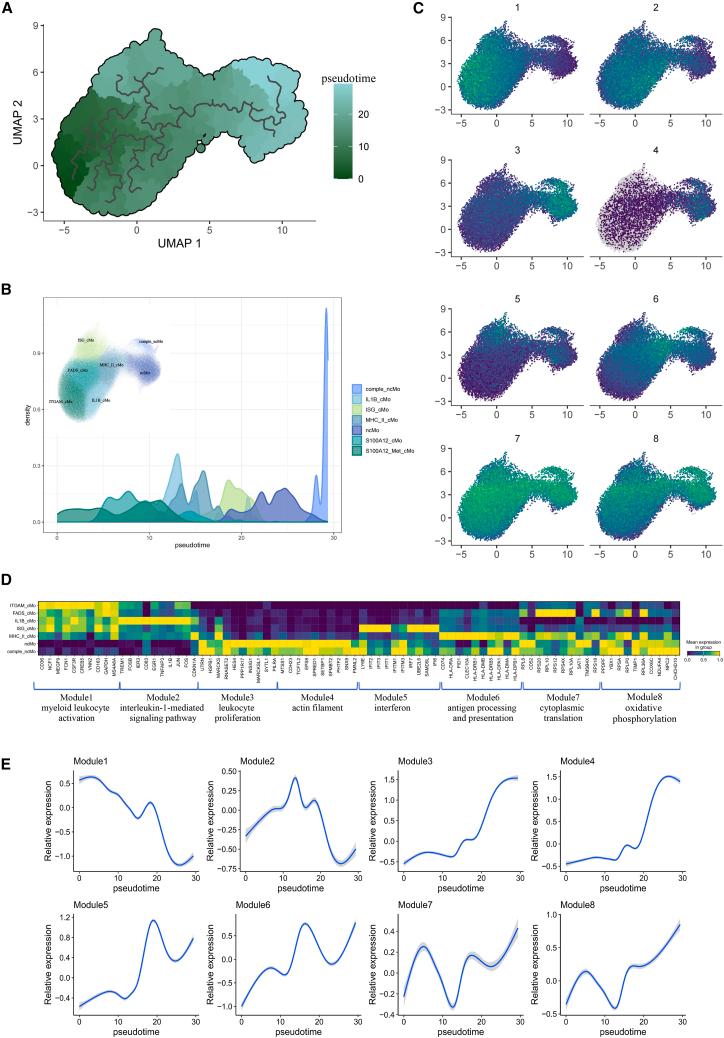
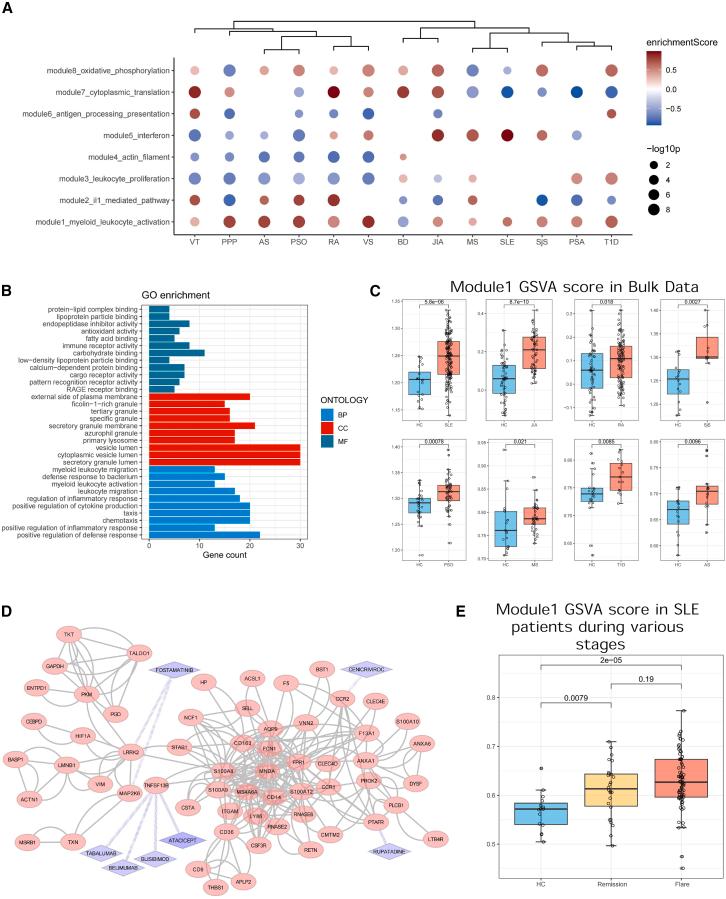
Myeloid cells are pivotal in autoimmune disorder development due to their varied immune response functions yet understanding them at the single-cell level in such conditions is limited. To address this gap, we analyzed 351,905 myeloid cells from 375 single-cell RNA sequencing samples covering 14 autoimmune diseases, which allowed us to classify myeloid cells into 13 distinct subsets with unique immunological profiles. Through pseudotime analysis, we identified a branching process leading to two intermediary inflammatory subtypes and observed dysregulation in eight co-expression modules crucial for monocyte function across autoimmune conditions. Notably, a module linked to myeloid cell activation was consistently upregulated in autoimmune disorders. This insight led us to identify potential drug targets for therapeutic repurposing within the dysregulated modules. By incorporating genetic data from genome-wide association studies, we identified 13 myeloid cell subsets predisposed to varying degrees of risk in different autoimmune conditions.
髓系细胞因其多样的免疫反应功能在自身免疫性疾病的发展中起关键作用,但在这种情况下,在单细胞水平上对它们的了解有限。为了填补这一空白,我们分析了来自375个单细胞RNA测序样本的351,905个髓系细胞,这些样本涵盖了14种自身免疫性疾病,这使我们能够将髓系细胞分类为13个具有独特免疫特征的不同亚群。通过伪时间分析,我们确定了一个导致两种中间炎症亚型的分支过程,并观察到在自身免疫性疾病中对单核细胞功能至关重要的八个共表达模块的失调。值得注意的是,与髓系细胞激活相关的一个模块在自身免疫性疾病中持续上调。这一见解使我们能够在失调的模块中确定潜在的药物靶点用于治疗性再利用。通过纳入全基因组关联研究的遗传数据,我们确定了13个髓系细胞亚群在不同的自身免疫性疾病中易患不同程度的风险。


 Zotero 插件