
脊柱裂和先天性膈疝的分子、代谢及环境因素综合综述:对发病机制及新兴疗法的见解
Integrative Review of Molecular, Metabolic, and Environmental Factors in Spina Bifida and Congenital Diaphragmatic Hernia: Insights into Mechanisms and Emerging Therapeutics.
作者信息
Buczyńska Angelika, Sidorkiewicz Iwona, Kosiński Przemysław, Krętowski Adam Jacek, Zbucka-Krętowska Monika
机构信息
Clinical Research Centre, Medical University of Białystok, ul. M. Skłodowskiej-Curie 24a, 15-276 Białystok, Poland.
Clinical Research Support Centre, Medical University of Białystok, ul. M. Waszyngtona 17, 15-276 Białystok, Poland.
出版信息
Cells. 2025 Jul 10;14(14):1059. doi: 10.3390/cells14141059.
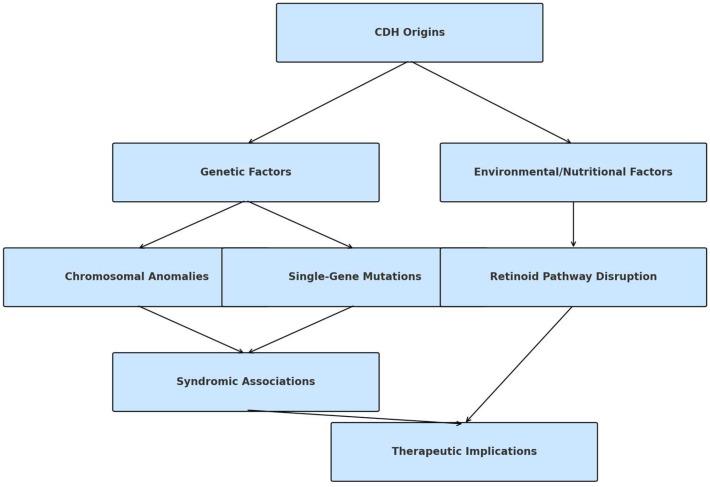
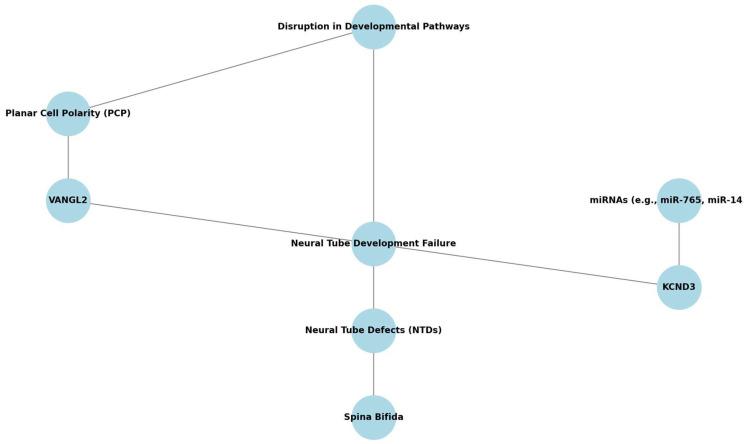
Spina Bifida (SB) and Congenital Diaphragmatic Hernia (CDH) are complex congenital anomalies that pose significant challenges in pediatric healthcare. This review synthesizes recent advancements in understanding the genetic, metabolic, and environmental factors contributing to these conditions, with the aim of integrating mechanistic insights into therapeutic innovations. In SB, key findings highlight the roles of , a critical regulator of spinal cord development, and , essential for planar cell polarity and neural tube closure. MicroRNAs such as miR-765 and miR-142-3p are identified as key regulators of these genes, influencing neural development. Additionally, telomere shortening-a marker of cellular senescence-alongside disruptions in folate metabolism and maternal nutritional deficiencies, significantly increases the risk of SB. These findings underscore the crucial role of telomere integrity in maintaining neural tissue homeostasis during embryonic development. For CDH, genetic deletions, including those on chromosome 15q26, and chromosomal abnormalities have been shown to disrupt lung and vascular development, profoundly impacting neonatal outcomes. MicroRNAs miR-379-5p and miR-889-3p are implicated in targeting essential genes such as and , which play pivotal roles in pulmonary function. Promising emerging therapies, including degradable tracheal plugs and fibroblast growth factor-based treatments, offer potential strategies for mitigating pulmonary hypoplasia and improving clinical outcomes. This review underscores the intricate interplay of genetic, metabolic, and environmental pathways in SB and CDH, identifying critical molecular targets for diagnostics and therapeutic intervention. By integrating findings from genetic profiling, in vitro models, and clinical studies, it aims to inform future research directions and optimize patient outcomes through collaborative, multidisciplinary approaches.
脊柱裂(SB)和先天性膈疝(CDH)是复杂的先天性异常疾病,给儿科医疗保健带来了重大挑战。本综述综合了在理解导致这些疾病的遗传、代谢和环境因素方面的最新进展,旨在将机制性见解整合到治疗创新中。在脊柱裂方面,关键发现突出了 (脊髓发育的关键调节因子)和 (对平面细胞极性和神经管闭合至关重要)的作用。诸如miR - 765和miR - 142 - 3p等微小RNA被确定为这些基因的关键调节因子,影响神经发育。此外,端粒缩短(细胞衰老的标志物)以及叶酸代谢紊乱和母体营养缺乏,显著增加了脊柱裂的风险。这些发现强调了端粒完整性在胚胎发育过程中维持神经组织稳态的关键作用。对于先天性膈疝,包括15q26染色体上的缺失在内的基因缺失和染色体异常已被证明会破坏肺和血管发育,对新生儿结局产生深远影响。微小RNA miR - 379 - 5p和miR - 889 - 3p参与靶向诸如 和 等关键基因,这些基因在肺功能中起关键作用。有前景的新兴疗法,包括可降解气管塞和基于成纤维细胞生长因子的治疗方法,为减轻肺发育不全和改善临床结局提供了潜在策略。本综述强调了脊柱裂和先天性膈疝中遗传、代谢和环境途径的复杂相互作用,确定了诊断和治疗干预的关键分子靶点。通过整合基因谱分析、体外模型和临床研究的结果,其旨在为未来的研究方向提供信息,并通过协作性的多学科方法优化患者结局。
 Zotero 插件