
开始腹膜透析的成年人中尿毒症毒素与肠道微生物群之间的关联
Associations Between Uraemic Toxins and Gut Microbiota in Adults Initiating Peritoneal Dialysis.
作者信息
James Philippa, Stanford Jordan, Dixit Ojas V A, Nicdao Mary Ann, McWhinney Brett, Sud Kamal, Ryan Michele, Read Scott, Ahlenstiel Golo, Lambert Kelly, O'Brien Claire, Chau Katrina
机构信息
School of Medicine, Western Sydney University, Campbelltown, NSW 2560, Australia.
School of Medical, Indigenous and Health Sciences, Faculty of Science, Medicine and Health, University of Wollongong, Wollongong, NSW 2522, Australia.
出版信息
Toxins (Basel). 2025 Jul 1;17(7):334. doi: 10.3390/toxins17070334.
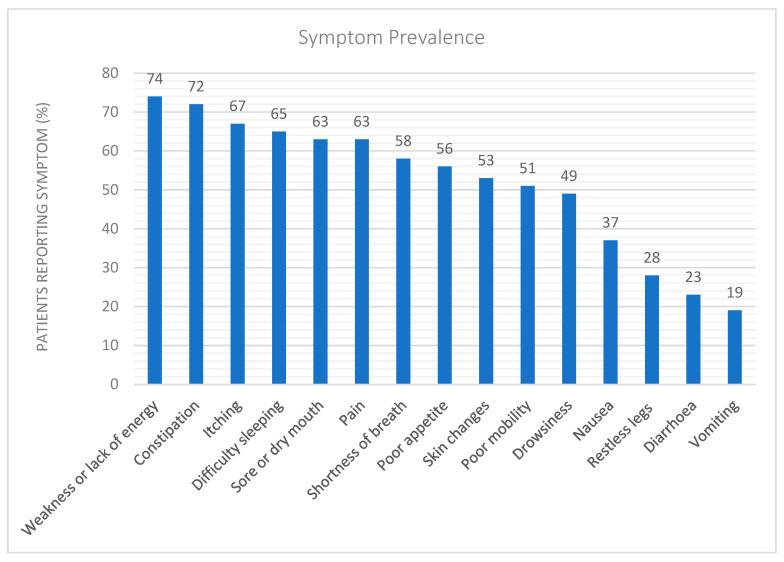
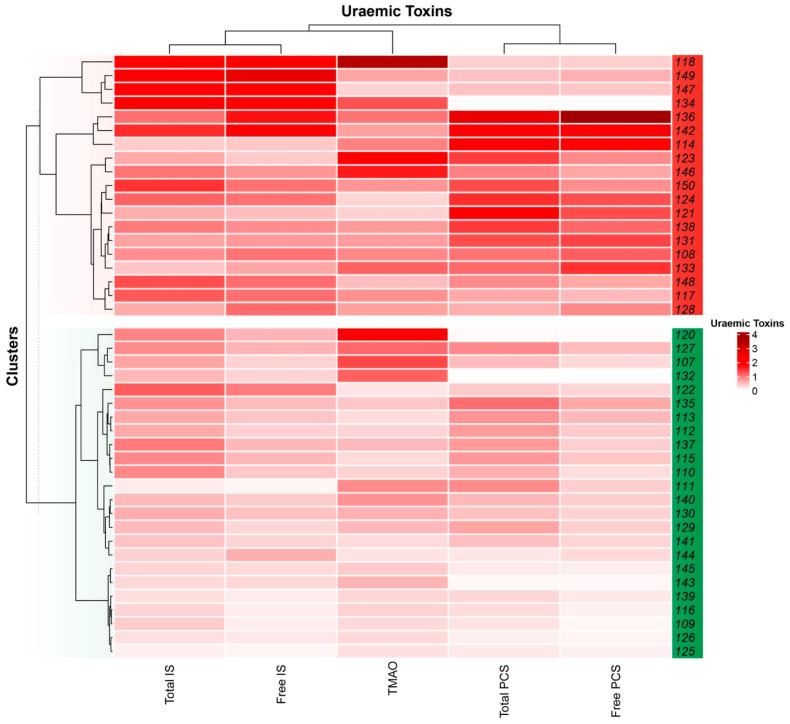
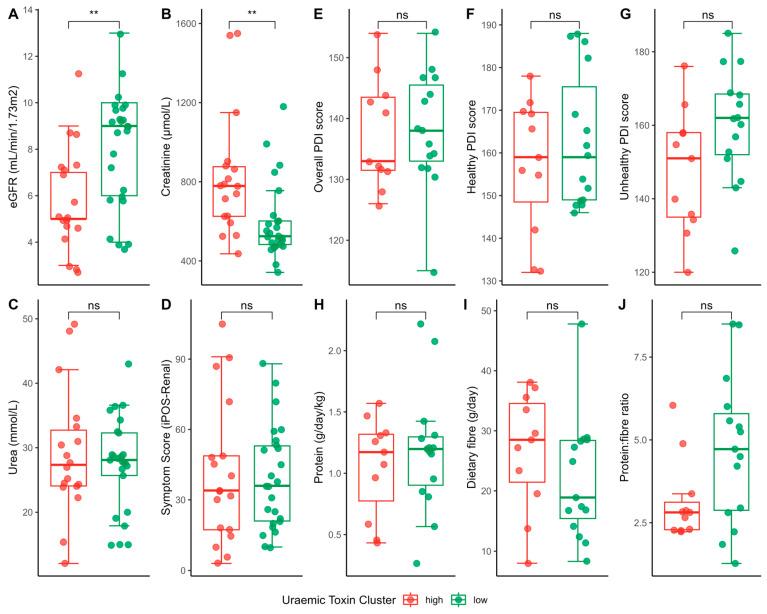
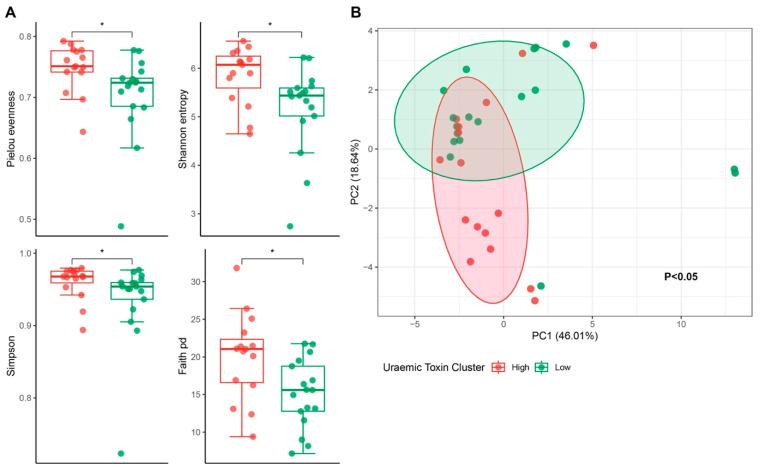
Declining kidney function contributes to the accumulation of uraemic toxins produced by gut microbiota, leading to the uraemic syndrome. This study aimed to identify associations between uraemic toxins, diet quality, symptoms and the gut microbiota in individuals initiating peritoneal dialysis. A cross-sectional analysis of baseline data from participants in a longitudinal study was conducted. Symptom scores using the Integrated Palliative Care Outcomes Scale-Renal were recorded. Plasma p-Cresyl sulfate, indoxyl sulfate and trimethylamine N-oxide were measured using liquid chromatography-mass spectrometry. Gut microbiota was determined using 16S rRNA sequencing. Multivariate linear models examined associations across the cohort. Data from 43 participants (mean age 61 ± 13 years; 70% male; median eGFR 7 mL/min/1.73 m) were analysed. Diabetes was the primary cause of kidney disease (51.2%). Patients were classified into 'high' ( = 18) and 'low' ( = 26) uraemic toxin groups using K-means clustering. The 'high' group had a lower eGFR ( < 0.05) but no differences in diet quality or symptom scores. Significant differences in alpha and beta diversity were observed between the groups ( = 0.01). The 'high' group had increased , , , and decreased abundances. Multivariate models identified 32 genera associated with uraemic toxins, including positive associations of UCG-002 and UCG-005 with p-cresyl sulfate, and negative associations with and . Patients with kidney failure initiating peritoneal dialysis have distinct uraemic toxin profiles, associated with differences in microbial diversity. This phenotype was also associated with differences in residual kidney function but not with diet or symptom severity. Longitudinal studies are required to determine causality and guide therapeutic interventions.
肾功能下降会导致肠道微生物群产生的尿毒症毒素积累,进而引发尿毒症综合征。本研究旨在确定开始腹膜透析的个体中尿毒症毒素、饮食质量、症状与肠道微生物群之间的关联。对一项纵向研究参与者的基线数据进行了横断面分析。记录了使用综合姑息治疗结局量表-肾脏版得出的症状评分。采用液相色谱-质谱法测定血浆对甲酚硫酸盐、吲哚硫酸盐和氧化三甲胺。使用16S rRNA测序确定肠道微生物群。多变量线性模型检验了整个队列中的关联。分析了43名参与者的数据(平均年龄61±13岁;70%为男性;估算肾小球滤过率中位数为7 mL/min/1.73 m²)。糖尿病是肾病的主要病因(51.2%)。使用K均值聚类将患者分为“高”(n = 18)和“低”(n = 26)尿毒症毒素组。“高”组的估算肾小球滤过率较低(P < 0.05),但饮食质量或症状评分无差异。两组之间在α和β多样性方面观察到显著差异(P = 0.01)。“高”组的[具体菌属1]、[具体菌属2]、[具体菌属3]和[具体菌属4]丰度增加,[具体菌属5]丰度降低。多变量模型确定了32个与尿毒症毒素相关的菌属,包括UCG - 002和UCG - 005与对甲酚硫酸盐呈正相关,与[具体菌属6]和[具体菌属7]呈负相关。开始腹膜透析的肾衰竭患者具有独特的尿毒症毒素谱,与微生物多样性差异相关。这种表型也与残余肾功能差异相关,但与饮食或症状严重程度无关。需要进行纵向研究以确定因果关系并指导治疗干预。

 Zotero 插件