
探索西非改善抗生素使用行为改变的现状与发展策略:一项多学科干预研究项目方案
Exploring the Current Situation and Developing Strategies for Behavior Change to Improve Antibiotic Use in West Africa: Protocol for a Multidisciplinary Interventional Research Project.
作者信息
Neuerer Maresa, Baxerres Carine, Dekker Denise, Bila Blandine, Arhinful Daniel, Aglanu Leslie Mawuli, Akenten Charity Wiafe, Coulibaly Boubacar, Sié Ali, Amuasi John Humphrey, Souares Aurélia
机构信息
Heidelberg Institute of Global Health, Heidelberg University, Heidelberg, Germany.
Institut de Recherche pour le Développement, Laboratoire Population Environnement Développement, Aix-Marseille Université, Marseille, France.
出版信息
JMIR Res Protoc. 2025 Jul 25;14:e66424. doi: 10.2196/66424.
BACKGROUND
Antimicrobial resistance (AMR) is recognized as a global concern, with particularly severe consequences in low- and middle-income countries. Although it may occur naturally, it is also an anthropogenic problem linked to the irrational use of antibiotics in humans and animal husbandry and the use of pesticides in plant agriculture. Generally, data on AMR and evidence of effective and feasible multifaceted interventions are limited in many African countries.
OBJECTIVE
This study aims at (1) assessing baseline data on AMR pathogens in Burkina Faso and Ghana; (2) understanding perceptions and quantifying use of antibiotics among health care workers, communities, and livestock farmers; and (3) defining and refining an AMR intervention using a design thinking approach.
METHODS
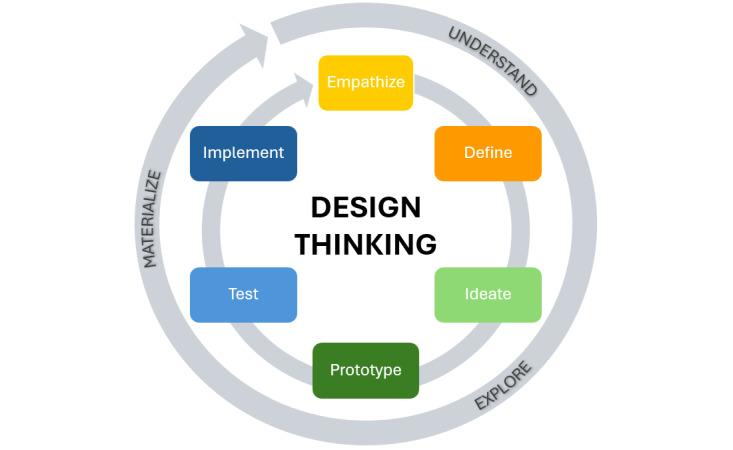
This multidisciplinary study will be conducted in two rural districts and will consist of two phases. First, baseline data will be collected on AMR pathogens along dominant food production chains. extended-spectrum beta-lactamase (ESBL)-producing Escherichia coli and Klebsiella pneumoniae will be selected as indicator mechanisms for AMR because of their high occurrence among animals and humans. The perception and understanding of AMR and antibiotic use among different stakeholders and community members will be assessed using epidemiologic and socio-anthropological methods. Qualitative methods will include participant observations, in-depth and key informant interviews, and focus group discussions. The quantitative part will consist of the development of an inventory of circulating antibiotics and a household survey. Second, key informant and in-depth interviews will be conducted with One Health stakeholders in preparation for the intervention development. Subsequently, multidisciplinary "design teams" will develop ideas for an intervention on AMR using a design thinking approach.
RESULTS
Data collection started in April 2022. The analysis of microbiological, anthropological, and socio-epidemiological data is ongoing in both countries. The intervention development has been initiated in Ghana but has not started yet in Burkina Faso. All results are planned to be submitted to peer-reviewed journals by December 2025. First, manuscripts will be published for each discipline. Afterward, the results of the 3 disciplines will be combined in multidisciplinary papers, and a publication of the evaluation of the intervention will follow.
CONCLUSIONS
Owing to the multifactorial nature of AMR, different perspectives need to be considered to develop a holistic context-based intervention that is tailored to local needs. This study stands out in its combination of different disciplinary and epistemological perspectives following the One Health paradigm and taking a design thinking approach to develop an intervention. Thereby, collaboration across disciplines and social levels and a participatory bottom-up approach will be promoted to achieve a common understanding of problems and needs and to develop an accepted and efficacious intervention. The national AMR networks and policymakers will be continuously involved in the project.
INTERNATIONAL REGISTERED REPORT IDENTIFIER (IRRID): DERR1-10.2196/66424.
背景
抗菌药物耐药性(AMR)被视为一个全球关注的问题,在低收入和中等收入国家会产生特别严重的后果。虽然它可能自然发生,但也是一个人为问题,与人类和畜牧业中抗生素的不合理使用以及植物农业中农药的使用有关。一般来说,许多非洲国家关于抗菌药物耐药性的数据以及有效可行的多方面干预措施的证据都很有限。
目的
本研究旨在(1)评估布基纳法索和加纳抗菌药物耐药性病原体的基线数据;(2)了解医护人员、社区和牲畜养殖户对抗生素的认知并量化其使用情况;(3)使用设计思维方法定义并完善一项抗菌药物耐药性干预措施。
方法
这项多学科研究将在两个农村地区进行,包括两个阶段。首先,将沿着主要粮食生产链收集抗菌药物耐药性病原体的基线数据。产超广谱β-内酰胺酶(ESBL)的大肠杆菌和肺炎克雷伯菌将被选为抗菌药物耐药性的指示机制,因为它们在动物和人类中普遍存在。将使用流行病学和社会人类学方法评估不同利益相关者和社区成员对抗菌药物耐药性和抗生素使用的认知与理解。定性方法将包括参与观察、深入访谈和关键信息提供者访谈以及焦点小组讨论。定量部分将包括编制流通抗生素清单和进行家庭调查。其次,将与“同一个健康”利益相关者进行关键信息提供者访谈和深入访谈,为干预措施的制定做准备。随后,多学科“设计团队”将使用设计思维方法制定抗菌药物耐药性干预措施的想法。
结果
数据收集于2022年4月开始。两个国家的微生物学、人类学和社会流行病学数据的分析正在进行中。加纳已经启动了干预措施的制定,但布基纳法索尚未开始。所有结果计划在2025年12月前提交给同行评审期刊。首先,将为每个学科发表手稿。之后,将把这三个学科的结果合并在多学科论文中,并随后发表干预措施的评估报告。
结论
由于抗菌药物耐药性的多因素性质,需要考虑不同的观点,以制定一个基于当地情况的全面干预措施,满足当地需求。本研究在遵循“同一个健康”范式并采用设计思维方法制定干预措施方面,将不同学科和认识论观点结合起来,颇具特色。从而将促进跨学科和社会层面的合作以及自下而上的参与式方法,以达成对问题和需求的共同理解,并制定出被接受且有效的干预措施。国家抗菌药物耐药性网络和政策制定者将持续参与该项目。
国际注册报告识别号(IRRID):DERR1-10.2196/66424。

 Zotero 插件