
髋关节置换术后谵妄与褪黑素节律丧失之间的关联:一项初步研究。
Association Between Postoperative Delirium and Loss of Melatonin Rhythm After Hip Arthroplasty: A Pilot Study.
作者信息
Pérez-Alavéz Julio C, Castañeda-López Jesús T, Nieto-Nino Andrea G, Rojas-Granados Adelina, Angeles-Castellanos Manuel
机构信息
Orthopedic Service, Grupo Angeles Hospital, Mexico City, MEX.
Orthopedic Service, Xoco General Hospital, Mexico City, MEX.
出版信息
Cureus. 2025 Jun 25;17(6):e86728. doi: 10.7759/cureus.86728. eCollection 2025 Jun.
INTRODUCTION
The development of in-hospital postoperative delirium is one of the most common adverse complications in older patients. It can complicate the clinical course and prognosis, leading to patient deterioration. Its incidence is high, affecting up to 55% of patients undergoing procedures such as hip arthroplasty.
MATERIAL AND METHODS
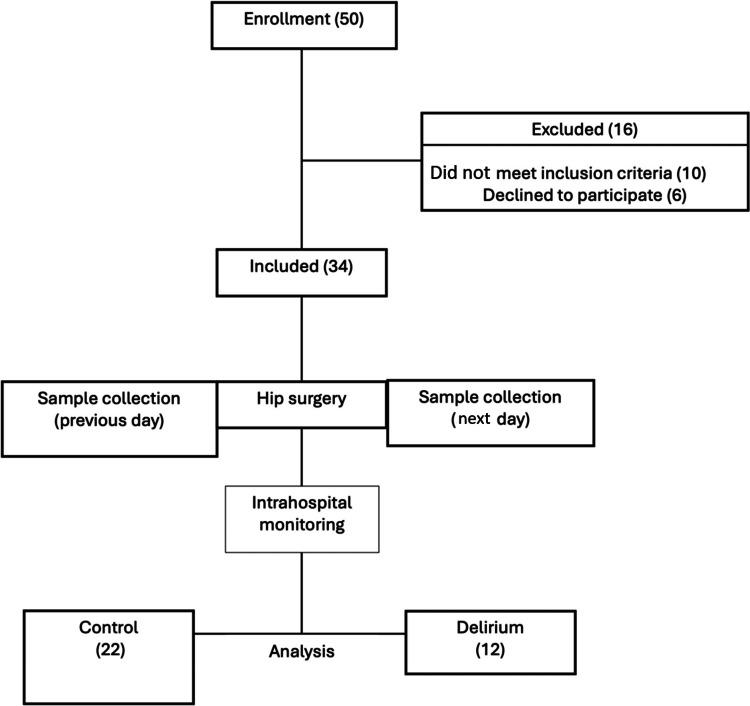
Thirty-four hospitalized patients aged 60 years and older with a diagnosis of hip fracture, but without delirium at admission, were included in the study. Daytime and nighttime saliva samples were collected one day before and one day after surgery. Pre- and postoperative melatonin levels were analyzed. Patients were then divided into two groups for comparison: those who developed delirium and those who did not.
RESULTS
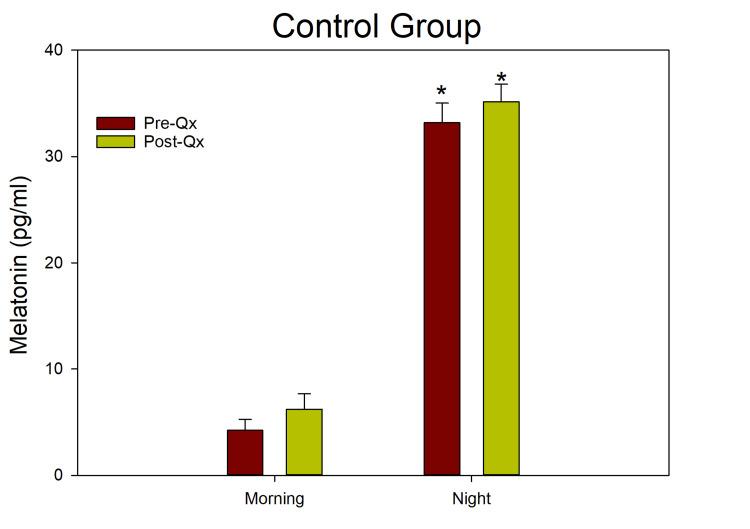
Postoperative delirium was observed in 35.29% of patients. In the control group, salivary melatonin levels showed low concentrations during the day and high levels at night, indicating a preserved daily rhythm in melatonin secretion (F(1,33) = 82.639; p < 0.001). This pattern was consistent before and after surgery. In contrast, the delirium group also showed a diurnal rhythm with low morning and high evening melatonin levels before and after surgery, but without a statistically significant difference (F(1,22) = 0.225; p = N/A).
CONCLUSIONS
This study concludes that assessing melatonin levels during both light and dark phases is important to determine whether the circadian rhythm of melatonin secretion has been disrupted. This information may help guide the use of melatonin to prevent or anticipate the development of postoperative delirium.
引言
医院内术后谵妄的发生是老年患者最常见的不良并发症之一。它会使临床病程和预后复杂化,导致患者病情恶化。其发病率很高,高达55%接受髋关节置换术等手术的患者会受到影响。
材料与方法
本研究纳入了34名60岁及以上的住院患者,这些患者被诊断为髋部骨折,入院时无谵妄。在手术前一天和手术后一天收集白天和夜间的唾液样本。分析术前和术后褪黑素水平。然后将患者分为两组进行比较:发生谵妄的患者和未发生谵妄的患者。
结果
35.29%的患者出现术后谵妄。在对照组中,唾液褪黑素水平白天浓度低,夜间浓度高,表明褪黑素分泌的每日节律保持正常(F(1,33)=82.639;p<0.001)。这种模式在手术前后是一致的。相比之下,谵妄组在手术前后也显示出昼夜节律,早晨褪黑素水平低,晚上褪黑素水平高,但无统计学显著差异(F(1,22)=0.225;p=无数据)。
结论
本研究得出结论,评估昼夜阶段的褪黑素水平对于确定褪黑素分泌的昼夜节律是否被打乱很重要。这些信息可能有助于指导使用褪黑素预防或预测术后谵妄的发生。


 Zotero 插件