
尤加尼热泥中微生物多糖对斑马鱼抗炎途径的调节作用
Anti-Inflammatory Pathways Modulated by Microbial Polysaccharides from Euganean Thermal Muds in Zebrafish.
作者信息
Caichiolo Micol, Zampieri Raffaella Margherita, Terrin Francesca, Tesoriere Annachiara, Caldara Fabrizio, La Rocca Nicoletta, Martini Paolo, Dalla Valle Luisa
机构信息
Department of Biology, University of Padova, Via U. Bassi 58/b, 35131 Padova, Italy.
Pietro d'Abano Thermal Studies Center, Via Jappelli 5, 35031 Padova, Italy.
出版信息
Antioxidants (Basel). 2025 Jul 17;14(7):878. doi: 10.3390/antiox14070878.
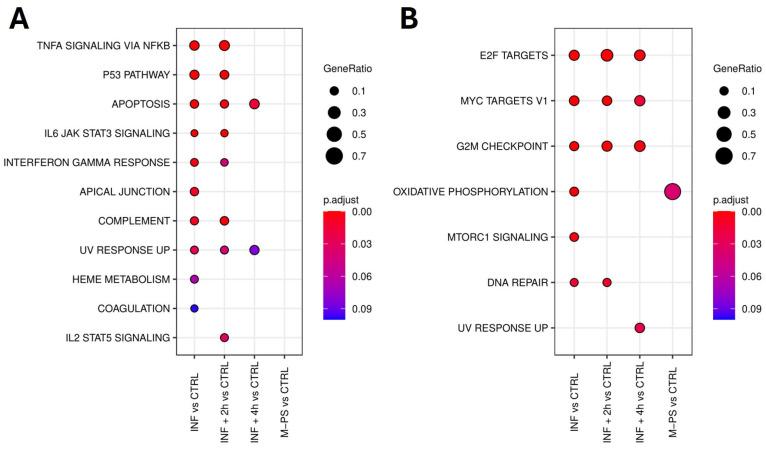
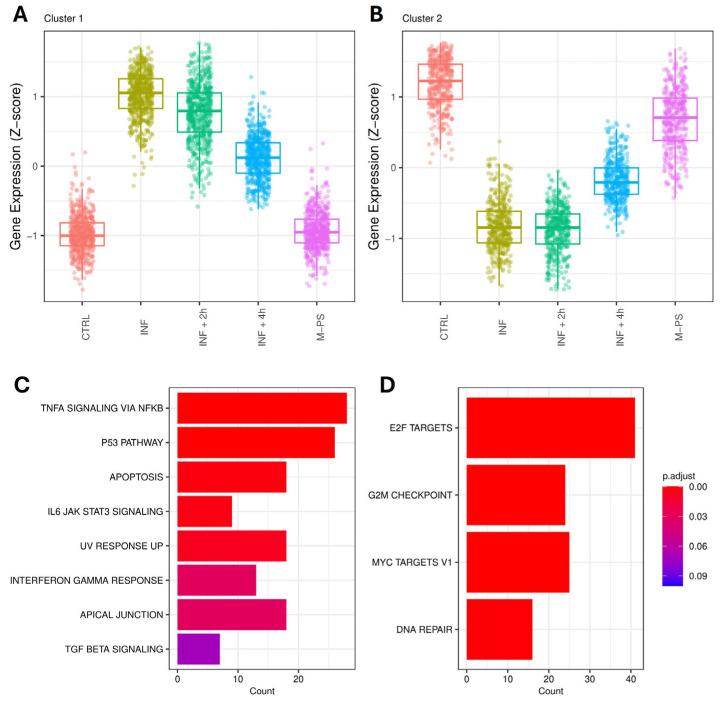
Thermal mud produced by spas of the Euganean Thermal District (Italy) has been used since ancient times for therapeutic purposes. Recently, the anti-inflammatory activity of microbial polysaccharides (M-PS), extracted from traditionally maturated muds, was demonstrated using the zebrafish model organism. However, the downstream signalling pathways regulated by M-PS remain largely unknown. In this study, to investigate the underlying mechanisms of inflammation resolution, we performed a transcriptome analysis on zebrafish larvae inflamed with copper sulphate and treated with M-PS. Our findings revealed that M-PS treatment down-regulated the expression of key genes involved in several inflammatory pathways. Gene Set Enrichment Analysis identified eleven up-regulated pathways (e.g., TNF-α signalling via NFκB, IL6-JAK-STAT signalling, p53 pathway, apoptosis, and interferon response) with components reduced in number and expression level in M-PS-treated larvae compared to the inflamed ones. Additionally, seven down-regulated pathways were identified (e.g., transcription factors E2F, MYC, and the G2M checkpoint). DEG-pseudotime analysis further confirmed the association of these genes with the pathways identified by GSEA. These results provide valuable insights into the anti-inflammatory properties of M-PS and the therapeutic potential of Euganean thermal muds for inflammatory diseases.
意大利尤加尼安热区温泉产生的热泥自古以来就被用于治疗目的。最近,利用斑马鱼模式生物证明了从传统成熟泥中提取的微生物多糖(M-PS)的抗炎活性。然而,M-PS调节的下游信号通路在很大程度上仍然未知。在本研究中,为了探究炎症消退的潜在机制,我们对用硫酸铜致炎并用M-PS处理的斑马鱼幼虫进行了转录组分析。我们的研究结果表明,M-PS处理下调了参与多种炎症途径的关键基因的表达。基因集富集分析确定了11条上调途径(例如,通过NFκB的TNF-α信号传导、IL6-JAK-STAT信号传导、p53途径、细胞凋亡和干扰素反应),与发炎幼虫相比,M-PS处理的幼虫中这些途径的成分数量和表达水平降低。此外,还确定了7条下调途径(例如,转录因子E2F、MYC和G2M检查点)。差异表达基因的伪时间分析进一步证实了这些基因与基因集富集分析确定的途径之间的关联。这些结果为M-PS的抗炎特性以及尤加尼安热泥对炎症性疾病的治疗潜力提供了有价值的见解。




 Zotero 插件