
利用甘草素:一种基于黄酮类化合物的癌症预防和治疗方法。
Harnessing Liquiritigenin: A Flavonoid-Based Approach for the Prevention and Treatment of Cancer.
作者信息
Sajeev Anjana, Aswani Babu Santha, Alqahtani Mohammed S, Abbas Mohamed, Sethi Gautam, Kunnumakkara Ajaikumar B
机构信息
Cancer Biology Laboratory, Department of Biosciences and Bioengineering, Indian Institute of Technology Guwahati (IITG), Guwahati 781039, Assam, India.
Radiological Sciences Department, College of Applied Medical Sciences, King Khalid University, Abha 61421, Saudi Arabia.
出版信息
Cancers (Basel). 2025 Jul 13;17(14):2328. doi: 10.3390/cancers17142328.
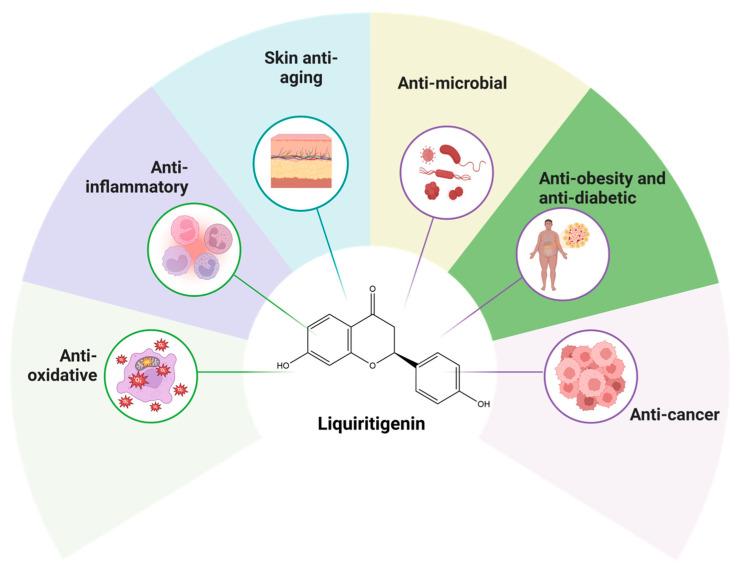
BACKGROUND/OBJECTIVES: The integration of natural compounds in cancer research marked a crucial shift in the modern medical landscape, through a growing acknowledgment of their potential as efficient, less toxic, and cost-effective alternatives to contemporary chemotherapeutics. Liquiritigenin (LIQ) is a compound obtained from different plants, the most important being the species, commonly known as licorice.
METHODS
This review compiles findings from previously published preclinical studies and experimental research articles focusing on LIQ's pharmacological effects, with particular attention to its anticancer potential. The relevant literature was identified using established scientific databases and selected based on relevance to cancer biology and LIQ-associated signaling pathways.
RESULTS
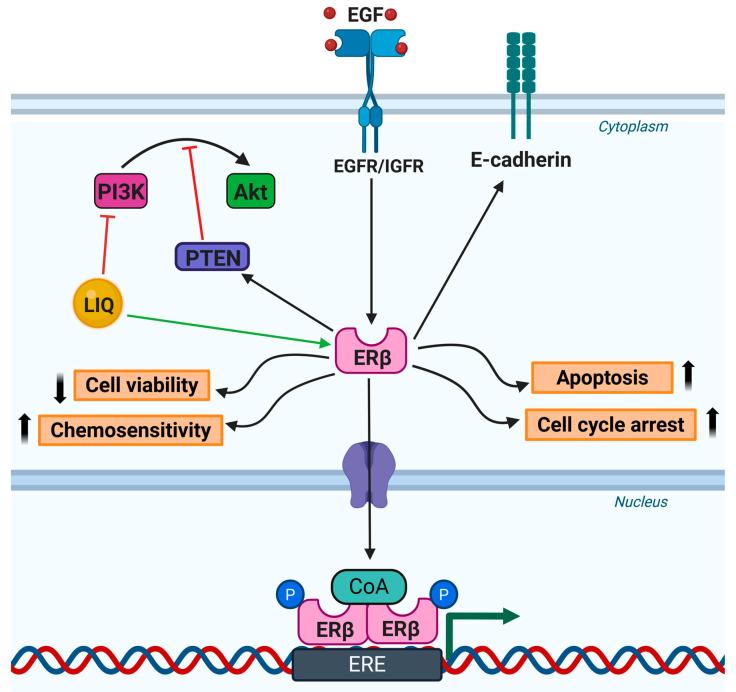
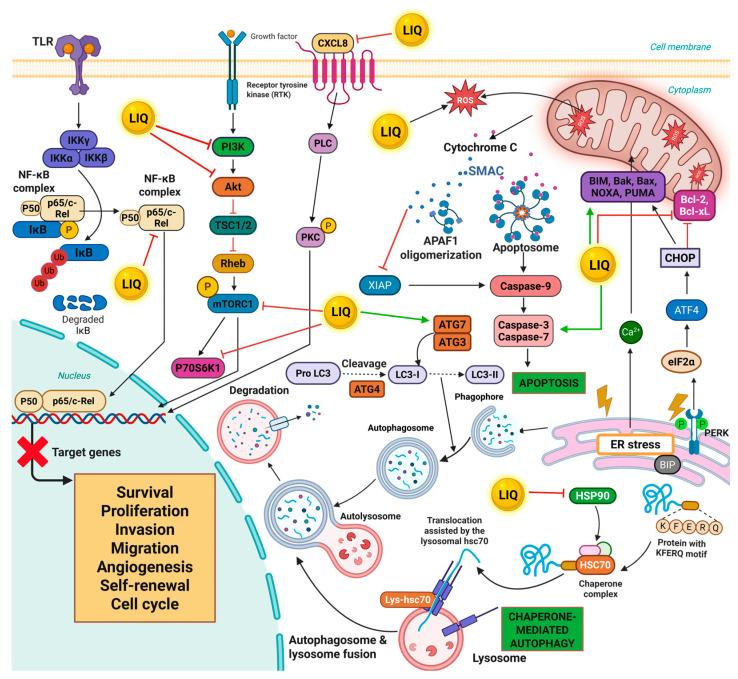
LIQ demonstrates anti-oxidant, anti-inflammatory, and anti-proliferative effects. It exerts its potential anticancer activities by inducing apoptosis, preventing cell proliferation, and modulating various signaling pathways such as nuclear factor kappa-light-chain-enhancer of activated B cells (NF-κB), phosphoinositide 3 kinase (PI3K)/Akt/mammalian target of rapamycin (mTOR), mitogen-activated protein kinase (MAPK), and so on.
CONCLUSIONS
LIQ represents a promising natural agent for cancer therapy, with evidence supporting its multifunctional role in targeting tumor growth and survival mechanisms. By providing a detailed analysis of LIQ, this review aims to highlight its therapeutic efficacy across various cancer types and emphasize its importance as a promising compound in cancer research. In addition, this review seeks to bridge the gap between traditional medicine and modern pharmacology and paves the way for LIQ's clinical application in cancer therapy.
背景/目的:天然化合物融入癌症研究标志着现代医学领域的一个关键转变,这是因为人们越来越认识到它们作为当代化疗药物的高效、低毒且经济有效的替代品的潜力。甘草素(LIQ)是一种从不同植物中提取的化合物,其中最重要的是通常被称为甘草的植物。
方法
本综述汇编了先前发表的临床前研究和实验研究文章的结果,重点关注LIQ的药理作用,尤其关注其抗癌潜力。使用已建立的科学数据库识别相关文献,并根据与癌症生物学和LIQ相关信号通路的相关性进行筛选。
结果
LIQ具有抗氧化、抗炎和抗增殖作用。它通过诱导细胞凋亡、阻止细胞增殖以及调节各种信号通路,如活化B细胞核因子κB(NF-κB)、磷酸肌醇3激酶(PI3K)/蛋白激酶B(Akt)/雷帕霉素哺乳动物靶点(mTOR)、丝裂原活化蛋白激酶(MAPK)等,发挥其潜在的抗癌活性。
结论
LIQ是一种有前景的癌症治疗天然药物,有证据支持其在靶向肿瘤生长和生存机制方面的多功能作用。通过对LIQ进行详细分析,本综述旨在突出其在各种癌症类型中的治疗效果,并强调其作为癌症研究中有前景的化合物的重要性。此外,本综述旨在弥合传统医学与现代药理学之间的差距,为LIQ在癌症治疗中的临床应用铺平道路。
 Zotero 插件