
维生素D调节暴露于牙周炎相关细菌的口腔上皮细胞中的炎症和抗菌反应。
Vitamin D Modulates Inflammatory and Antimicrobial Responses in Oral Epithelial Cells Exposed to Periodontitis-Associated Bacteria.
作者信息
Karaca Fadime, Bloch Susanne, Kendlbacher Fabian L, Behm Christian, Schäffer Christina, Andrukhov Oleh
机构信息
Competence Center for Periodontal Research, University Clinic of Dentistry, Medical University of Vienna, 1090 Vienna, Austria.
NanoGlycobiology Research Group, Institute of Biochemistry, Department of Natural Sciences and Sustainable Resources, University of Natural Resources and Life Sciences, 1190 Vienna, Austria.
出版信息
Int J Mol Sci. 2025 Jul 21;26(14):7001. doi: 10.3390/ijms26147001.
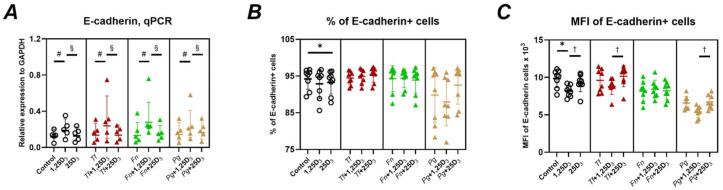
The oral epithelium is essential for maintaining oral health and plays a key role in the onset and progression of periodontitis. It serves as both a mechanical and immunological barrier and possesses antimicrobial activity. Vitamin D, a hormone with known immunomodulatory functions, may influence oral epithelial responses. This study investigated the effects of two vitamin D metabolites on key immunological and antimicrobial functions of oral epithelial cells, both under basal conditions and during bacterial challenge. Ca9-22 oral epithelial cells were treated with 1,25(OH)D or 25(OH)D in the presence or absence of , , or . Inflammatory responses were assessed by measuring gene and protein expression of IL-1β and IL-8. Antimicrobial activity was evaluated via expression of LL-37, hBD-2, and hBD-3, as well as direct bacterial killing assays. Expression of epithelial integrity markers E-cadherin and ICAM-1 was also analyzed. Vitamin D metabolites reduced IL-8 expression and significantly increased LL-37 expression and production in Ca9-22 cells. Both forms enhanced antimicrobial activity against all tested pathogens and modulated epithelial integrity markers. Vitamin D positively regulates antimicrobial and barrier functions in oral epithelial cells, suggesting a potential role in supporting oral health and preventing periodontitis progression.
口腔上皮对于维持口腔健康至关重要,并且在牙周炎的发生和发展中起关键作用。它既是机械屏障又是免疫屏障,并具有抗菌活性。维生素D是一种具有已知免疫调节功能的激素,可能会影响口腔上皮反应。本研究调查了两种维生素D代谢物在基础条件下以及细菌攻击期间对口腔上皮细胞关键免疫和抗菌功能的影响。在存在或不存在 、 或 的情况下,用1,25(OH)D或25(OH)D处理Ca9-22口腔上皮细胞。通过测量IL-1β和IL-8的基因和蛋白质表达来评估炎症反应。通过LL-37、hBD-2和hBD-3的表达以及直接细菌杀伤试验来评估抗菌活性。还分析了上皮完整性标志物E-钙黏蛋白和ICAM-1的表达。维生素D代谢物降低了Ca9-22细胞中IL-8的表达,并显著增加了LL-37的表达和产生。两种形式均增强了对所有测试病原体的抗菌活性,并调节了上皮完整性标志物。维生素D正向调节口腔上皮细胞中的抗菌和屏障功能,表明其在支持口腔健康和预防牙周炎进展方面具有潜在作用。


 Zotero 插件