
枹栎线粒体基因组:基因组特征及进化意义
Mitochondrial genome of Quercus chenii: genomic features and evolutionary implications.
作者信息
Li Xuan, Zhang Shixin, Li Yongfu, El-Kassaby Yousry A, Fang Yanming
机构信息
Co-Innovation Center for Sustainable Forestry in Southern China, College of Life Science, Key Laboratory of State Forestry and Grassland Administration on Subtropical Forest Biodiversity Conservation, Nanjing Forestry University, Nanjing, China.
Department of Forest and Conservation Sciences, Faculty of Forestry, The University of British Columbia, 2424 Main Mall, Vancouver, BC, V6T 1Z4, Canada.
出版信息
BMC Genomics. 2025 Jul 29;26(1):701. doi: 10.1186/s12864-025-11877-3.
UNLABELLED
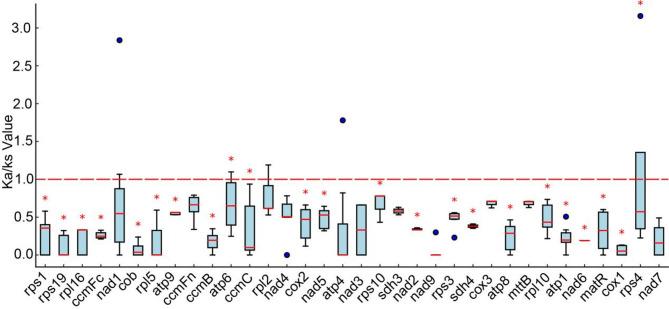
Recent advances in high-throughput sequencing have enabled detailed characterization of plant mitochondrial genomes. Here, we assembled and analyzed the mitochondrial genome of Nakai, a key oak species in Fagaceae, using Illumina NovaSeq6000. The genome consists of a 364,958 bp linear and a 53,677 bp circular chromosome, totaling 418,635 bp with a GC content of 45.6%. Repeat-rich regions (210–250 and 300–340 kb) may facilitate structural rearrangements, while extensive RNA editing-particularly in and -likely enhances protein functionality and mitochondrial adaptability. Comparative collinearity analysis showed high structural conservation with Carruth. (90.92%) but marked divergence from L. (35.80%), suggesting lineage-specific rearrangements. Phylogenetic analysis based on the mitochondrial genome supports the same placement of within Fagaceae as that derived from the chloroplast genome. The analysis across Fagaceae mitochondrial genomes revealed strong conservation of core genes, with adaptive variations in energy metabolism-related genes, suggesting functional divergence linked to metabolic optimization under environmental stress. These findings highlight the distinct evolutionary strategies of mitochondrial and chloroplast genomes: the former optimizing energy production, while the latter fine-tunes photosynthesis and stress responses. Comparison analysis with the chloroplast genome further revealed both conserved ( and ) and divergent ( and ) genes, implying potential historical gene transfer events. Together, these findings highlight the dynamic yet conserved nature of the . mitochondrial genome and provide new insights into organellar genome evolution, structural plasticity, and adaptive mechanisms within the Fagaceae family.
SUPPLEMENTARY INFORMATION
The online version contains supplementary material available at 10.1186/s12864-025-11877-3.
未标注
高通量测序的最新进展使得对植物线粒体基因组进行详细表征成为可能。在此,我们使用Illumina NovaSeq6000组装并分析了壳斗科关键栎属物种蒙古栎的线粒体基因组。该基因组由一条364,958 bp的线性染色体和一条53,677 bp的环状染色体组成,总计418,635 bp,GC含量为45.6%。富含重复序列的区域(210 - 250和300 - 340 kb)可能促进结构重排,而广泛的RNA编辑——特别是在……和……中——可能增强蛋白质功能和线粒体适应性。比较共线性分析显示与麻栎(90.92%)具有高度的结构保守性,但与栓皮栎(35.80%)存在明显差异,表明存在谱系特异性重排。基于线粒体基因组的系统发育分析支持蒙古栎在壳斗科中的位置与叶绿体基因组推导的位置相同。对壳斗科线粒体基因组的……分析揭示了核心基因的高度保守性,以及能量代谢相关基因的适应性变异,表明在环境胁迫下与代谢优化相关的功能分化。这些发现突出了线粒体和叶绿体基因组不同的进化策略:前者优化能量产生,而后者微调光合作用和应激反应。与叶绿体基因组的比较分析进一步揭示了保守(……和……)和分歧(……和……)基因,暗示了潜在的历史基因转移事件。总之,这些发现突出了蒙古栎线粒体基因组动态但保守的性质,并为壳斗科内细胞器基因组进化、结构可塑性和适应性机制提供了新的见解。
补充信息
在线版本包含可在10.1186/s12864 - 025 - 11877 - 3获取的补充材料。



 Zotero 插件