
用于转移性去势抵抗性前列腺癌的PARP抑制剂:答案多于问题,一项系统评价和荟萃分析
PARP Inhibitors for Metastatic CRPC: More Answers than Questions, a Systematic Review and Meta-Analysis.
作者信息
Manneh Ray, Molina-Cerrillo Javier, de Velasco Guillermo, Ibatá Linda, Martínez Susan, Ruiz-Granados Álvaro, Alonso-Gordoa Teresa
机构信息
Medical Oncology Department, Sociedad de Oncología y Hematología del César, Valledupar 200001, Colombia.
Medical Oncology Department, Hospital Universitario Ramón y Cajal, 28034 Madrid, Spain.
出版信息
Pharmaceuticals (Basel). 2025 Jul 8;18(7):1015. doi: 10.3390/ph18071015.
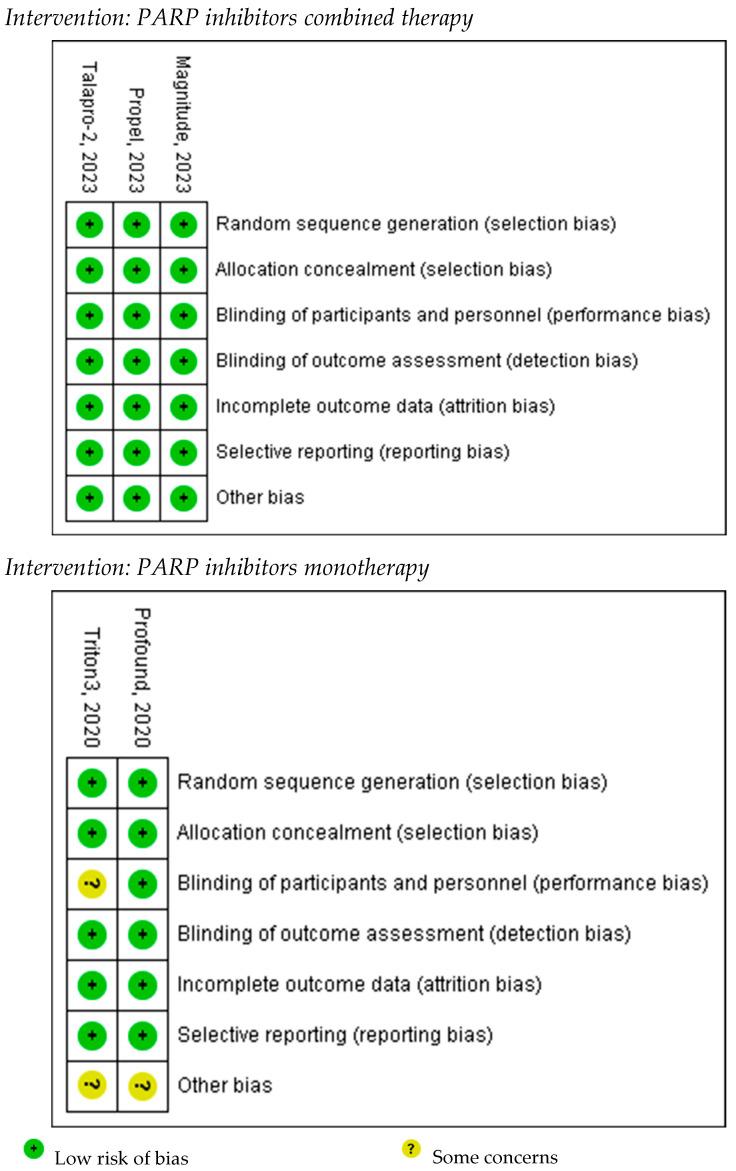
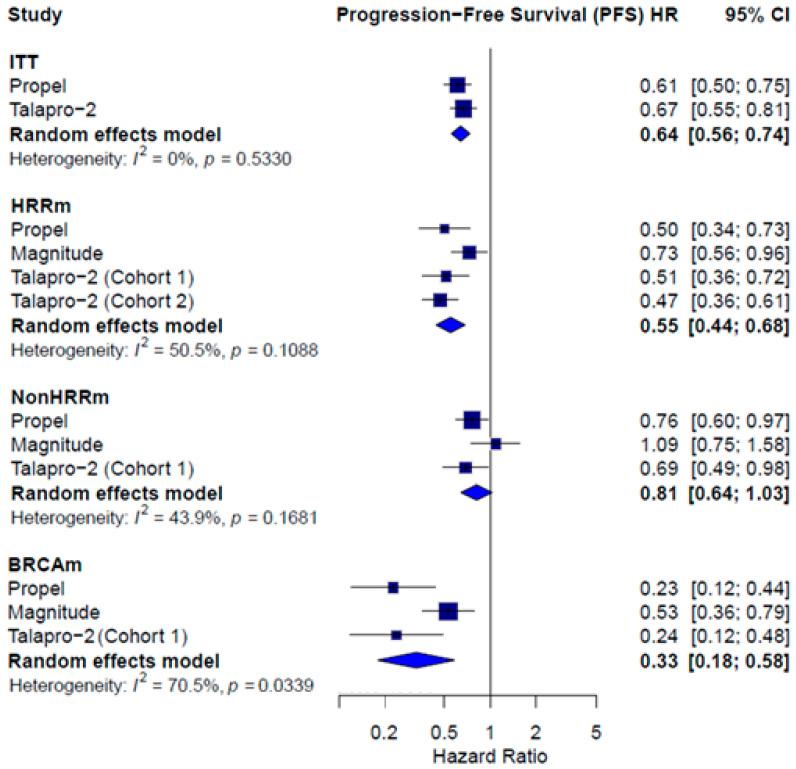
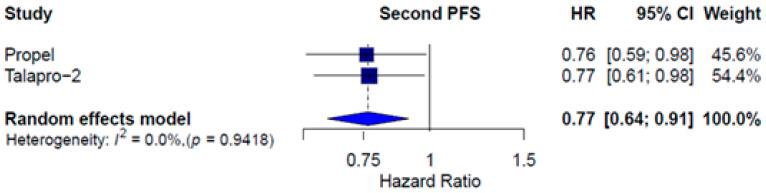
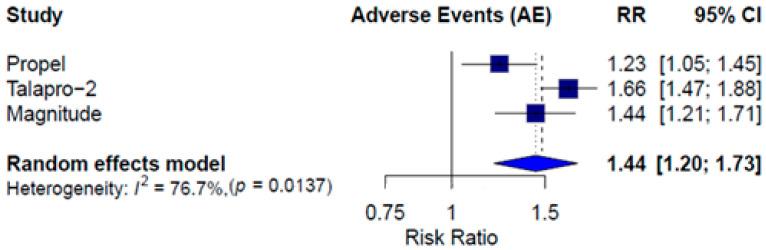
PARP inhibitors (PARPi), alone or in combination with androgen receptor signaling inhibitors (ARSi), have shown clinical benefit in metastatic castration-resistant prostate cancer (mCRPC), particularly in tumors with homologous recombination repair (HRR) gene alterations. Recent data from the TALAPRO-2 trial complete the current evidence on PARPi-ARSi combination strategies in this setting. : To evaluate the efficacy and safety of PARPi-based therapies-monotherapy and combination with ARSi-in patients with mCRPC, focusing on molecular subgroups defined by DNA repair alterations. : We conducted a systematic review and meta-analysis of phase III randomized controlled trials (RCTs) assessing PARPi as monotherapy or in combination with ARSi. Searches were performed in PubMed, EMBASE, the Cochrane Library, and oncology conference proceedings up to February 2025. Outcomes included radiographic progression-free survival (rPFS), overall survival (OS), second progression-free survival (PFS2), and grade ≥3 adverse events (AEs). Data were pooled using a random-effects model, with subgroup analyses by DNA repair status. Five RCTs ( = 2921) were I confirmincluded: three on combination therapy ( = 2271) and two on monotherapy ( = 650). Combination therapy improved rPFS in the ITT (HR = 0.64; 95% CI: 0.56-0.74), HRRm (HR = 0.55; 95% CI: 0.44-0.68), and BRCAm (HR = 0.33; 95% CI: 0.18-0.58) subgroups. OS was also improved in the ITT (HR = 0.80; 95% CI: 0.70-0.92), HRRm (HR = 0.68; 95% CI: 0.55-0.83), and BRCAm (HR = 0.54; 95% CI: 0.34-0.85) groups. No benefit was observed in non-HRRm patients. PFS2 favored combination therapy (HR = 0.77; 95% CI: 0.64-0.91). Grade ≥3 AEs were more frequent (RR = 1.44; 95% CI: 1.20-1.73). Monotherapy improved rPFS in ITT (HR = 0.46; 95% CI: 0.20-0.81) and BRCAm (HR = 0.33; 95% CI: 0.15-0.75); OS benefit was seen only in BRCAm (HR = 0.73; 95% CI: 0.57-0.95). : PARPi therapies improve outcomes mainly in HRR- and BRCA-mutated mCRPC. Molecular selection is key to optimizing benefit and minimizing toxicity. Further research on the activity of PARPi combinations in non-HRR mutated mCRPC is needed to better understand the underlying mechanisms of efficacy.
聚(ADP - 核糖)聚合酶抑制剂(PARPi)单独使用或与雄激素受体信号传导抑制剂(ARSi)联合使用,已在转移性去势抵抗性前列腺癌(mCRPC)中显示出临床益处,特别是在具有同源重组修复(HRR)基因改变的肿瘤中。TALAPRO - 2试验的最新数据完善了当前关于PARPi - ARSi联合策略在这种情况下的证据。:评估基于PARPi的疗法(单药治疗以及与ARSi联合使用)对mCRPC患者的疗效和安全性,重点关注由DNA修复改变定义的分子亚组。:我们对评估PARPi单药治疗或与ARSi联合使用的III期随机对照试验(RCT)进行了系统评价和荟萃分析。检索了截至2025年2月的PubMed、EMBASE、Cochrane图书馆和肿瘤学会议论文集。结局指标包括影像学无进展生存期(rPFS)、总生存期(OS)、二次无进展生存期(PFS2)和≥3级不良事件(AE)。数据使用随机效应模型进行汇总,并按DNA修复状态进行亚组分析。纳入了5项RCT(n = 2921):3项关于联合治疗(n = 2271)和2项关于单药治疗(n = 650)。联合治疗在意向性治疗(ITT)亚组(HR = 0.64;95%CI:0.56 - 0.74)、HRR缺陷型(HRRm)亚组(HR = 0.55;95%CI:0.44 - 0.68)和BRCA突变型(BRCAm)亚组(HR = 0.33;95%CI:0.18 - 0.58)中改善了rPFS。ITT亚组(HR = 0.80;95%CI:0.70 - 0.92)、HRRm亚组(HR = 0.68;95%CI:0.55 - 0.83)和BRCAm亚组(HR = 0.54;95%CI:0.34 - 0.85)的OS也得到了改善。在非HRRm患者中未观察到益处。PFS2有利于联合治疗(HR = 0.77;95%CI:0.64 - 0.91)。≥3级AE更常见(RR = 1.44;95%CI:1.20 - 1.73)。单药治疗在ITT亚组(HR = 0.46;95%CI:0.20 - 0.81)和BRCAm亚组(HR = 0.33;95%CI:0.15 - 0.75)中改善了rPFS;仅在BRCAm亚组中观察到OS获益(HR = 0.73;95%CI:0.57 - 0.95)。:PARPi疗法主要在HRR和BRCA突变的mCRPC中改善结局。分子选择是优化获益和最小化毒性的关键。需要对PARPi联合治疗在非HRR突变的mCRPC中的活性进行进一步研究,以更好地理解疗效的潜在机制。





 Zotero 插件