
用于医疗保健和医学应用的经罗伊氏乳杆菌功能化的生物活性棉、羊毛和丝绸织物的开发:一项体内研究。
Development of Bioactive Cotton, Wool, and Silk Fabrics Functionalized with L. for Healthcare and Medical Applications: An In Vivo Study.
作者信息
Ivanovska Aleksandra, Petrović Anica, Lazarević-Pašti Tamara, Ilic-Tomic Tatjana, Dimić-Mišić Katarina, Lađarević Jelena, Bradić Jovana
机构信息
Innovation Center of the Faculty of Technology and Metallurgy, University of Belgrade, Karnegijeva 4, 11000 Belgrade, Serbia.
Department of Pharmacy, Faculty of Medical Sciences, University of Kragujevac, Svetozara Makovića 69, 34000 Kragujevac, Serbia.
出版信息
Pharmaceutics. 2025 Jun 30;17(7):856. doi: 10.3390/pharmaceutics17070856.
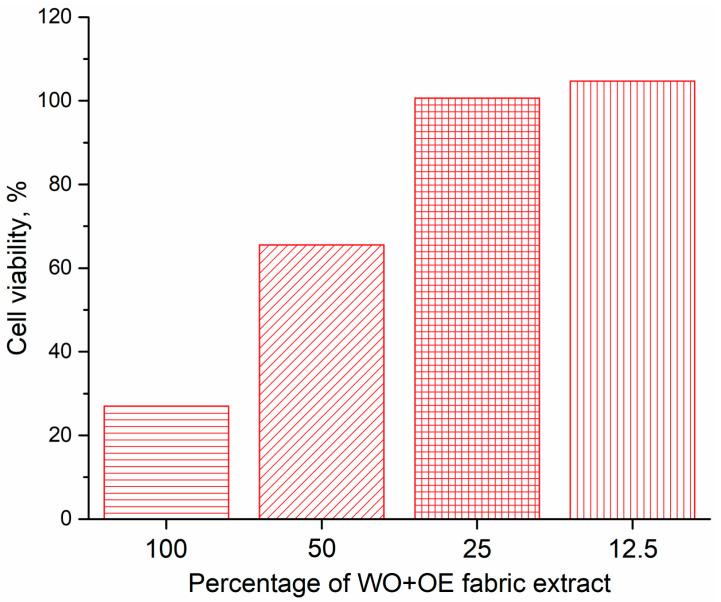
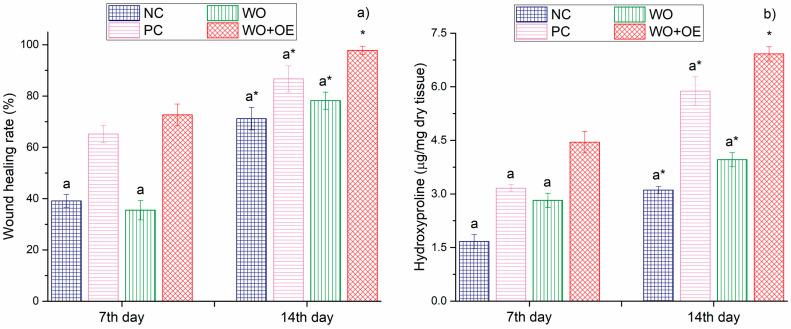
This study presents an innovative approach to developing bioactive natural fabrics for healthcare and medical applications. An ethanol extract of L. (in further text: OE), exhibiting exceptional antioxidant (100%) and antibacterial activity (>99% against and ), was employed to biofunctionalize cotton, wool, and silk fabrics. All biofunctionalized fabrics demonstrated strong antioxidant activity (>99%), while antibacterial efficacy varied by fabric: cotton > 54%, wool > 99%, and silk > 89%. OE-biofunctionalized wool possessed the highest release of OE's bioactive compounds, followed by silk and cotton, indicating substrate-dependent release behavior. This tunable fabrics' OE release profile, along with their unique bioactivity, supports targeted applications: OE-functionalized silk for luxury or prolonged therapeutic use (skin-care textiles, post-surgical dressings, anti-aging products), cotton for disposable or short-term use (protective wipes, minor wound coverings), and wool for wound dressings. The biocompatibility and cytotoxicity of OE-biofunctionalized wool were evaluated via in vitro assays using healthy human keratinocytes and in vivo testing in male rats. The obtained results revealed that OE-functionalized wool significantly accelerated wound closure (97.8% by day 14), enhanced collagen synthesis (6.92 µg/mg hydroxyproline), and improved tissue and systemic antioxidant defense while reducing oxidative stress markers in skin and blood samples of rats treated with OE-biofunctionalized wool. OE-biofunctionalized wool demonstrates strong potential as an advanced natural solution for managing chronic wounds. Further clinical validation is recommended to confirm its performance in real-world healthcare settings. This work introduces an entirely new application of OE in textile biofunctionalization, offering alternatives for healthcare and medical textiles.
本研究提出了一种创新方法,用于开发用于医疗保健和医学应用的生物活性天然织物。采用L.的乙醇提取物(后文简称:OE),其具有出色的抗氧化活性(100%)和抗菌活性(对……和……的抗菌率>99%),对棉、羊毛和丝绸织物进行生物功能化处理。所有生物功能化织物均表现出较强的抗氧化活性(>99%),而抗菌效果因织物种类而异:棉>54%,羊毛>99%,丝绸>89%。OE生物功能化羊毛释放的OE生物活性化合物最多,其次是丝绸和棉,表明其释放行为依赖于底物。这种可调节的织物OE释放特性及其独特的生物活性,支持了靶向应用:OE功能化丝绸用于奢华或长期治疗用途(护肤纺织品、术后敷料、抗衰老产品),棉用于一次性或短期使用(防护湿巾、小伤口敷料),羊毛用于伤口敷料。通过使用健康人角质形成细胞的体外试验和在雄性大鼠体内进行测试,评估了OE生物功能化羊毛的生物相容性和细胞毒性。所得结果表明,OE功能化羊毛显著加速了伤口愈合(第14天时达到97.8%),增强了胶原蛋白合成(6.92μg/mg羟脯氨酸),改善了组织和全身的抗氧化防御能力,同时降低了用OE生物功能化羊毛处理的大鼠皮肤和血液样本中的氧化应激标志物。OE生物功能化羊毛作为一种用于管理慢性伤口的先进天然解决方案具有强大潜力。建议进一步进行临床验证,以确认其在实际医疗环境中的性能。这项工作介绍了OE在纺织品生物功能化方面的全新应用,为医疗保健和医用纺织品提供了替代方案。





 Zotero 插件