
水凝胶共轭:用于药物递送的水凝胶工程
Hydrogel Conjugation: Engineering of Hydrogels for Drug Delivery.
作者信息
Dinh Linh, Hwang Sung-Joo, Yan Bingfang
机构信息
Division of Pharmaceutical Sciences, James L. Winkle College of Pharmacy, University of Cincinnati, Cincinnati, OH 45229, USA.
College of Pharmacy & Yonsei Institute of Pharmaceutical Sciences, Yonsei University, 85 Songdogwahakro, Yeonsu-gu, Incheon 21983, Republic of Korea.
出版信息
Pharmaceutics. 2025 Jul 10;17(7):897. doi: 10.3390/pharmaceutics17070897.
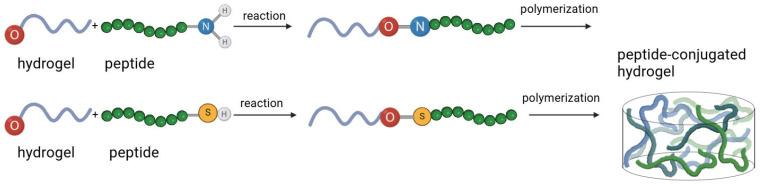
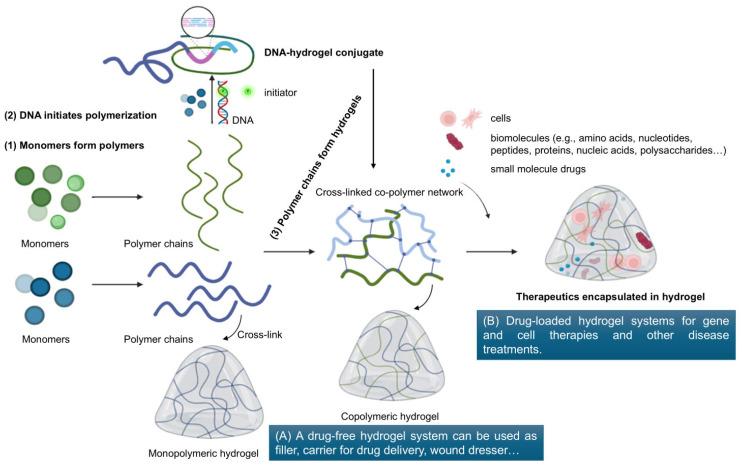
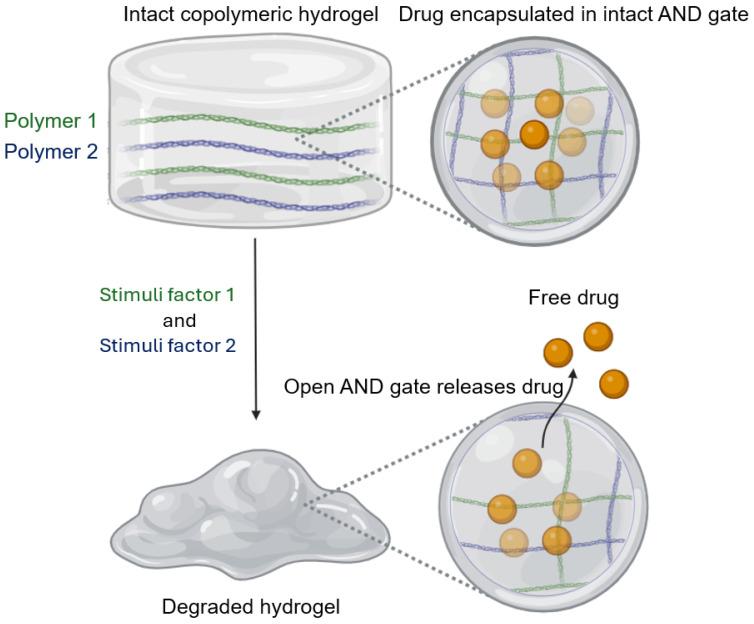
: Hydrogels are 3D networks of hydrophilic polymers with various biomedical applications, including tissue regeneration, wound healing, and localized drug delivery. Hydrogel conjugation links therapeutic agents to a hydrogel network, creating a delivery system with adjustable and flexible hydrogel properties and drug activity, allowing for controlled release and enhanced drug stability. Conjugating therapeutic agents to hydrogels provides innovative delivery formats, including injectable and sprayable dosage forms, which facilitate localized and long-lasting delivery. This approach enables non-viral therapeutic methods, such as insertional mutagenesis, and minimally invasive drug administration. : While numerous reviews have analyzed advancements in hydrogel synthesis, characterization, properties, and hydrogels as a drug delivery vehicle, this review focuses on hydrogel conjugation, which enables the precise functionalization of hydrogels with small molecules and macromolecules. Subsequently, a description and discussion of several bio-conjugated hydrogel systems, as well as binding motifs (e.g., "click" chemistry, functional group coupling, enzymatic ligation, etc.) and their potential for clinical translation, are provided. In addition, the integration of therapeutic agents with nucleic acid-based hydrogels can be leveraged for sequence-specific binding, representing a leap forward in biomaterials. : Special attention was given to the latest conjugation approaches and binding motifs that are useful for designing hydrogel-based drug delivery systems. The review systematically categorizes hydrogel conjugates for drug delivery, focusing on conjugating hydrogels with major classes of therapeutic agents, including small-molecule drugs, nucleic acids, proteins, etc., each with distinct conjugation challenges. The design principles were discussed along with their properties and drug release profiles. Finally, future opportunities and current limitations of conjugated hydrogel systems are addressed.
水凝胶是具有各种生物医学应用的亲水性聚合物三维网络,包括组织再生、伤口愈合和局部药物递送。水凝胶共轭将治疗剂连接到水凝胶网络上,创建一个具有可调节和灵活水凝胶特性及药物活性的递送系统,实现控释并提高药物稳定性。将治疗剂与水凝胶共轭可提供创新的递送形式,包括可注射和可喷雾剂型,便于局部和长效递送。这种方法实现了非病毒治疗方法,如插入诱变和微创药物给药。
虽然众多综述分析了水凝胶合成、表征、性质以及水凝胶作为药物递送载体方面的进展,但本综述重点关注水凝胶共轭,它能使水凝胶与小分子和大分子进行精确功能化。随后,对几种生物共轭水凝胶系统以及结合基序(如“点击”化学、官能团偶联、酶促连接等)及其临床转化潜力进行了描述和讨论。此外,治疗剂与基于核酸的水凝胶的整合可用于序列特异性结合,这代表了生物材料领域的一大进步。
特别关注了对设计基于水凝胶的药物递送系统有用的最新共轭方法和结合基序。该综述系统地对用于药物递送的水凝胶共轭物进行了分类,重点关注将水凝胶与主要类别的治疗剂共轭,包括小分子药物、核酸、蛋白质等,每种都有不同的共轭挑战。讨论了设计原则及其性质和药物释放概况。最后,探讨了共轭水凝胶系统的未来机遇和当前局限性。


 Zotero 插件