
自上而下生成的微塑料和纳米塑料会降低巨噬细胞活力,而不会引发促炎反应。
Top-down generated micro- and nanoplastics reduce macrophage viability without eliciting a pro-inflammatory response.
作者信息
van den Berg Annemijne E T, Adriaans Kas J, Parker Luke A, Höppener Elena M, Dusza Hanna M, Legler Juliette, Pieters Raymond H H
机构信息
Institute for Risk Assessment Sciences, Utrecht University, Yalelaan 104-106, 3584 CM Utrecht, The Netherlands.
TNO Environmental Modelling, Sensing and Analysis, Utrecht, The Netherlands.
出版信息
Microplast nanoplast. 2025;5(1):32. doi: 10.1186/s43591-025-00138-5. Epub 2025 Aug 1.
UNLABELLED
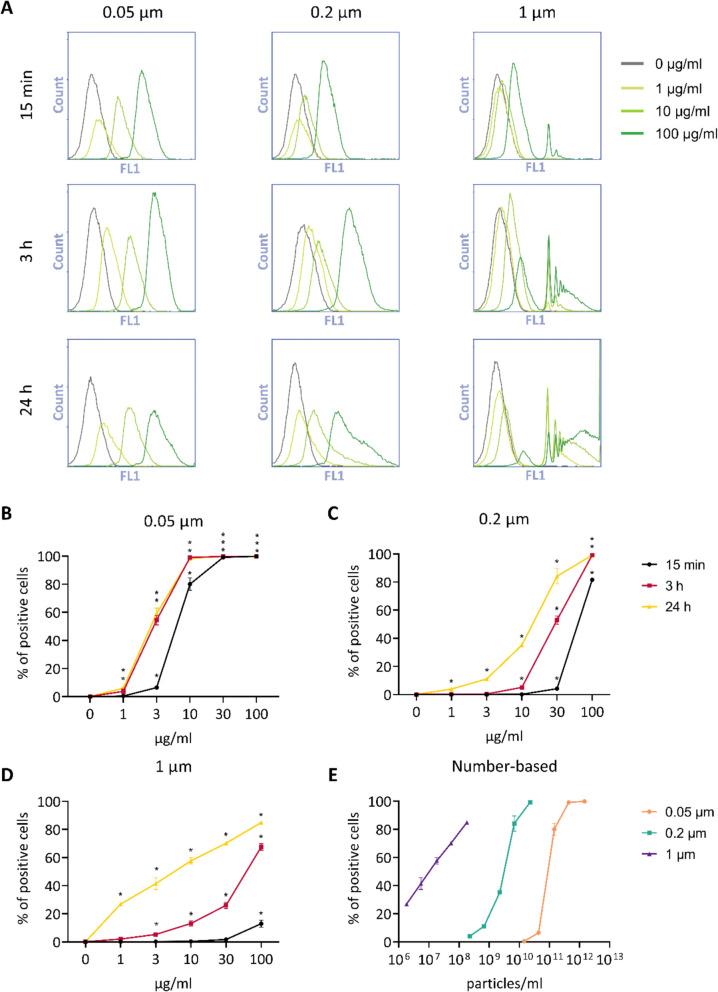
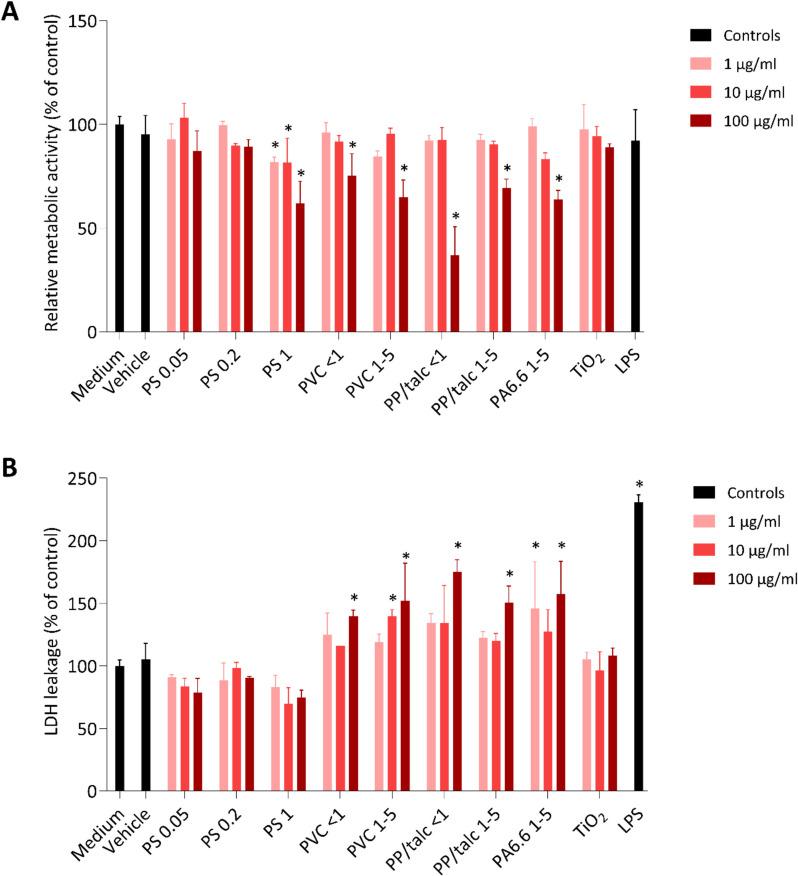
The presence of micro- and nanoplastic particles (MNPs) in our environment, food and drinking water has raised public concern due to inevitable human exposure. MNPs can be intentionally added to products or formed from plastics through fragmentation in the environment. Macrophages may become activated upon encountering MNPs, potentially triggering inflammation. However, this process, particularly in response to fragmented MNPs, remains poorly understood. This study aims to investigate whether fragmented MNPs have cytotoxic and pro-inflammatory effects on human macrophages. We examined the immunotoxic effects of mechanically degraded secondary polyvinylchloride, polypropylene and polyamide particles (PVC, PP; < 1 μm and 1-5 μm, PA6.6; 1-5 µm), in addition to primary polystyrene beads (PS; 0.05, 0.2 and 1 μm) and titanium dioxide particles (TiO; < 0.1 μm) on human THP-1 macrophages. After up to 24 h of exposure to 1, 10 and 100 μg/ml, uptake was determined through flow cytometry and confocal microscopy, and effects on macrophages were measured by assessing lysosomal activity, mitochondrial activity, lactate dehydrogenase leakage, NF-κB activity and cytokine secretion. PS particles were taken up by macrophages in a concentration-, time-, and size-dependent manner based on particle mass. Additionally, MNPs increased lysosomal activity, suggesting potential accumulation of the particles. Fragmented MNPs induced a decrease in mitochondrial activity and an increase in LDH leakage depending on concentration, specifying their cytotoxic potential. However, at these levels, they did not significantly induce NF-κB activity and cytokine production (IL-6, IL-1β, TNF-α). Our findings suggest a lack of a direct pro-inflammatory response by macrophages to fragmented MNPs of various polymer types. However, higher exposure concentrations induced cytotoxicity, which may indirectly influence immune system functioning. This work emphasizes the importance of studying environmentally relevant MNPs to provide deeper insights into potential health impact of physico-chemically altered MNPs.
SUPPLEMENTARY INFORMATION
The online version contains supplementary material available at 10.1186/s43591-025-00138-5.
未标注
由于人类不可避免地会接触到微塑料和纳米塑料颗粒(MNPs),它们在我们环境、食物和饮用水中的存在引发了公众关注。MNPs 可以被有意添加到产品中,或者在环境中通过塑料破碎形成。巨噬细胞在遇到 MNPs 时可能会被激活,从而可能引发炎症。然而,这一过程,尤其是对破碎 MNPs 的反应,仍知之甚少。本研究旨在调查破碎的 MNPs 对人类巨噬细胞是否具有细胞毒性和促炎作用。我们检测了机械降解的二次聚氯乙烯、聚丙烯和聚酰胺颗粒(PVC、PP;<1μm 和 1 - 5μm,PA6.6;1 - 5μm),以及原生聚苯乙烯珠(PS;0.05、0.2 和 1μm)和二氧化钛颗粒(TiO;<0.1μm)对人类 THP - 1 巨噬细胞的免疫毒性作用。在暴露于 1、10 和 100μg/ml 长达 24 小时后,通过流式细胞术和共聚焦显微镜测定摄取情况,并通过评估溶酶体活性、线粒体活性、乳酸脱氢酶泄漏、NF - κB 活性和细胞因子分泌来测量对巨噬细胞的影响。PS 颗粒被巨噬细胞摄取的方式基于颗粒质量呈现浓度、时间和大小依赖性。此外,MNPs 增加了溶酶体活性,表明颗粒可能发生了积累。破碎的 MNPs 根据浓度诱导线粒体活性降低和 LDH 泄漏增加,表明它们具有细胞毒性潜力。然而,在这些水平下,它们并未显著诱导 NF - κB 活性和细胞因子产生(IL - 6、IL - 1β、TNF - α)。我们的研究结果表明,巨噬细胞对各种聚合物类型的破碎 MNPs 缺乏直接的促炎反应。然而,更高的暴露浓度会诱导细胞毒性,这可能间接影响免疫系统功能。这项工作强调了研究与环境相关的 MNPs 的重要性,以便更深入地了解物理化学性质改变的 MNPs 对健康的潜在影响。
补充信息
在线版本包含可在 10.1186/s43591 - 025 - 00138 - 5 获取的补充材料。




 Zotero 插件