
泛酸盐调节疟疾媒介斯氏按蚊的摄食和繁殖,其模式取决于补充方案和亲本营养。
Pantothenate regulates feeding and reproduction in the malaria vector Anopheles stephensi, with patterns dependent on supplementation scheme and parental nutrition.
作者信息
Dobson Megan E, Kaylor Hannah L, Pruett Sydney L, Brady Jessica, Savoie-Penton Kayla, Isoe Jun, Debebe Yared, Riehle Michael A, Luckhart Shirley
机构信息
Department of Biological Sciences, University of Idaho, Moscow, ID, 83843, USA.
Department of Entomology, Plant Pathology, and Nematology, University of Idaho, Moscow, ID, 83843, USA.
出版信息
Parasit Vectors. 2025 Aug 4;18(1):334. doi: 10.1186/s13071-025-06959-w.
BACKGROUND
Pantothenate (Pan), or vitamin B5, is the substrate for biosynthesis of coenzyme A (CoA), an essential cellular cofactor involved in many metabolic processes. Our previous studies demonstrated that Pan availability influences a broad range of traits across multiple species, including malaria parasite development in the mosquito Anopheles stephensi. Accordingly, restricting Pan availability during parasite development may be a viable strategy for malaria control. However, the physiological roles of Pan in A. stephensi remain unclear. In these studies, we investigated the effects of Pan supplementation on this globally important malaria vector.
METHODS
Female A. stephensi were supplemented with Pan via either water, which, similar to plant nectar, is directed to the crop and then slowly released into the midgut, or blood, which transits directly to the midgut for digestion. The effects of provisioning on subsequent blood feeding behavior, reproduction, and offspring sex ratio were assessed. We evaluated these traits across multiple generations, with and without additional supplementation of offspring.
RESULTS
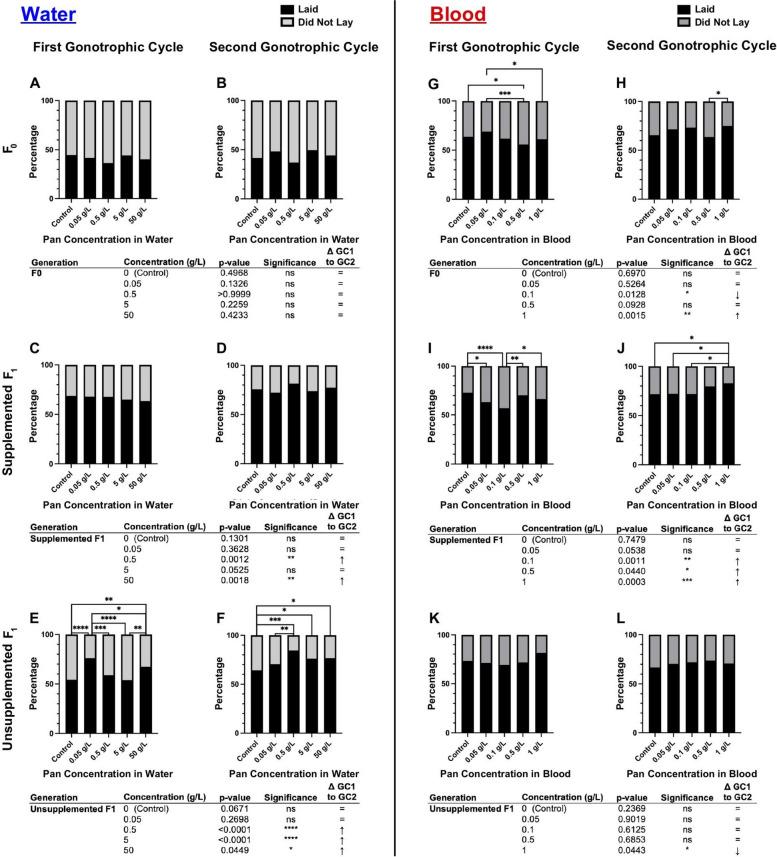
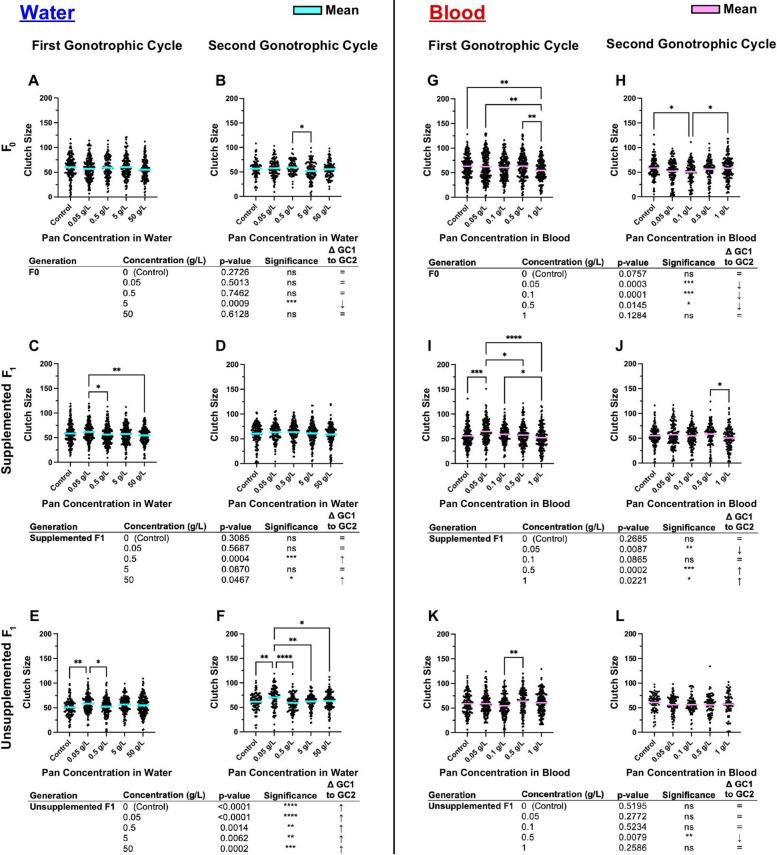
Our findings revealed that Pan regulates vectorially important traits in concentration-, delivery-, and age-dependent ways. The greatest effects of Pan provisioning were on reproduction. The unsupplemented offspring of mothers supplemented with Pan via water exhibited increased fecundity, indicating transgenerational effects from supplemented mothers. However, when Pan was provisioned in blood, only mothers and their supplemented offspring exhibited altered reproduction.
CONCLUSIONS
Our work establishes the importance of Pan in A. stephensi reproduction and provides a foundation for investigating the transgenerational effects of Pan and CoA on mosquito physiology. These observations suggest that targeting Pan-CoA biology in Anopheles spp. could provide opportunities for novel mosquito control strategies.
背景
泛酸(Pan),即维生素B5,是辅酶A(CoA)生物合成的底物,CoA是一种参与许多代谢过程的必需细胞辅因子。我们之前的研究表明,泛酸的可利用性会影响多个物种的广泛性状,包括疟原虫在斯氏按蚊体内的发育。因此,在寄生虫发育过程中限制泛酸的可利用性可能是控制疟疾的一种可行策略。然而,泛酸在斯氏按蚊中的生理作用仍不清楚。在这些研究中,我们调查了补充泛酸对这种全球重要疟疾传播媒介的影响。
方法
通过水或血液对雌性斯氏按蚊补充泛酸,水类似于植物花蜜,会进入嗉囊然后缓慢释放到中肠,而血液会直接进入中肠进行消化。评估了补充泛酸对后续吸血行为、繁殖和后代性别比例的影响。我们在有或没有对后代额外补充泛酸的情况下,对多代进行了这些性状的评估。
结果
我们的研究结果表明,泛酸以浓度、递送方式和年龄依赖性方式调节对传播媒介重要的性状。补充泛酸的最大影响在于繁殖。通过水补充泛酸的母亲所生的未补充后代表现出繁殖力增加,表明补充泛酸的母亲存在跨代效应。然而,当通过血液补充泛酸时,只有母亲及其补充泛酸的后代的繁殖发生了改变。
结论
我们的工作确立了泛酸在斯氏按蚊繁殖中的重要性,并为研究泛酸和CoA对蚊子生理学的跨代效应提供了基础。这些观察结果表明,针对按蚊属中的泛酸-CoA生物学可能为新型蚊子控制策略提供机会。

 Zotero 插件