
焦虑与2019冠状病毒病双向联系的分子见解:临床与生物信息学相结合的方法
Molecular insights into the bidirectional link between anxiety and COVID-19: a combined clinical and bioinformatics approach.
作者信息
Huang Wenjie, Hu Biao, Gu Chengyu, Wu Hao, Huang Yize, Yang Dexiang
机构信息
Department of Pulmonary and Critical Care Medicine, Tongling Hospital Affiliated to Bengbu Medical University, Tongling, Anhui, China.
Department of Psychiatry, Tongde Hospital of Zhejiang Province, Hangzhou, Zhejiang, China.
出版信息
Front Psychiatry. 2025 Jul 22;16:1643355. doi: 10.3389/fpsyt.2025.1643355. eCollection 2025.
INTRODUCTION
Numerous studies have reported an increased incidence of anxiety in individuals affected by COVID-19; however, the specific molecular mechanisms underlying this association remain poorly understood.
METHODS
In this study, we employed the Zung Self-Rating Anxiety Scale (SAS) to assess anxiety levels in 36 asymptomatic COVID-19 patients. In parallel, we conducted a comprehensive literature-based data mining analysis to reconstruct the functional and molecular pathways linking COVID-19 and anxiety. Additionally, we performed a meta-analysis using eight independent COVID-19 case-control gene expression datasets to examine expression alterations in the literature-derived pathways.
RESULTS
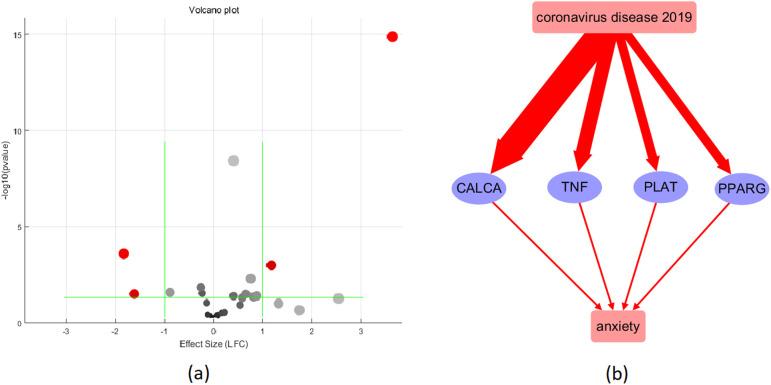
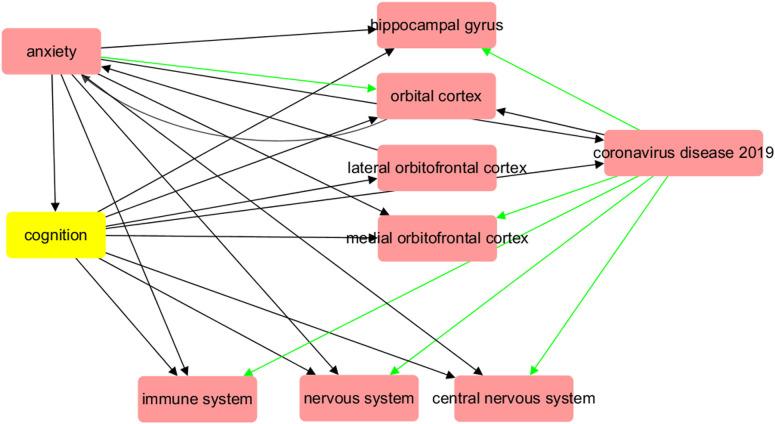
Our findings revealed that even among asymptomatic individuals, approximately 25% exhibited mild anxiety symptoms, which negatively correlated with age. The reconstructed pathways suggested that COVID-19 may contribute to cognitive decline through multisystem dysfunction and structural or functional brain abnormalities-hallmarks of anxiety disorders. The meta-analysis confirmed increased expression of four anxiety-related molecular mediators in response to COVID-19 infection: CALCA, TNF, PLAT, and PPARG, with the latter three associated with neurocognitive decline.
CONCLUSION
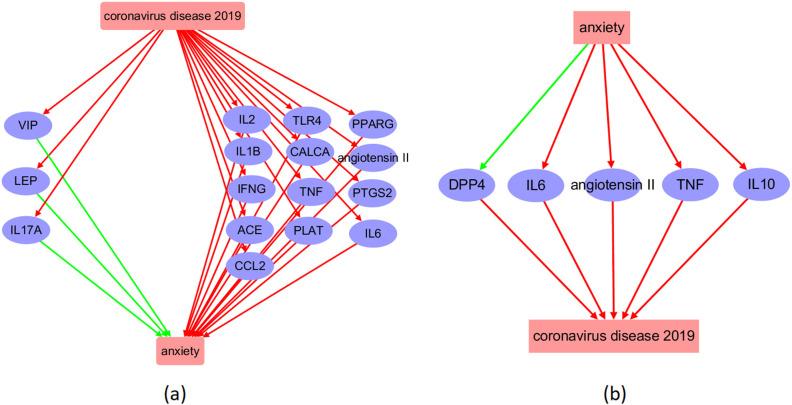
These results provide molecular-level evidence for a bidirectional association between COVID-19 and anxiety, potentially mediated by dysregulated inflammatory cytokines and other secreted proteins. Furthermore, impaired cognitive function may serve as a critical link connecting these two conditions.
引言
众多研究报告称,感染新型冠状病毒肺炎(COVID-19)的个体焦虑症发病率增加;然而,这种关联背后的具体分子机制仍知之甚少。
方法
在本研究中,我们采用zung自评焦虑量表(SAS)评估了36例无症状COVID-19患者的焦虑水平。同时,我们进行了一项基于文献的全面数据挖掘分析,以重建连接COVID-19与焦虑的功能和分子途径。此外,我们使用八个独立的COVID-19病例对照基因表达数据集进行了荟萃分析,以检查文献衍生途径中的表达变化。
结果
我们的研究结果显示,即使在无症状个体中,约25%的人表现出轻度焦虑症状,且与年龄呈负相关。重建的途径表明,COVID-19可能通过多系统功能障碍以及大脑结构或功能异常(焦虑症的特征)导致认知能力下降。荟萃分析证实,COVID-19感染后,四种与焦虑相关的分子介质CALCA、TNF、PLAT和PPARG的表达增加,后三种与神经认知能力下降有关。
结论
这些结果为COVID-19与焦虑之间的双向关联提供了分子水平的证据,这种关联可能由炎症细胞因子和其他分泌蛋白失调介导。此外,认知功能受损可能是连接这两种情况的关键环节。
 Zotero 插件