
隐性营养不良性大疱性表皮松解症伤口的自然史研究及患者通过移动应用家庭摄影报告的结果
Natural history study of recessive dystrophic epidermolysis bullosa wounds and patient reported outcomes using mobile application home photography.
作者信息
Fulchand Shivali, Nazaroff Jaron, Harris Nicki, So Jodi Y, Villanueva Gaona Ricardo, Alvarez Estephannie, Li Shufeng, Lu Ying, Eid Edward, Tang Jean Y
机构信息
Department of Dermatology, Stanford University School of Medicine, 455 Broadway St, Discovery Hall, Room 143, Redwood City, 8843, 94063, MC, CA, U.S.
Department of Data Science, Stanford University School of Medicine, Stanford, CA, USA.
出版信息
Sci Rep. 2025 Aug 6;15(1):28767. doi: 10.1038/s41598-025-14413-1.
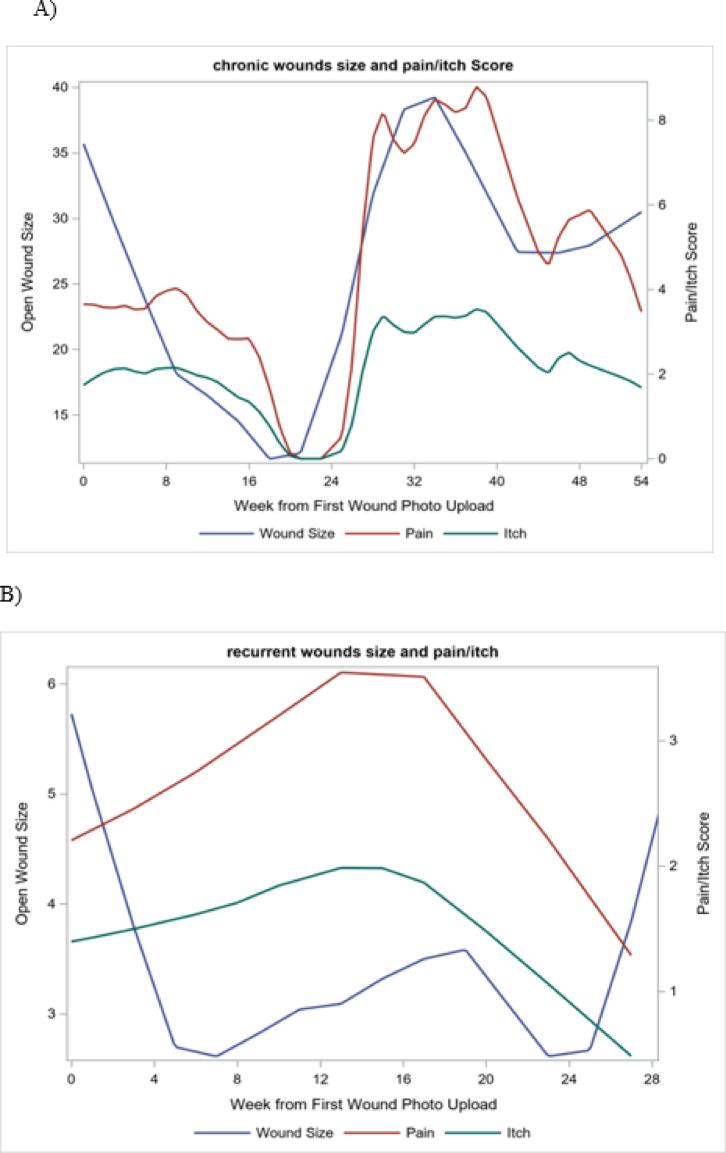
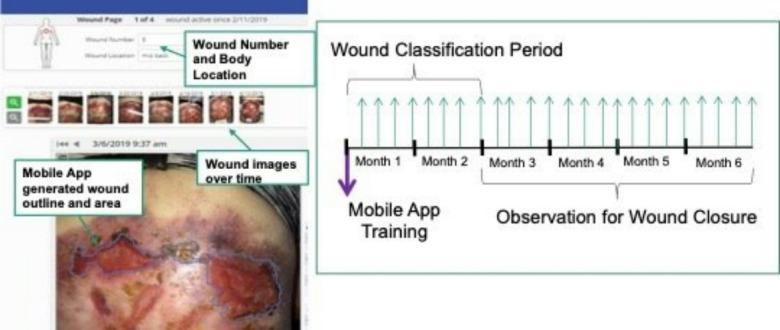
Recessive dystrophic epidermolysis bullosa (RDEB) is a rare, blistering genetic disease where wounding and wound pain are the most reported problems by patients. The natural history of RDEB wounds, specifically spontaneous wound closure between chronic open vs. recurrent wounds, has not been prospectively studied, thus limiting the design of clinical trial endpoints. We conducted a prospective observational study in which participants used a mobile application to upload weekly photographs of multiple target wounds for up to 6 months and reported associated wound pain and itch (Photo Cohort, N = 69 wounds). We also utilized a separate dataset of placebo-treated wounds from a previously completed trial (Validation Cohort, N = 57 wounds) to validate the 12-week definition of wounds and to determine their rate of spontaneous wound closure. We reveal that chronic open wounds were larger, more painful, and only 17% of were observed to have spontaneous wound closure during follow up. In contrast, 100% (P < 0.001) of recurrent wounds were observed to have spontaneous closure during the photo observation. These differences were confirmed in the Validation Cohort. The median time to wound closure for chronic open wounds was 14.6 vs. 8 weeks for recurrent wounds. Additionally, recurrent wounds had a 29-fold greater likelihood to close spontaneously. In conclusion, chronic open wounds have a lower rate of spontaneous wound closure and are associated with more pain and itch. Wound type is the most significant predictor of spontaneous wound closure and should be the key consideration in the selection of wounds in RDEB clinical trials.
隐性营养不良性大疱性表皮松解症(RDEB)是一种罕见的遗传性水疱病,患者最常报告的问题是伤口及伤口疼痛。RDEB伤口的自然病程,特别是慢性开放性伤口与复发性伤口之间的自发伤口闭合情况,尚未得到前瞻性研究,因此限制了临床试验终点的设计。我们进行了一项前瞻性观察研究,参与者使用移动应用程序上传多个目标伤口的每周照片,为期6个月,并报告相关的伤口疼痛和瘙痒情况(照片队列,N = 69个伤口)。我们还利用了之前一项已完成试验中安慰剂治疗伤口的单独数据集(验证队列,N = 57个伤口),以验证伤口的12周定义,并确定其自发伤口闭合率。我们发现,慢性开放性伤口更大、更疼痛,在随访期间只有17%的伤口观察到有自发伤口闭合。相比之下,在照片观察期间,100%(P < 0.001)的复发性伤口观察到有自发闭合。这些差异在验证队列中得到了证实。慢性开放性伤口闭合的中位时间为14.6周,而复发性伤口为8周。此外,复发性伤口自发闭合的可能性高29倍。总之,慢性开放性伤口的自发伤口闭合率较低,且与更多的疼痛和瘙痒相关。伤口类型是自发伤口闭合的最重要预测因素,应是RDEB临床试验中伤口选择的关键考虑因素。


 Zotero 插件