
眼部衰老研究进展:深度学习、成像技术与液体活检生物标志物的结合
Advances in ocular aging: combining deep learning, imaging, and liquid biopsy biomarkers.
作者信息
Zhang Dengren, Li Naiyang, Li Fan
机构信息
Eye Center, Zhongshan City People's Hospital, Zhongshan, China.
Shenzhen University Medical School, Shenzhen, China.
出版信息
Front Med (Lausanne). 2025 Jul 23;12:1591936. doi: 10.3389/fmed.2025.1591936. eCollection 2025.
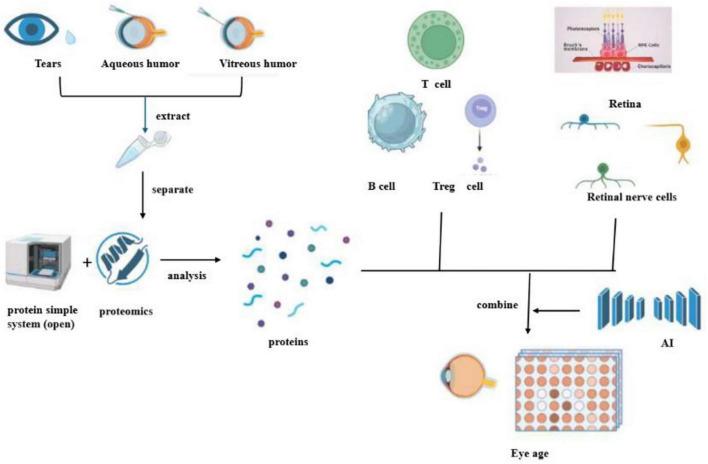
Ageing is a significant risk factor for a wide range of human diseases. Yet, its direct relationship with ocular ageing as a marker for overall age-related diseases and mortality still needs to be explored. Non-invasive and minimally invasive methods, including biomarkers detected through ocular imaging or liquid biopsies from the aqueous humour or vitreous body, provide a promising avenue for assessing ocular ageing. These approaches are particularly valuable given the eye's limited regenerative capacity, where tissue damage can result in irreversible harm. In recent years, artificial intelligence (AI), particularly deep learning, has revolutionized medical research, offering novel perspectives on the ageing process. This review highlights how integrating deep learning with advanced imaging and liquid biopsy biomarkers has become a transformative approach to understanding ocular ageing and its implications for systemic health.
衰老是多种人类疾病的重要风险因素。然而,其作为整体年龄相关疾病和死亡率标志物与眼部衰老的直接关系仍有待探索。非侵入性和微创方法,包括通过眼部成像检测到的生物标志物或来自房水或玻璃体的液体活检,为评估眼部衰老提供了一条有前景的途径。鉴于眼睛有限的再生能力,组织损伤可能导致不可逆转的损害,这些方法尤其有价值。近年来,人工智能(AI),特别是深度学习,彻底改变了医学研究,为衰老过程提供了新的视角。本综述强调了将深度学习与先进的成像和液体活检生物标志物相结合如何成为理解眼部衰老及其对全身健康影响的变革性方法。

 Zotero 插件