
血液炎症复合标志物对小儿继发性噬血细胞性淋巴组织细胞增生症患者生存的预后价值
Prognostic value of blood inflammatory composite markers in the survival of pediatric patients with secondary hemophagocytic lymphohistiocytosis.
作者信息
Luo Nandu, Xie Xin, Chen Yan, Du Zuochen, Huang Pei
机构信息
Department of Pediatrics, Affiliated Hospital of Zunyi Medical University, Zunyi, China.
Guizhou Children's Hospital, Zunyi, China.
出版信息
Front Pediatr. 2025 Jul 24;13:1458490. doi: 10.3389/fped.2025.1458490. eCollection 2025.
OBJECTIVE
This study aimed to explore the prognostic value of blood inflammatory composite markers in the survival of pediatric patients diagnosed with secondary hemophagocytic lymphohistiocytosis (sHLH).
METHODS
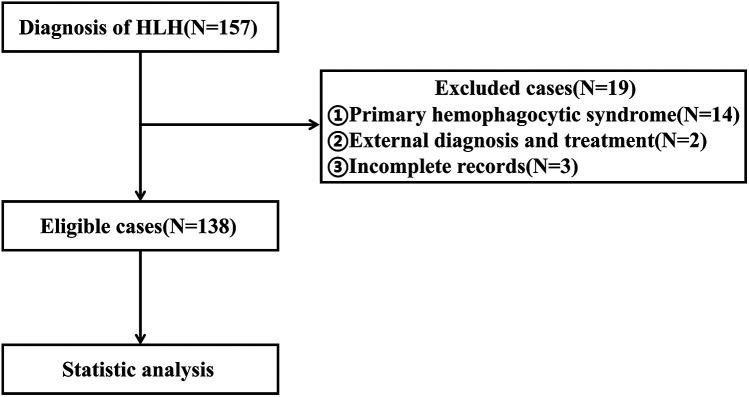
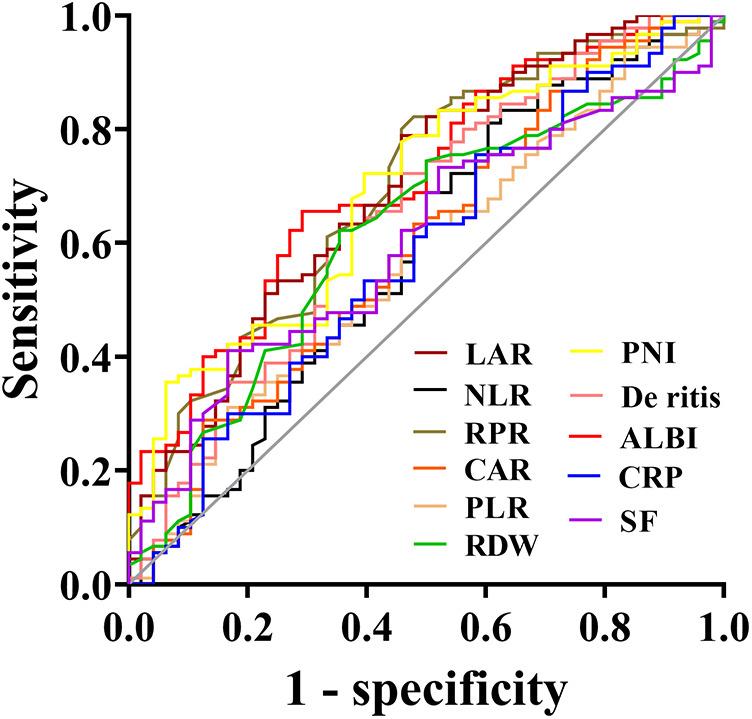
Clinical data from 138 newly diagnosed sHLH patients hospitalized between January 2012 and October 2023 were analyzed. Receiver operating characteristic curve analysis was used to determine cutoff values and evaluate predictive accuracy, while Cox regression analysis was employed to identify prognostic factors.
RESULTS
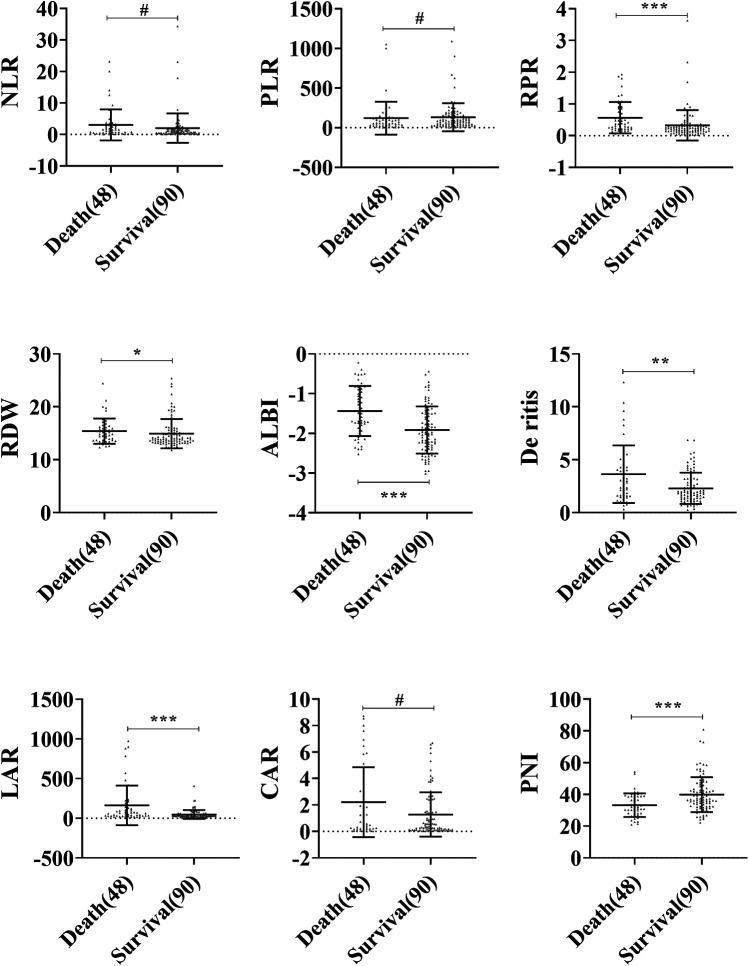
The median age of the 138 sHLH patients was 38 months, with a female-to-male ratio of 0.92. Infection was identified as the most common cause of sHLH, 52.9% testing positive for the epstein-barr virus (EBV). Clinical features included decreased blood cell counts in 87.0% of patients, hypofibrinogenemia in 55.07%, hypertriglyceridemia in 46.38%, and elevated ferritin levels in 94.2%. Additionally, all patients experienced fever, while hepatomegaly and splenomegaly were observed in 66.67% and 76.81%, respectively. During the study, 48 patients died. Cox regression analysis identified red blood cell distribution width (RDW) ≥14.35%, fibrinogen <1.5 g/L, red blood cell distribution width to platelet ratio (RPR) ≥0.36, and lactate dehydrogenase to serum albumin ratio (LAR) ≥56.02 as significant predictors of decreased survival.
CONCLUSION
This study provides preliminary evidence that accessible inflammatory markers like LAR and RPR may assist in early prognostic assessment of pediatric sHLH. These findings highlight the potential utility of routine blood parameters, warranting further validation in larger, stratified cohorts.
目的
本研究旨在探讨血液炎症复合标志物对诊断为继发性噬血细胞性淋巴组织细胞增生症(sHLH)的儿科患者生存的预后价值。
方法
分析了2012年1月至2023年10月期间住院的138例新诊断的sHLH患者的临床资料。采用受试者工作特征曲线分析来确定临界值并评估预测准确性,同时采用Cox回归分析来确定预后因素。
结果
138例sHLH患者的中位年龄为38个月,男女比例为0.92。感染被确定为sHLH最常见的病因,52.9%的患者检测出爱泼斯坦-巴尔病毒(EBV)呈阳性。临床特征包括87.0%的患者血细胞计数减少、55.07%的患者纤维蛋白原血症、46.38%的患者高甘油三酯血症以及94.2%的患者铁蛋白水平升高。此外,所有患者均有发热,66.67%的患者出现肝肿大,76.81%的患者出现脾肿大。在研究期间,48例患者死亡。Cox回归分析确定红细胞分布宽度(RDW)≥14.35%、纤维蛋白原<1.5 g/L、红细胞分布宽度与血小板比值(RPR)≥0.36以及乳酸脱氢酶与血清白蛋白比值(LAR)≥56.02是生存降低的显著预测因素。
结论
本研究提供了初步证据,表明像LAR和RPR这样易于获得的炎症标志物可能有助于儿科sHLH的早期预后评估。这些发现凸显了常规血液参数的潜在效用,需要在更大的分层队列中进行进一步验证。


 Zotero 插件