
自组装且靶向肠道的氟苯尼考纳米微球能有效抑制耐药性、根除生物膜并维持肠道稳态。
Self-assembled and intestine-targeting florfenicol nano-micelles effectively inhibit drug-resistant eradicate biofilm, and maintain intestinal homeostasis.
作者信息
Zuo Runan, Fu Linran, Pang Wanjun, Kong Lingqing, Weng Liangyun, Sun Zeyuan, Li Ruichao, Qu Shaoqi, Li Lin
机构信息
Animal-derived Food Safety Innovation Team, Pharmacology and Toxicology Laboratory, College of Veterinary Medicine, Anhui Agricultural University, Hefei, 230036, China.
出版信息
J Pharm Anal. 2025 Jul;15(7):101226. doi: 10.1016/j.jpha.2025.101226. Epub 2025 Feb 12.
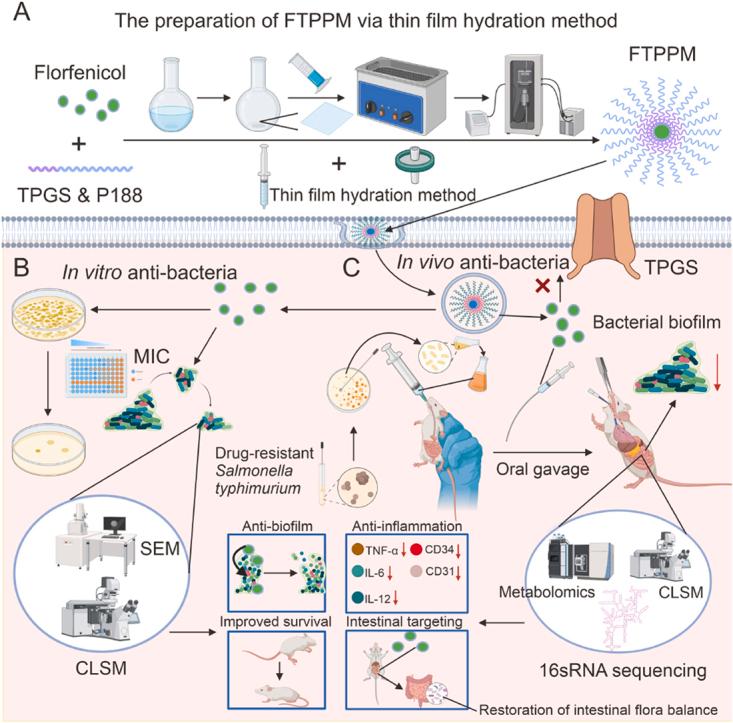
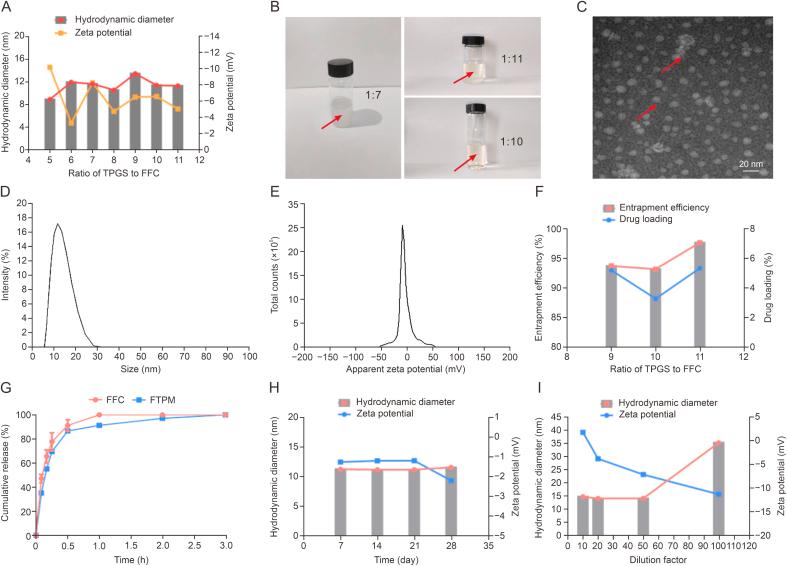
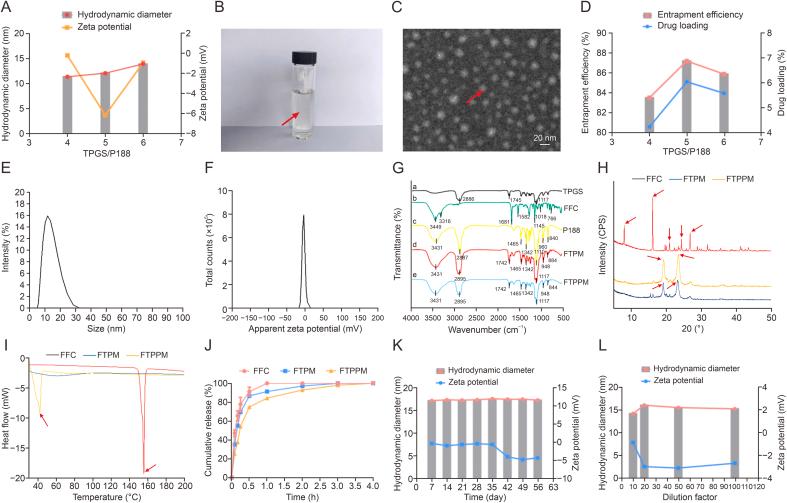
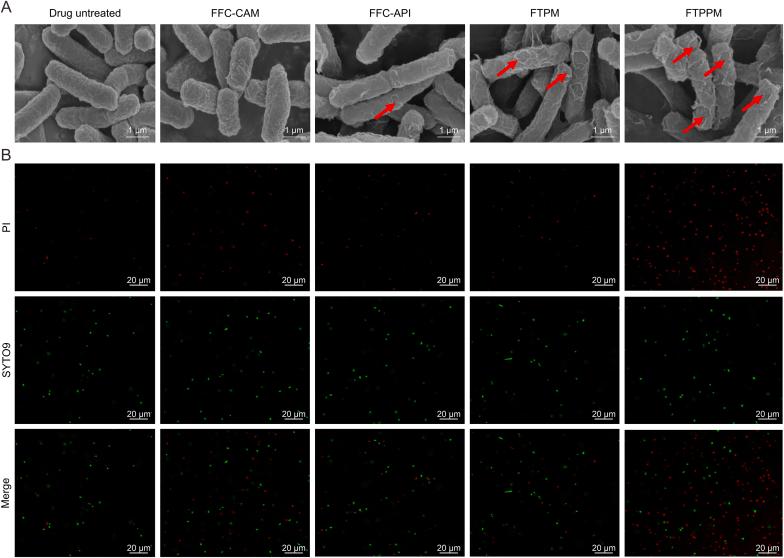
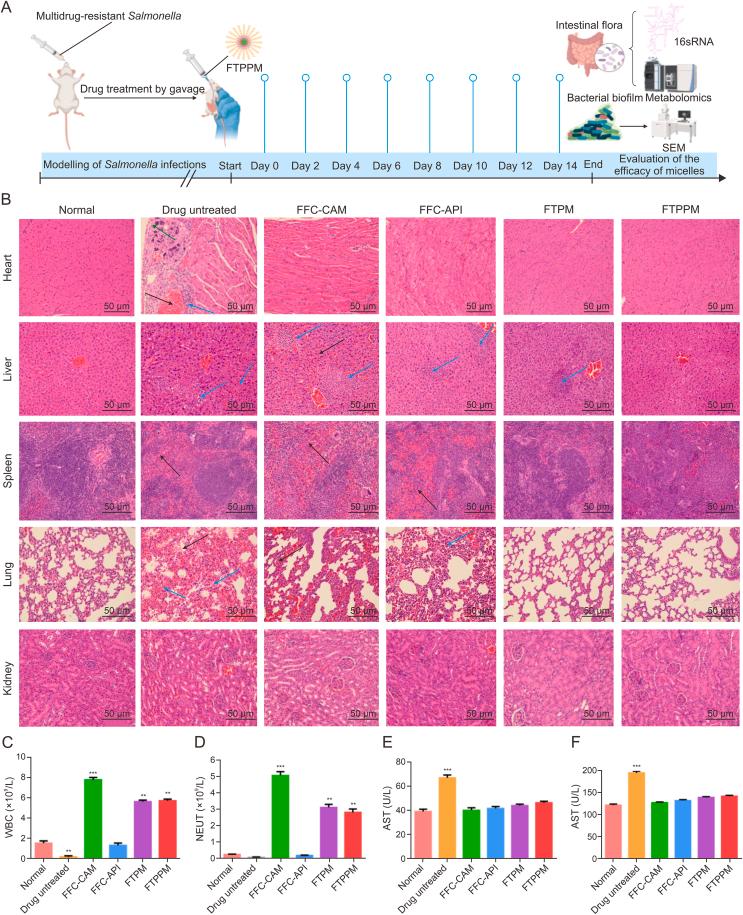
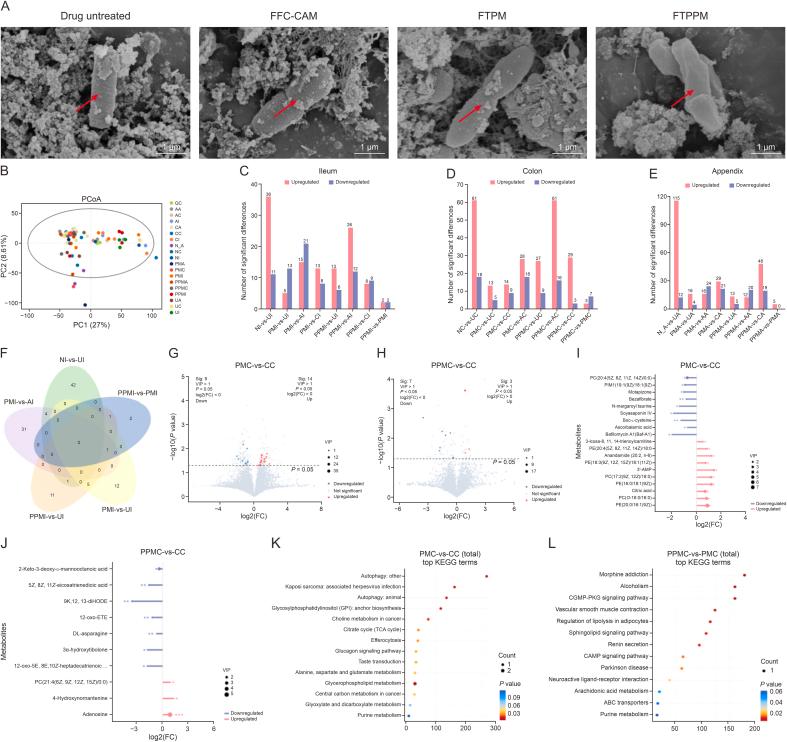
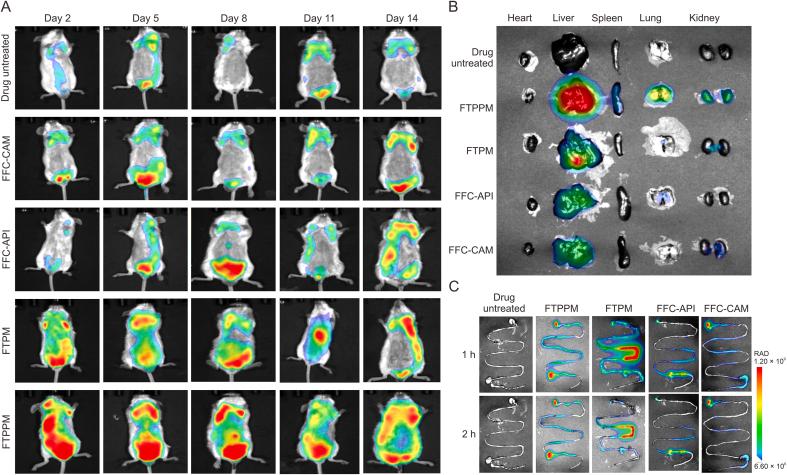
Antimicrobial resistance (AMR) is a growing public health crisis that requires innovative solutions. Emerging multidrug resistant (MDR) has raised concern for its effect on pathogenic infection and mortality in humans caused by enteric diseases. To combat these MDR pathogens, highly effective and broad-spectrum antibiotics such as flufenicol (FFC) need to be evaluated for their potent antibacterial activity against . However, the low solubility and low oral bioavailability of flufenicol need to be addressed to better combat AMR. In this work, we develop a novel nano-formulation, flufenicol nano-micelles (FTPPM), which are based on d-α-tocopherol polyethylene glycol 1,000 succinate (TPGS)/poloxamer 188 (P188), for the targeted treatment of biofilms formed by drug-resistant in the intestine. Herein, FTPPM were prepared via a thin film hydration method. The preparation process for the mixed micelles is simple and convenient compared with other existing nanodrug delivery systems, which can further decrease production costs. The optimized FTPPM demonstrated outstanding stability and sustained release. An evaluation of the anti-drug-resistant efficacy demonstrated that FTPPM showed a stronger efficacy (68.17 %) than did florfenicol-loaded TPGS polymer micelles (FTPM), flufenicol active pharmaceutical ingredients (FFC-API), and flufenicol commercially available medicine (FFC-CAM), and also exhibited outstanding biocompatibility. Notably, FTPPM also inhibited drug-resistant from forming biofilms. More importantly, FTPPM effectively restored intestinal flora disorders induced by drug-resistant in mice. In summary, FTPPM significantly improved the solubility and oral bioavailability of florfenicol, enhancing its efficacy against drug-resistant both and . FTPPM represent a promising drug-resistant treatment for curbing bacterial resistance via oral administration.
抗菌药物耐药性(AMR)是一个日益严重的公共卫生危机,需要创新解决方案。新出现的多重耐药性(MDR)已引起人们对其对肠道疾病导致的人类致病性感染和死亡率的影响的关注。为了对抗这些多重耐药病原体,需要评估诸如氟苯尼考(FFC)等高效广谱抗生素对其的强效抗菌活性。然而,氟苯尼考的低溶解度和低口服生物利用度需要得到解决,以便更好地对抗AMR。在这项工作中,我们开发了一种新型纳米制剂,即基于d-α-生育酚聚乙二醇1000琥珀酸酯(TPGS)/泊洛沙姆188(P188)的氟苯尼考纳米胶束(FTPPM),用于靶向治疗肠道中由耐药菌形成的生物膜。在此,FTPPM通过薄膜水化法制备。与其他现有的纳米药物递送系统相比,混合胶束的制备过程简单方便,这可以进一步降低生产成本。优化后的FTPPM表现出出色的稳定性和缓释性。对其抗耐药菌疗效的评估表明,FTPPM显示出比载有氟苯尼考的TPGS聚合物胶束(FTPM)、氟苯尼考活性药物成分(FFC-API)和氟苯尼考市售药品(FFC-CAM)更强的疗效(68.17%),并且还表现出出色的生物相容性。值得注意的是,FTPPM还抑制耐药菌形成生物膜。更重要的是,FTPPM有效地恢复了小鼠中由耐药菌引起的肠道菌群紊乱。总之,FTPPM显著提高了氟苯尼考的溶解度和口服生物利用度,增强了其对体内外耐药菌的疗效。FTPPM代表了一种有前景的通过口服给药抑制细菌耐药性的耐药菌治疗方法。




 Zotero 插件