
沙特阿拉伯地区毒素暴露的患病率:一项系统评价和荟萃分析。
Prevalence of toxin exposure in regions of Saudi Arabia: A systematic review and meta-analysis.
作者信息
Aljumaan Mohammed A, Alsulaibikh Amal H
机构信息
Department of Emergency Medicine, King Fahd Hospital of the University, Imam Abdulrahman Bin Faisal University, Dammam, Saudi Arabia.
出版信息
J Family Community Med. 2025 Jul-Sep;32(3):186-197. doi: 10.4103/jfcm.jfcm_337_24. Epub 2025 Jul 14.
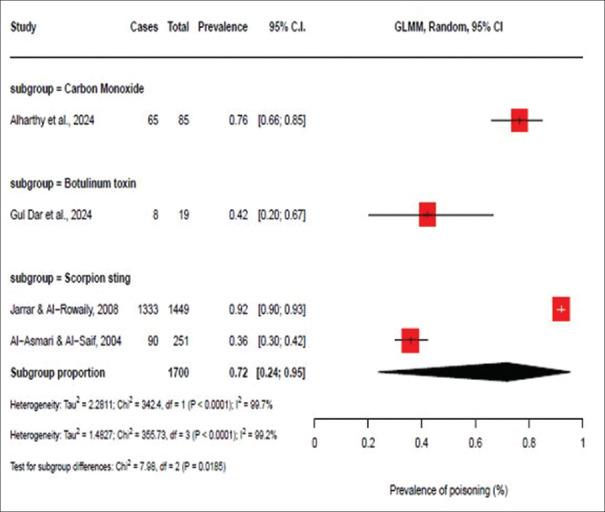
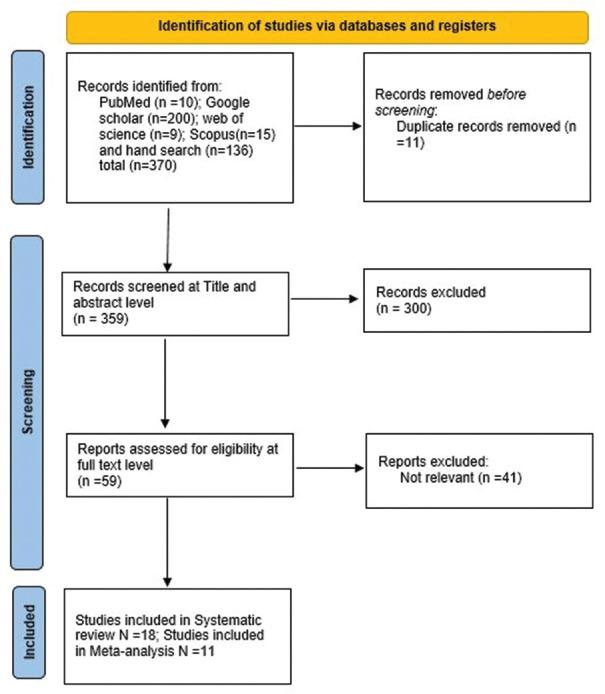
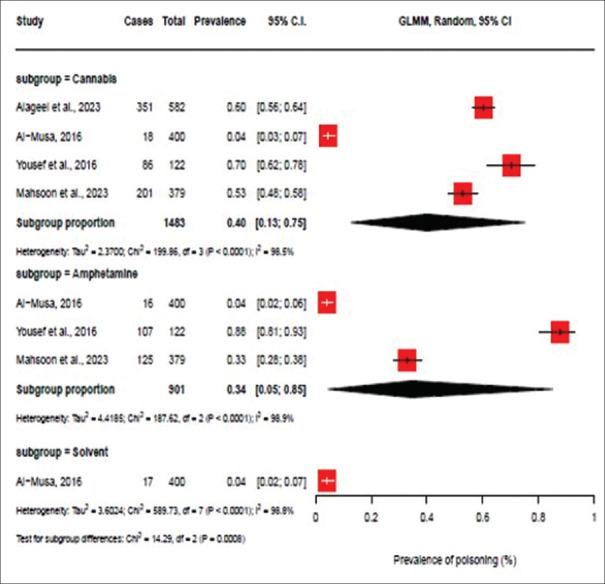
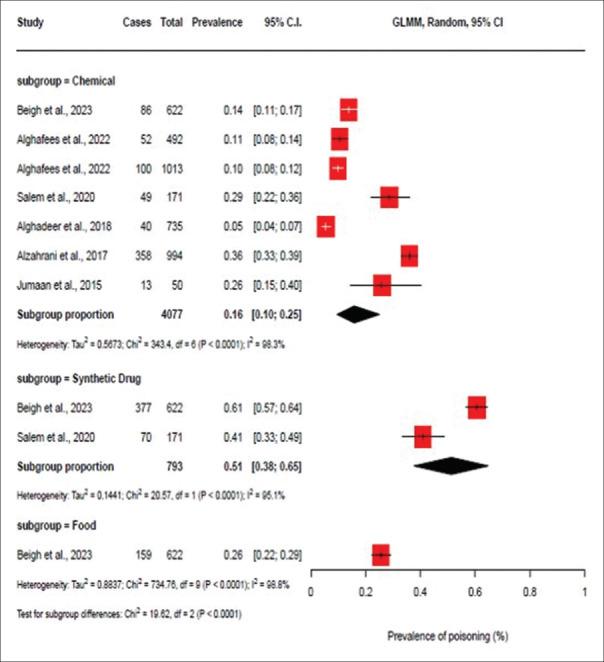
Poisoning is a growing significant concern globally. The increased use of industrial and household chemicals, together with widespread consumption of pharmaceuticals and processed foods, elevates the risk of toxic exposure worldwide. This study aimed to assess the frequency of toxic exposure by examining poisoning events in different regions of Saudi Arabia. A systematic literature review was conducted using PubMed, Web of Science, Scopus, and Google Scholar to identify studies on toxins and their prevalence in Saudi Arabia from 2004 to 2024. A meta-analysis was performed using R software, and the AXIS risk of bias was evaluated. Eighteen studies met the inclusion criteria for the systematic review, and eleven of these contributed data to the meta-analysis. Pooled prevalence for synthetic drugs was: cannabis 0.40 (95% confidence interval [CI]: 0.13-0.75), amphetamines 0.34 (95% CI: 0.05-0.85), and solvents 0.04 (95% CI: 0.02-0.07). Pooled prevalence for industrial chemicals was: chemical poisoning 0.16 (95% CI: 0.10-0.25), drug overdose 0.51 (95% CI: 0.38-0.65), and food 0.26 (95% CI: 0.22-0.29). Pooled prevalence for natural toxins was: carbon monoxide 0.76 (95% CI: 0.66-0.85), botulinum 0.42 (95% CI: 0.20-0.67), and scorpion stings 0.72 (95% CI: 0.24-0.95). The study highlights the diverse substances that cause acute poisoning in Saudi Arabia, with regional variations in toxin types and associated risks. Carbon monoxide was the most prevalent natural toxin (0.76), followed by scorpion stings (0.72). Drug overdose showed the highest prevalence of synthetic and chemical agents (0.51). Other notable toxins included botulinum (0.42), cannabis (0.40), and amphetamines (0.34). Industrial chemicals (0.16) and food-related toxins (0.26) also contributed to the issue. The findings highlight the need for public education programs on safe chemical and drug use. The future research should focus on risk factors, prevention, and the improvement of access to medical care.
中毒在全球范围内日益成为一个重大问题。工业和家用化学品使用的增加,以及药品和加工食品的广泛消费,提高了全球有毒物质暴露的风险。本研究旨在通过检查沙特阿拉伯不同地区的中毒事件来评估有毒物质暴露的频率。使用PubMed、科学网、Scopus和谷歌学术进行了系统的文献综述,以确定2004年至2024年期间沙特阿拉伯关于毒素及其流行情况的研究。使用R软件进行了荟萃分析,并评估了AXIS偏倚风险。18项研究符合系统综述的纳入标准,其中11项为荟萃分析提供了数据。合成药物的合并患病率为:大麻0.40(95%置信区间[CI]:0.13 - 0.75),苯丙胺0.34(95%CI:0.05 - 0.85),以及溶剂0.04(95%CI:0.02 - 0.07)。工业化学品的合并患病率为:化学中毒0.16(95%CI:0.10 - 0.25),药物过量0.51(9,5%CI:0.38 - 0.65),以及食品0.26(95%CI:0.22 - 0.29)。天然毒素的合并患病率为:一氧化碳0.76(95%CI:0.66 - 0.85),肉毒杆菌0.42(95%CI:0.20 - 0.67),以及蝎子蜇伤0.72(95%CI:0.24 - 0.95)。该研究突出了在沙特阿拉伯导致急性中毒的多种物质,毒素类型和相关风险存在地区差异。一氧化碳是最常见的天然毒素(0.76),其次是蝎子蜇伤(0.72)。药物过量在合成和化学制剂中患病率最高(0.51)。其他值得注意的毒素包括肉毒杆菌(0.42)、大麻(0.40)和苯丙胺(0.34)。工业化学品(0.16)和与食品相关的毒素(0.26)也导致了这一问题。研究结果突出了开展关于安全使用化学品和药物的公众教育项目的必要性。未来的研究应关注风险因素、预防以及改善医疗服务的可及性。
 Zotero 插件