
肿瘤学中的靶向药物监测,利用下一代分析技术实现个性化治疗。
Targeted drug monitoring in oncology for personalized treatment with use of next generation analytics.
作者信息
Li Wei, Wen Chaoling, Ye Bin, Gujarathi Pranjal, Suryawanshi Meghraj, Vinchurkar Kuldeep, Bagban Imtiyaz, Singh Sudarshan, Olatunji Opeyemi Joshua
机构信息
Second People's Hospital of Wuhu, Wuhu, Anhui, China.
Anhui College of Traditional Chinese Medicine, Wuhu, 241000, Anhui, China.
出版信息
Discov Oncol. 2025 Aug 11;16(1):1523. doi: 10.1007/s12672-025-03376-4.
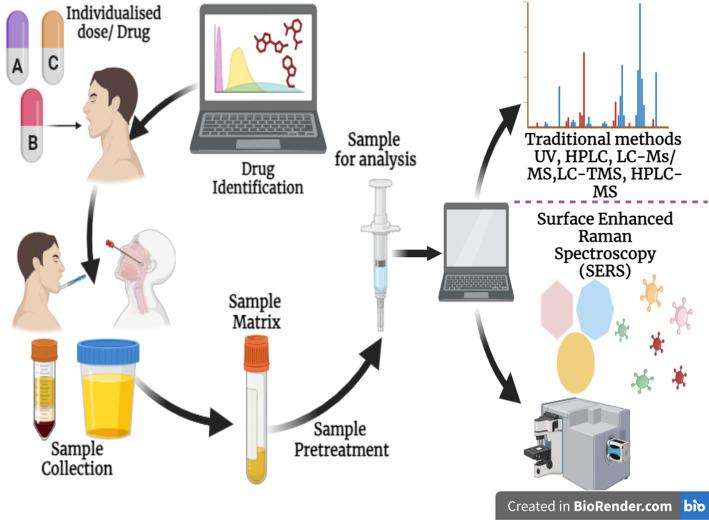
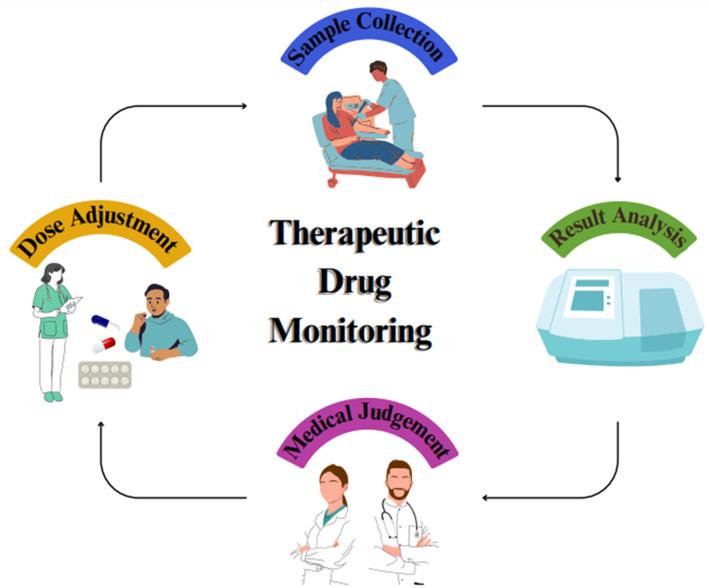
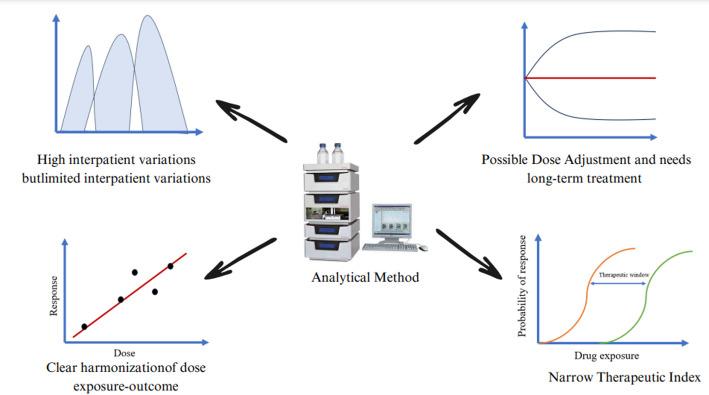
Therapeutic drug monitoring (TDM) is a clinical procedure aimed at maintaining plasma drug concentrations within a specific therapeutic range, thereby maximizing the safety and efficacy of pharmacological therapy. Conventional oncology strategies face challenges like non-specific toxicity, drug resistance, incomplete tumor eradication, high costs, and significant side effects that impact quality of life. Moreover, conventional therapy offers limited benefits in advanced stages, pose risks of secondary cancers and immune suppression, and lack personalization, highlighting the need for targeted, innovative approaches. In modern oncology, TDM has gained significant interest due to narrow therapeutic windows, significant inter-individual variability in pharmacokinetics, and the complexity of cancer pharmacotherapy. This study reviews the role of TDM in oncology with more emphasis on pharmacogenetic testing, immunoassays, and liquid-chromatography-mass spectroscopy (LC-MS/MS) techniques, highlighting its applications in optimizing the dose during immunotherapies, targeted therapies, and chemotherapeutics. Moreover, the review discusses the challenges and limitations associated with TDM in oncology, such as the requirement of robust clinical evidence, standardized practices, and integration with personalized medicine approaches. Emerging technologies, including AI and machine learning, are also considered for their potential to enhance TDM in oncology.
治疗药物监测(TDM)是一种临床程序,旨在将血浆药物浓度维持在特定的治疗范围内,从而使药物治疗的安全性和有效性最大化。传统的肿瘤学策略面临着诸如非特异性毒性、耐药性、肿瘤根除不完全、成本高以及影响生活质量的显著副作用等挑战。此外,传统疗法在晚期阶段提供的益处有限,存在引发继发性癌症和免疫抑制的风险,且缺乏个性化,这凸显了对靶向、创新方法的需求。在现代肿瘤学中,由于治疗窗狭窄、药代动力学个体间差异显著以及癌症药物治疗的复杂性,TDM受到了广泛关注。本研究回顾了TDM在肿瘤学中的作用,更侧重于药物遗传学检测、免疫测定和液相色谱 - 质谱联用(LC-MS/MS)技术,强调了其在优化免疫治疗、靶向治疗和化疗期间剂量方面的应用。此外,该综述讨论了肿瘤学中与TDM相关的挑战和局限性,如需要强有力的临床证据、标准化操作以及与个性化医疗方法的整合。还考虑了包括人工智能和机器学习在内的新兴技术在增强肿瘤学中TDM方面的潜力。
 Zotero 插件