
慢性粒单核细胞白血病的异基因移植
Allogeneic Transplant for CMML.
作者信息
Gagelmann Nico, Desai Nihar
机构信息
Department of Stem Cell Transplantation, University Medical Center Hamburg-Eppendorf, Hamburg, Germany.
Hans Messner Allogeneic Blood and Marrow Transplant Program, Division of Medical Oncology and Hematology, Princess Margaret Cancer Centre, Toronto, Canada.
出版信息
Curr Hematol Malig Rep. 2025 Aug 11;20(1):10. doi: 10.1007/s11899-025-00754-1.
PURPOSE OF REVIEW
Chronic myelomonocytic leukemia (CMML) is a rare hematologic malignancy at the intersection of myelodysplastic (MDS) and myeloproliferative neoplasms, predominantly affecting older adults. Allogeneic hematopoietic cell transplantation (allo-HCT) remains the only curative option, yet its application is limited by the advanced age and comorbidities of most patients. Recent classification updates and refined prognostic tools, particularly molecularly integrated models like CPSS-Mol have enhanced patient stratification and informed transplant timing. The aim of this review is to highlight the evolving landscape of CMML management, with a focus on the role of allo-HCT.
RECENT FINDINGS
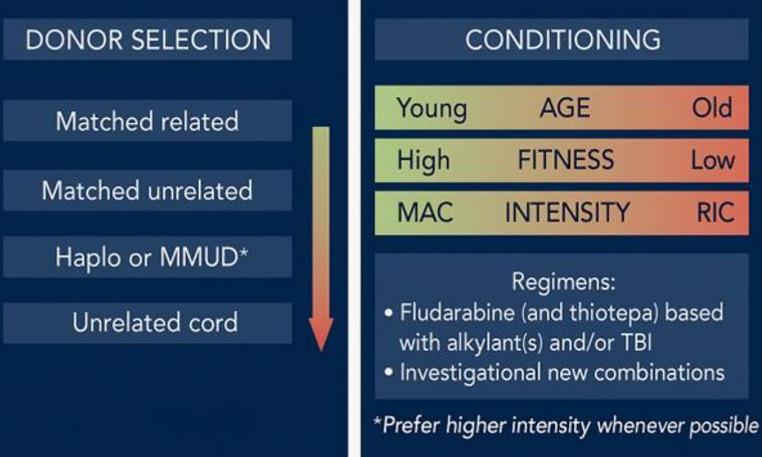
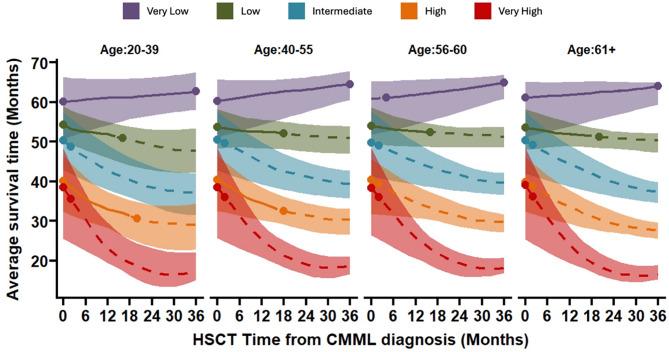
Novel studies patients demonstrated that individualized transplant timing significantly improved life expectancy. Optimizing transplant outcomes hinges on several factors:managing pretransplant splenomegaly, choosing appropriate debulking strategies, selecting optimal donors, and tailoring conditioning regimens. New data favor treosulfan-based and thiotepa-busulfan regimens for their favorable toxicity and relapse profiles. Post-transplant, strategies like post-transplant cyclophosphamide (PTCy) for GVHD prophylaxis and emerging approaches to minimal residual disease (MRD) monitoring offer additional refinements in patient management. While no MRD studies are CMML-specific, extrapolation from MDS supports its role in relapse prediction. Innovative therapies, including hypomethylating agent combinations, venetoclax, targeted inhibitors, and immunotherapies are under active investigation, with potential to improve pre- and post-transplant outcomes. Advancements in molecular classification, dynamic prognostic tools, and therapeutic strategies are reshaping the CMML treatment paradigm. Personalized approaches that integrate genetic risk, patient fitness, and disease characteristics are enabling more effective transplant strategies, with the ultimate goal of extending survival and improving quality of life in this complex and historically difficult-to-treat malignancy.
综述目的
慢性粒单核细胞白血病(CMML)是一种罕见的血液系统恶性肿瘤,处于骨髓增生异常综合征(MDS)和骨髓增殖性肿瘤的交叉点,主要影响老年人。异基因造血细胞移植(allo-HCT)仍然是唯一的治愈选择,但其应用受到大多数患者高龄和合并症的限制。最近的分类更新和完善的预后工具,特别是像CPSS-Mol这样的分子整合模型,增强了患者分层并为移植时机提供了依据。本综述的目的是突出CMML管理不断变化的格局,重点关注allo-HCT的作用。
最新发现
新的研究表明,个体化的移植时机显著提高了预期寿命。优化移植结果取决于几个因素:管理移植前的脾肿大、选择合适的减瘤策略、选择最佳供体以及调整预处理方案。新数据支持基于曲奥舒凡和硫替派-白消安的方案,因其具有良好的毒性和复发特征。移植后,如用于预防移植物抗宿主病(GVHD)的移植后环磷酰胺(PTCy)以及监测微小残留病(MRD)的新方法等策略,为患者管理提供了更多优化。虽然没有针对CMML的MRD研究,但从MDS推断支持其在复发预测中的作用。包括去甲基化药物联合、维奈克拉、靶向抑制剂和免疫疗法在内的创新疗法正在积极研究中,有可能改善移植前后的结果。分子分类、动态预后工具和治疗策略的进展正在重塑CMML的治疗模式。整合遗传风险、患者健康状况和疾病特征的个性化方法正在实现更有效的移植策略,最终目标是延长这种复杂且历来难以治疗的恶性肿瘤患者的生存期并提高生活质量。

 Zotero 插件