
皮肤和葡萄膜黑色素瘤转移患者外周血中γδ T细胞的细胞和分子特征
Cellular and molecular characterization of γδ T cells in peripheral blood from patients with metastases from cutaneous and uveal melanoma.
作者信息
Alonso-Agudo Tamara, Johansson Junko, Ståhlberg Anders, Olofsson Bagge Roger
机构信息
Department of Surgery, Institute of Clinical Sciences, Sahlgrenska Academy, University of Gothenburg, Gothenburg, Sweden.
Wallenberg Centre for Molecular and Translational Medicine, University of Gothenburg, Gothenburg, Sweden.
出版信息
Front Immunol. 2025 Jul 28;16:1564333. doi: 10.3389/fimmu.2025.1564333. eCollection 2025.
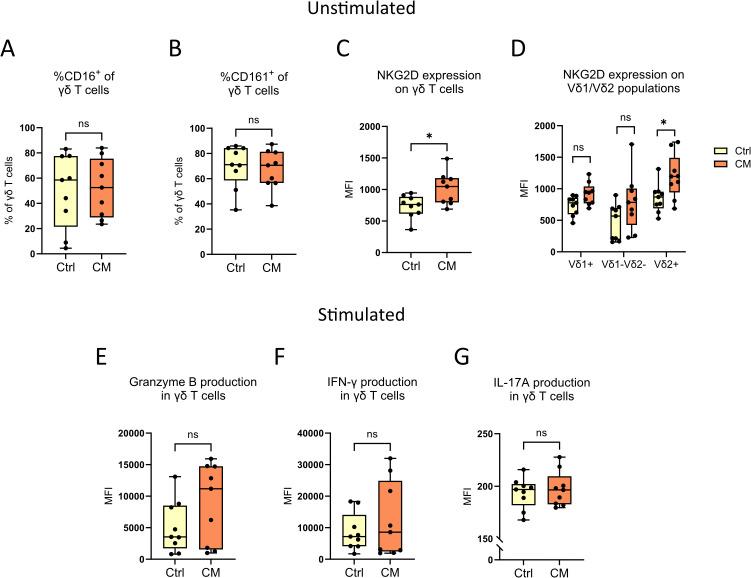
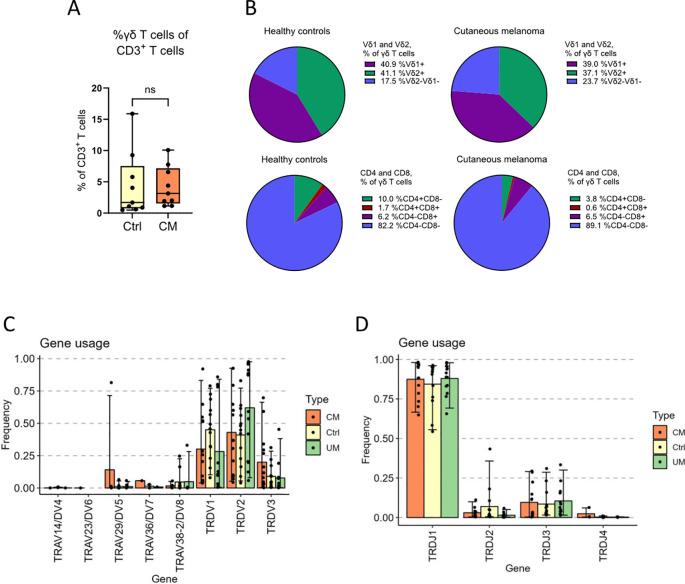
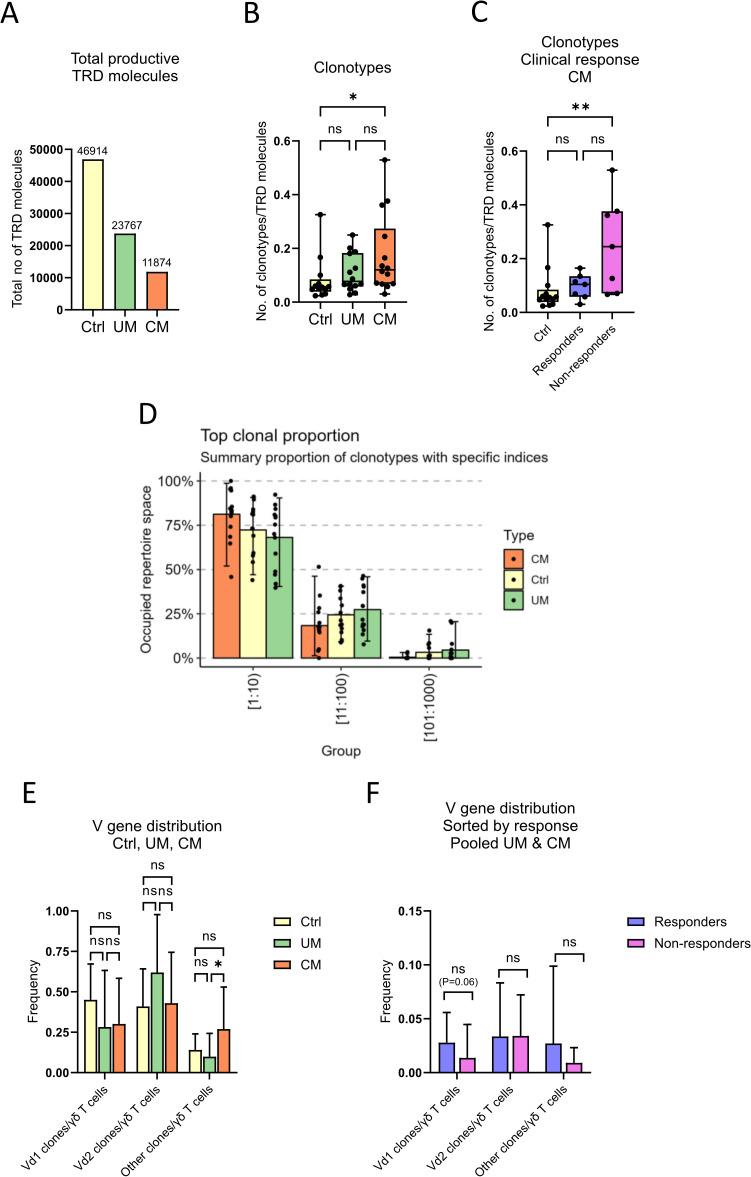
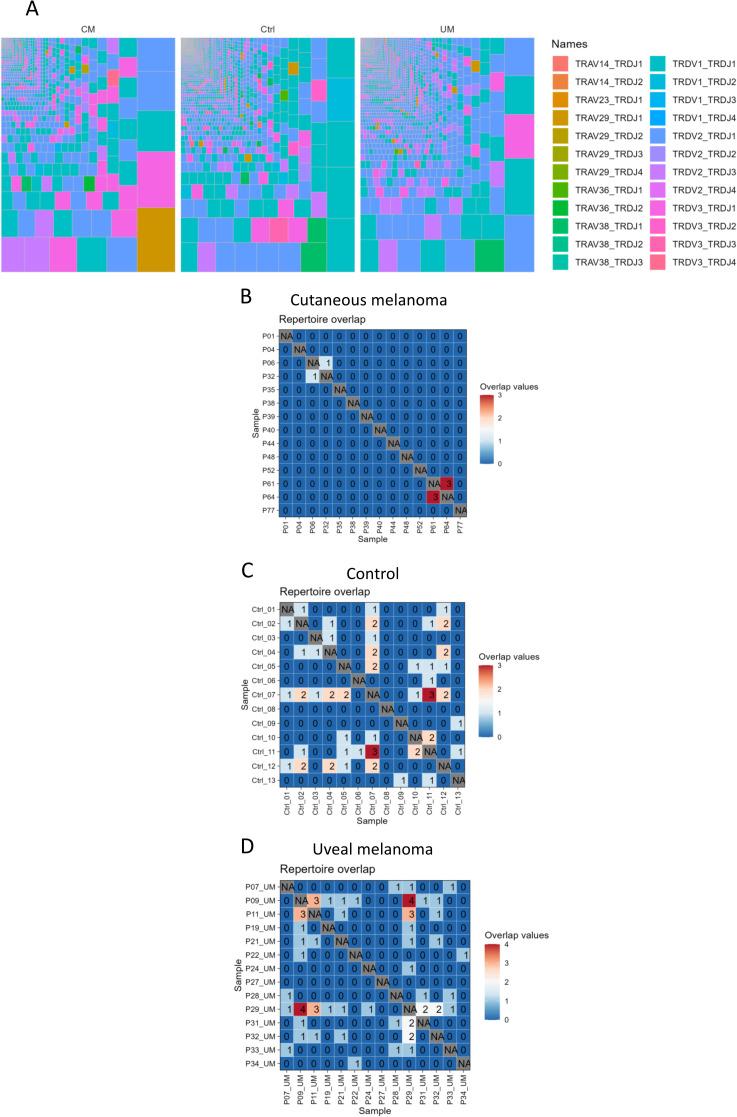
T cells can be divided into two major subtypes based on which chains that make up the T cell receptor (TCR): the conventional αβ T cells and the less common γδ T cells. γδ T cells are attractive targets of cancer immunotherapy due to e.g. their independence from MHC-restricted activation. Despite the successful implementation of immune checkpoint inhibitors for the treatment of metastatic melanoma, not all patients respond favorably to the treatment. In this study we characterized γδ T cells in peripheral blood from patients with cutaneous and uveal melanoma, and from age-matched healthy controls, with ultrasensitive DNA sequencing (SiMSen-Seq) of the δ-chain and flow cytometry to facilitate the introduction of γδ T cell-based treatment strategies. As a general trend, the Vδ1 subpopulation was found to be more abundant in patients labeled as responders versus non-responders. Regarding clonal diversity, although a high oligoclonality was found in each individual and within each group, clonal diversity was lower in patients labeled as responders to treatment. Cutaneous melanoma patients had a larger total number of clonotypes compared to the healthy controls, and did also express higher levels of the receptor NKG2D on the surface of Vδ2 cells. Overall, we could see small differences between cutaneous and uveal melanoma patients and healthy controls in regard to distribution of γδ subpopulations, with high clonal diversities and a mostly private repertoire of the δ receptor among all groups.
根据构成T细胞受体(TCR)的链的不同,T细胞可分为两个主要亚型:传统的αβ T细胞和不太常见的γδ T细胞。例如,γδ T细胞因其不依赖MHC限制的激活而成为癌症免疫治疗的有吸引力的靶点。尽管免疫检查点抑制剂已成功用于治疗转移性黑色素瘤,但并非所有患者对该治疗都有良好反应。在本研究中,我们使用δ链的超灵敏DNA测序(SiMSen-Seq)和流式细胞术对皮肤和葡萄膜黑色素瘤患者以及年龄匹配的健康对照者外周血中的γδ T细胞进行了表征,以促进基于γδ T细胞的治疗策略的引入。总体趋势是,在被标记为反应者与无反应者的患者中,发现Vδ1亚群更为丰富。关于克隆多样性,尽管在每个个体和每组中都发现了高度寡克隆性,但在被标记为对治疗有反应的患者中,克隆多样性较低。与健康对照相比,皮肤黑色素瘤患者的克隆型总数更多,并且在Vδ2细胞表面也表达更高水平的受体NKG2D。总体而言,我们可以看到皮肤和葡萄膜黑色素瘤患者与健康对照在γδ亚群分布方面存在细微差异,所有组中克隆多样性高,且δ受体的谱系大多是个体特有的。
 Zotero 插件