
肥胖和非肥胖多囊卵巢综合征(PCOS)患者的脂肪因子失调:与内脏脂肪指数和代谢风险的关联
Adipokine Dysregulation in Obese and Non-Obese Polycystic Ovary Syndrome (PCOS) Patients: Association With Visceral Adiposity Index and Metabolic Risk.
作者信息
Kumari Minakshi, Kumar Saket, Das Jhuma
机构信息
Biochemistry, Netaji Subhas Medical College and Hospital, Jamshedpur, IND.
Pathology, Netaji Subhas Medical College and Hospital, Jamshedpur, IND.
出版信息
Cureus. 2025 Jul 11;17(7):e87755. doi: 10.7759/cureus.87755. eCollection 2025 Jul.
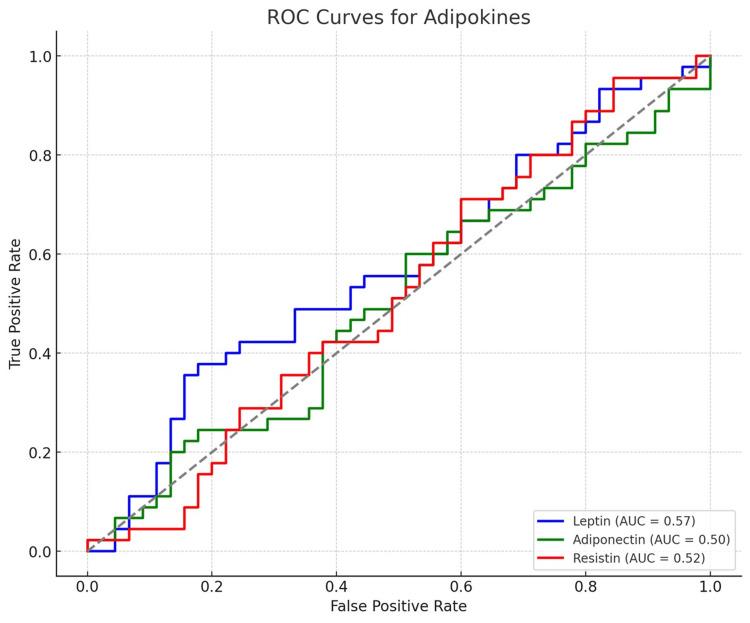
Background Polycystic ovary syndrome (PCOS) is a multifactorial endocrine disorder characterized by metabolic and reproductive abnormalities. Obesity exacerbates PCOS-associated insulin resistance, inflammation, and hormonal imbalances, potentially influencing adipokine secretion. This study evaluated variations in adipokines between obese and non-obese PCOS patients and their association with the Visceral Adiposity Index (VAI), metabolic parameters, and disease severity. Methods A cross-sectional study was conducted at a tertiary care center in North India on 90 women diagnosed with PCOS using the Rotterdam 2003 criteria. Participants were categorized into obese (n=45) and non-obese (n=45) groups based on body mass index (BMI). Clinical, biochemical, and inflammatory markers were assessed, including leptin, adiponectin, resistin, tumor necrosis factor alpha (TNF-α), and interleukin-6 (IL-6). Metabolic parameters such as fasting glucose, insulin, homeostatic model assessment for insulin resistance (HOMA-IR), and lipid profile were evaluated. Pearson correlation and receiver operating characteristic (ROC) analyses were used to assess associations and diagnostic accuracy. Results Obese PCOS patients had significantly higher leptin (24.5 ± 6.2 vs. 14.2 ± 5.8 ng/mL, p<0.001) and lower adiponectin (5.2 ± 1.4 vs. 7.8 ± 1.9 µg/mL, p=0.002) than non-obese counterparts. Resistin, TNF-α, and IL-6 were also elevated in the obese group (p<0.05). Obesity was associated with increased fasting glucose (mean difference = 5.6 mg/dL, 95% CI: 0.2-11.0, p=0.043), insulin (mean difference = 4.1 µIU/mL, 95% CI: 2.1-6.1, p<0.001), HOMA-IR (mean difference = 1.2, 95% CI: 0.7-1.7, p<0.001), triglycerides (mean difference = 24.3 mg/dL, 95% CI: 3.1-45.5, p=0.025), and lower high-density lipoprotein cholesterol (HDL-C) (mean difference = -6.2 mg/dL, 95% CI: -11.4 to -1.0, p=0.018). Leptin correlated positively with BMI (r=0.742, p<0.001) and VAI (r=0.763, p<0.001), while adiponectin showed a negative correlation (r=-0.515, p=0.010). ROC analysis indicated that leptin had the highest diagnostic accuracy for predicting obesity in PCOS (area under the curve [AUC] =0.85, 95% CI: 0.79-0.91, p<0.001). Conclusion Obesity in PCOS is associated with significant alterations in adipokine profiles, metabolic dysfunction, and elevated inflammatory markers. Leptin demonstrated the strongest association with obesity and metabolic disturbances, supporting its potential as a biomarker for identifying metabolic risk in PCOS. Targeted interventions addressing adipokine imbalances may help mitigate metabolic complications in obese PCOS patients.
背景
多囊卵巢综合征(PCOS)是一种多因素内分泌紊乱疾病,其特征为代谢和生殖异常。肥胖会加剧PCOS相关的胰岛素抵抗、炎症和激素失衡,可能影响脂肪因子的分泌。本研究评估了肥胖和非肥胖PCOS患者脂肪因子的差异及其与内脏脂肪指数(VAI)、代谢参数和疾病严重程度的关联。方法:在印度北部的一家三级医疗中心进行了一项横断面研究,对90名根据2003年鹿特丹标准诊断为PCOS的女性进行研究。根据体重指数(BMI)将参与者分为肥胖组(n = 45)和非肥胖组(n = 45)。评估了临床、生化和炎症标志物,包括瘦素、脂联素、抵抗素、肿瘤坏死因子α(TNF-α)和白细胞介素-6(IL-6)。评估了空腹血糖、胰岛素、胰岛素抵抗稳态模型评估(HOMA-IR)和血脂谱等代谢参数。采用Pearson相关性分析和受试者工作特征(ROC)分析来评估关联和诊断准确性。结果:肥胖PCOS患者的瘦素水平显著高于非肥胖患者(24.5±6.2 vs. 14.2±5.8 ng/mL,p<0.001),脂联素水平显著低于非肥胖患者(5.2±1.4 vs. 7.8±1.9 µg/mL,p = 0.002)。肥胖组的抵抗素、TNF-α和IL-6水平也升高(p<0.05)。肥胖与空腹血糖升高(平均差异=5.6 mg/dL,95% CI:0.2 - 11.0,p = 0.043)、胰岛素升高(平均差异=4.1 µIU/mL,95% CI:2.1 - 6.1,p<0.001)、HOMA-IR升高(平均差异=1.2,95% CI:0.7 - 1.7,p<0.001)、甘油三酯升高(平均差异=24.3 mg/dL,95% CI:3.1 - 45.5,p = 0.025)以及高密度脂蛋白胆固醇(HDL-C)降低(平均差异=-6.2 mg/dL,95% CI:-11.4至-1.0,p = 0.018)相关。瘦素与BMI呈正相关(r = 0.742,p<0.001),与VAI呈正相关(r = 0.763,p<0.001),而脂联素呈负相关(r = -0.515,p = 0.010)。ROC分析表明,瘦素在预测PCOS患者肥胖方面具有最高的诊断准确性(曲线下面积[AUC]=0.85,95% CI:0.79 - 0.91,p<0.001)。结论:PCOS患者的肥胖与脂肪因子谱的显著改变、代谢功能障碍和炎症标志物升高有关。瘦素与肥胖和代谢紊乱的关联最强,支持其作为识别PCOS患者代谢风险生物标志物的潜力。针对脂肪因子失衡的靶向干预可能有助于减轻肥胖PCOS患者的代谢并发症。
 Zotero 插件