
蠕虫感染会影响宿主对病毒感染和疫苗的免疫反应。
Helminth infections affect host immune responses to viral infections and vaccines.
作者信息
García-Bernalt Diego Juan, Desai Pritesh, Yeung Stephen T, Damani-Yokota Payal, Khanna Kamal M, Diamond Michael S, Schotsaert Michael
机构信息
Department of Microbiology, Icahn School of Medicine at Mount Sinai, New York, NY 10029, United States.
Global Health and Emerging Pathogens Institute, Icahn School of Medicine at Mount Sinai, New York, NY 10029, United States.
出版信息
FEMS Microbiol Rev. 2025 Jan 14;49. doi: 10.1093/femsre/fuaf036.
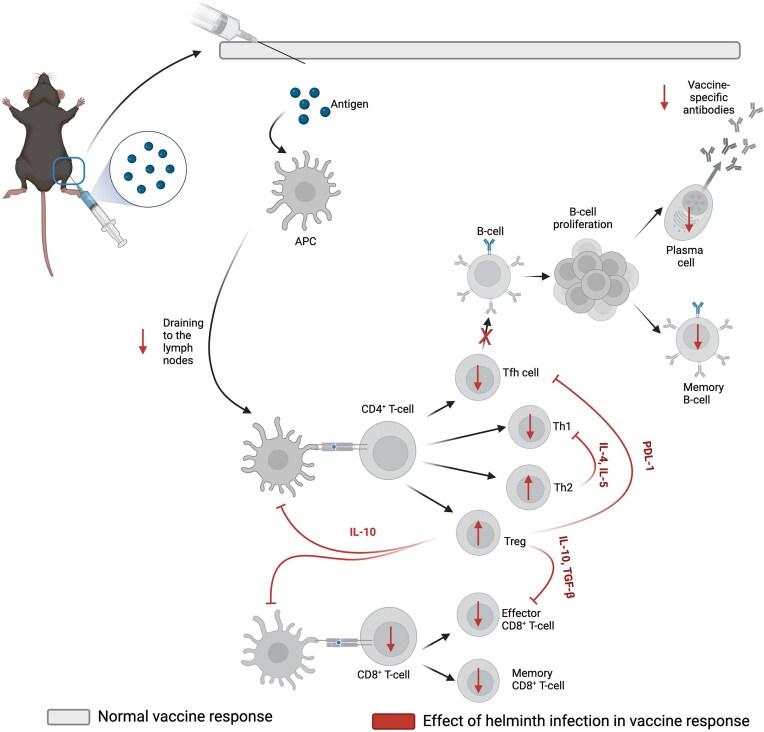
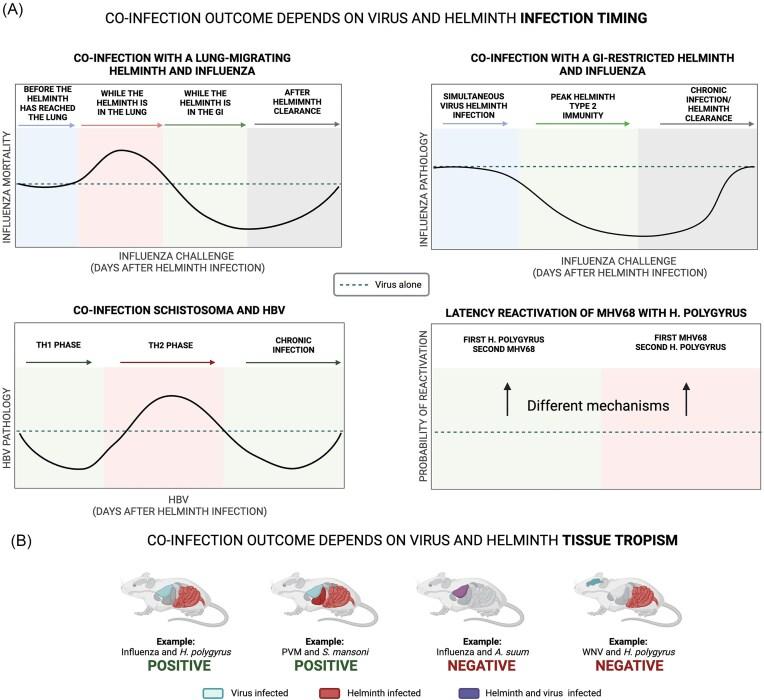
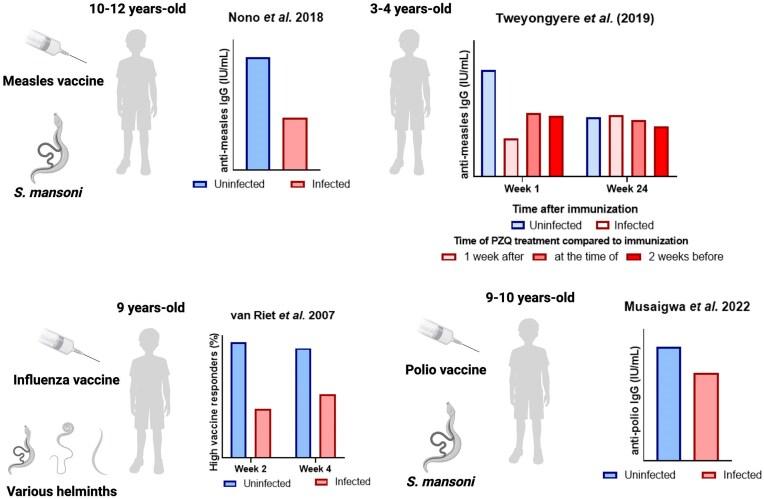
Helminths are highly prevalent in many regions of the world. Due to the chronic nature of most helminth infections, these parasites are proficient immunomodulators of their hosts. This modulation often leads to skewed or even impaired immune responses against unrelated antigens, such as viruses and vaccines, which can be both beneficial and detrimental for the host. The extent of these effects and the impact on the outcomes of viral infection depends on a variety of factors including timing and tropism of both infections, pathological mechanisms, genetic background, and environmental factors. In this review, we dissect these complex interactions between virus and helminths in the context of coinfection and the impact of helminth infection on antiviral vaccine efficacy. We characterize the key contributing mechanisms that have been defined in preclinical models and human trials and describe the immune actors involved in the modulation of the antiviral and vaccine immune response by helminths. Finally, we address the limitations of our current understanding of helminth-virus interactions.
蠕虫在世界许多地区高度流行。由于大多数蠕虫感染具有慢性性质,这些寄生虫是其宿主的高效免疫调节剂。这种调节通常会导致针对无关抗原(如病毒和疫苗)的免疫反应出现偏差甚至受损,这对宿主可能既有益也有害。这些影响的程度以及对病毒感染结果的影响取决于多种因素,包括两种感染的时间和嗜性、病理机制、遗传背景和环境因素。在这篇综述中,我们剖析了病毒与蠕虫在合并感染情况下的这些复杂相互作用,以及蠕虫感染对抗病毒疫苗效力的影响。我们描述了在临床前模型和人体试验中已确定的关键促成机制,并阐述了参与蠕虫对抗病毒和疫苗免疫反应调节的免疫作用因子。最后,我们讨论了目前我们对蠕虫 - 病毒相互作用理解的局限性。

 Zotero 插件