
糖尿病诊断中的唾液生物标志物:文献计量分析
Salivary biomarkers in diabetes mellitus diagnostics: A bibliometric analysis.
作者信息
Hu Die, Wu Yan, He Dongming, Rong Jin, Sun Meng, Yu Zhou, Wu Lihui
机构信息
Department of Nursing, The People's Hospital of Xishui, Zunyi, China.
Department of Urology, Suining Central Hospital, Suining, China.
出版信息
Medicine (Baltimore). 2025 Aug 8;104(32):e43760. doi: 10.1097/MD.0000000000043760.
BACKGROUND
Diabetes mellitus (DM) is a prevalent chronic disease worldwide, requiring accurate diagnosis and effective treatment for improved patient outcomes. Traditional glucose monitoring methods, such as venous blood sampling and fingertip glucose tests, are invasive and inconvenient. Salivary analysis, being noninvasive, easily accessible, and abundant, offers a promising diagnostic and monitoring alternative for DM. This study systematically assesses the current status and emerging trends of salivary analysis technology in DM research using bibliometric analysis.
METHODS
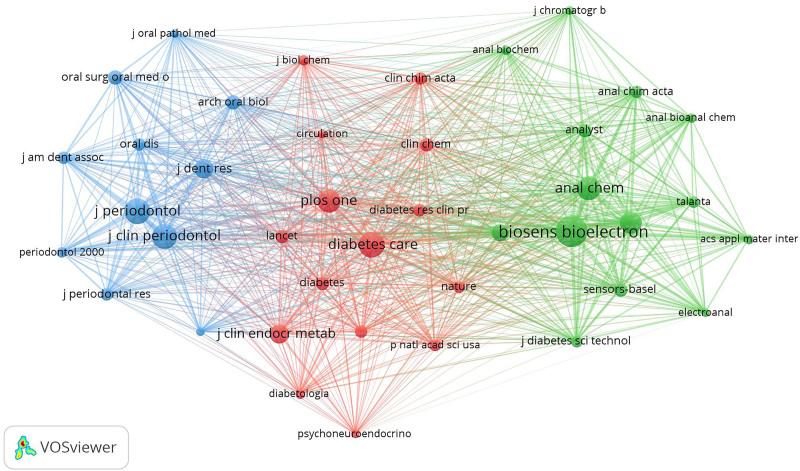
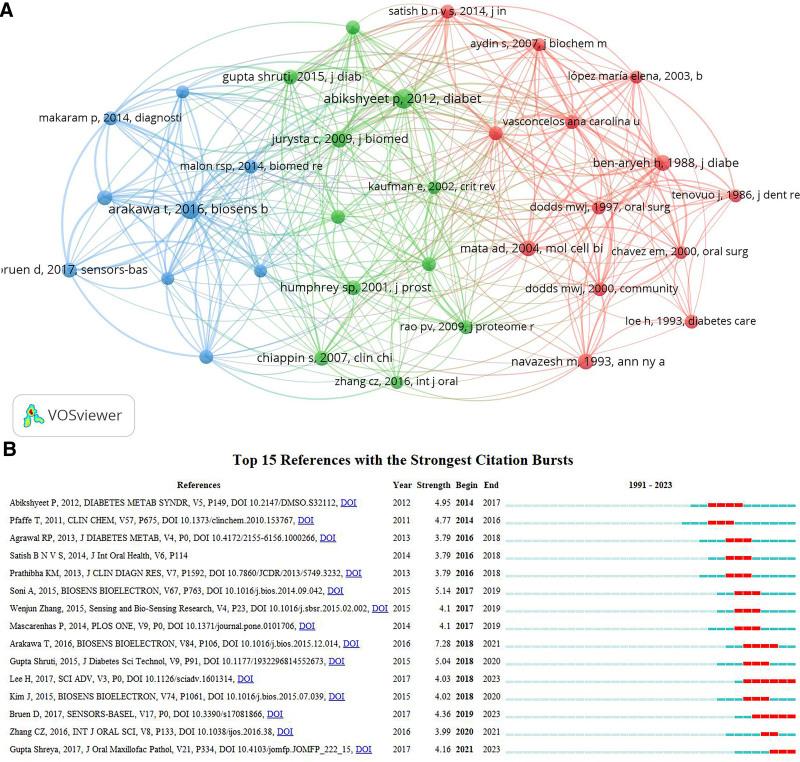
This study analyzed 482 publications on DM-related salivary analysis spanning from 1990 to 2023, sourced from the Web of Science Core Collection (WoSCC). Using VOSviewer, CiteSpace, and Pajek for co-occurrence and network visualization, we examined key contributors, influential countries and institutions, prominent journals, and thematic trends within the research domain. These tools enabled a comprehensive understanding of the evolving applications and research focuses of salivary analysis in DM.
RESULTS
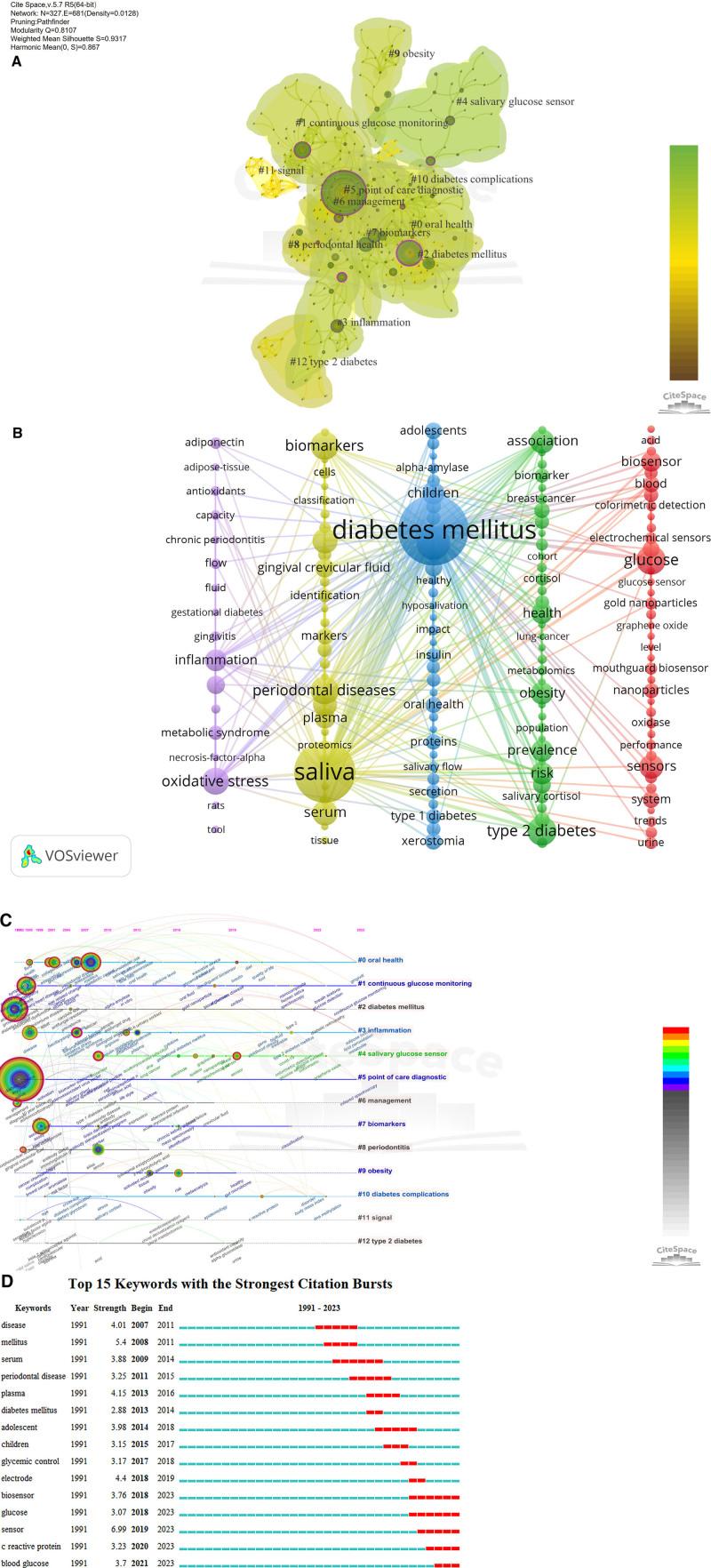
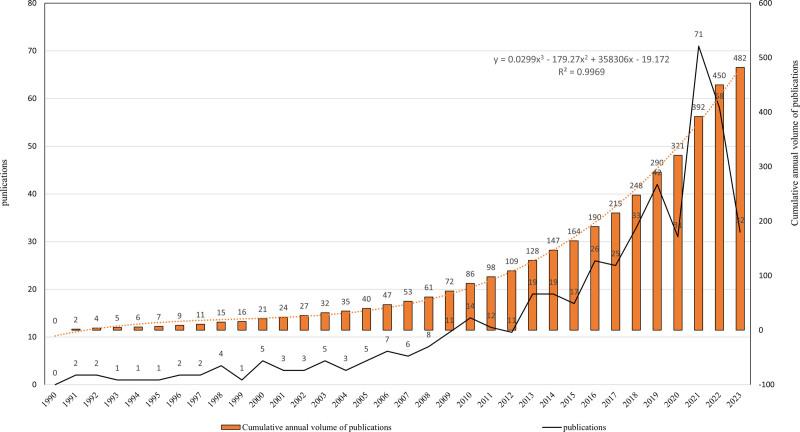
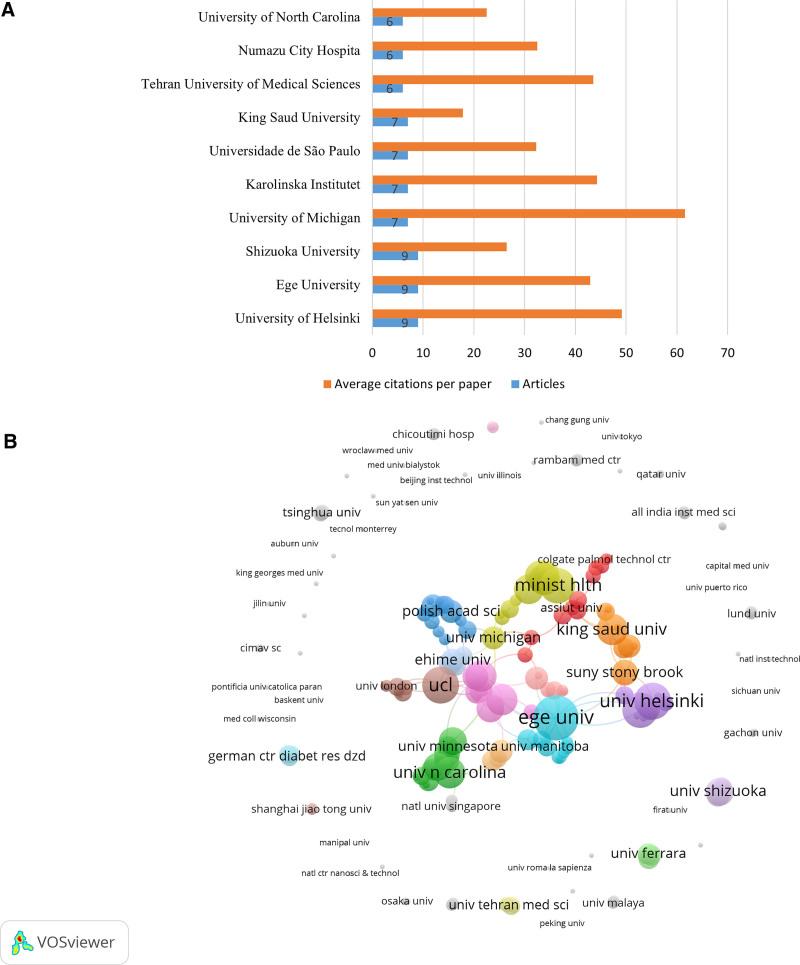
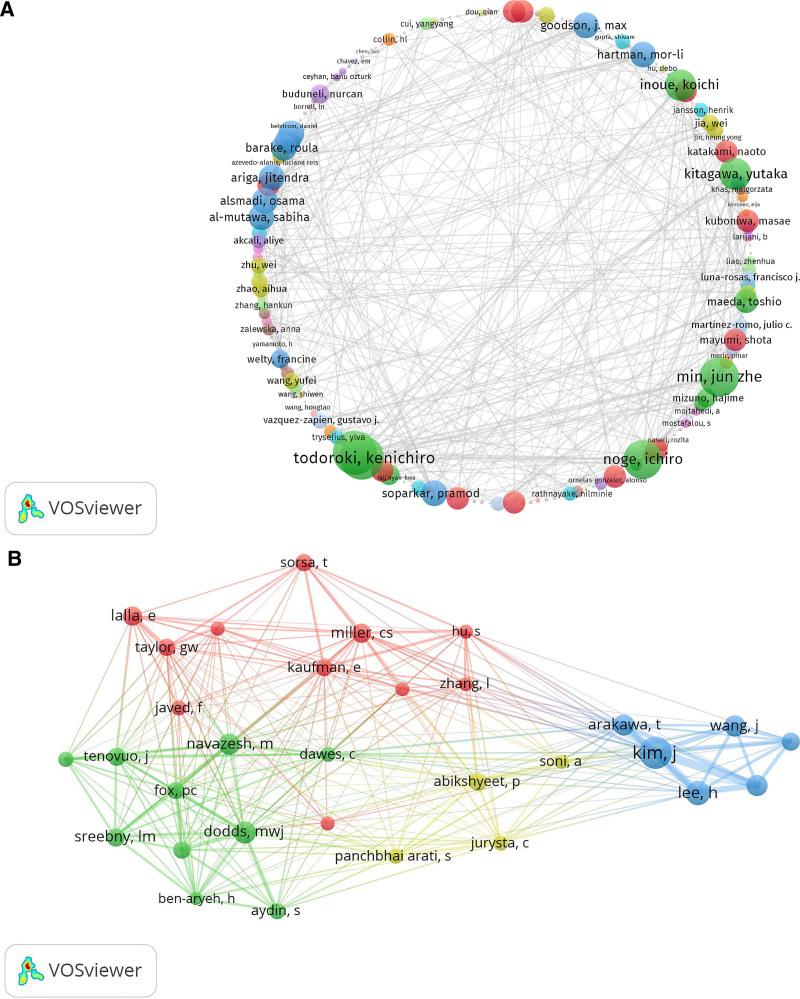
From 1990 to 2023, DM-related salivary analysis research has shown a steady annual increase, particularly focusing on biomarkers such as glucose and C-reactive protein (CRP). Significant emphasis has been placed on advancing biosensors for salivary-based glucose monitoring and analyzing inflammatory responses. This study identifies key authors, pivotal research institutions, and central journals contributing to the field, shedding light on emerging trends and current research emphases.
CONCLUSIONS
Salivary analysis represents a promising noninvasive approach for the diagnosis, monitoring, and management of DM. Despite the study's focus on data from the WoSCC, the findings provide valuable insights into the current state and future potential of this field. Future research should prioritize the development of advanced portable sensor technologies for salivary glucose monitoring and CRP-based biosensors, which have the potential to predict the progression of type 2 diabetes mellitus through inflammatory biomarkers. These innovations could significantly enhance diagnostic accuracy, patient convenience, and personalized therapeutic strategies in DM management.
背景
糖尿病(DM)是一种在全球范围内普遍存在的慢性疾病,需要准确的诊断和有效的治疗以改善患者预后。传统的血糖监测方法,如静脉采血和指尖血糖检测,具有侵入性且不方便。唾液分析具有非侵入性、易于获取且含量丰富的特点,为糖尿病的诊断和监测提供了一种有前景的替代方法。本研究使用文献计量分析系统地评估了唾液分析技术在糖尿病研究中的现状和新兴趋势。
方法
本研究分析了1990年至2023年期间来自科学引文索引核心合集(WoSCC)的482篇关于糖尿病相关唾液分析的出版物。使用VOSviewer、CiteSpace和Pajek进行共现分析和网络可视化,我们研究了该研究领域的主要贡献者、有影响力的国家和机构、著名期刊以及主题趋势。这些工具使我们能够全面了解唾液分析在糖尿病中不断发展的应用和研究重点。
结果
从1990年到2023年,糖尿病相关唾液分析研究每年稳步增长,尤其关注葡萄糖和C反应蛋白(CRP)等生物标志物。重点一直放在推进用于基于唾液的血糖监测的生物传感器以及分析炎症反应上。本研究确定了该领域的关键作者、关键研究机构和核心期刊,揭示了新兴趋势和当前研究重点。
结论
唾液分析是一种有前景的用于糖尿病诊断、监测和管理的非侵入性方法。尽管本研究侧重于来自WoSCC的数据,但研究结果为该领域的现状和未来潜力提供了有价值的见解。未来的研究应优先开发用于唾液葡萄糖监测的先进便携式传感器技术以及基于CRP的生物传感器,这些传感器有可能通过炎症生物标志物预测2型糖尿病的进展。这些创新可以显著提高糖尿病管理中的诊断准确性、患者便利性和个性化治疗策略。


 Zotero 插件