
儿童营养缺乏全球负担的趋势与跨国不平等及到2035年的预测:2021年全球疾病负担研究结果
Trends and cross-country inequality in the global burden of nutritional deficiencies in children, with projections to 2035: results from the Global Burden of Disease study 2021.
作者信息
Zhuang Shihao, Ruan Meijiang, Chen Qin, Wang Qiaomei, Chen Ting, Wang Hao, Liu Shanshan, Chen Qiudan, Zhang Chengchen, Hong Li
机构信息
College of Clinical Medicine for Obstetrics & Gynecology and Pediatrics, Fujian Medical University, Fuzhou, China.
Fujian Children's Hospital, Fuzhou, China.
出版信息
Front Nutr. 2025 Jul 29;12:1615593. doi: 10.3389/fnut.2025.1615593. eCollection 2025.
BACKGROUND
Nutritional deficiencies in children are a significant global health concern, contributing to considerable morbidity and mortality. This study evaluates the burden of children's nutritional deficiencies from 1990 to 2021, focusing on key indicators and exploring regional disparities and the role of socio-economic factors.
METHODS
Data from the Global Burden of Disease 2021 study were analyzed for children's nutritional deficiencies across 204 countries and territories. Age-standardized rates (ASRs) for prevalence (ASPR), incidence (ASIR), DALYs (ASDR), and mortality (ASMR) were calculated. Trends were assessed using estimated annual percentage changes (EAPC), and decomposition analysis was conducted to evaluate the drivers of changes in the burden of nutritional deficiencies. Projections to 2035 were made using the Bayesian age-period-cohort model and Health inequality was assessed to analyze transnational health inequality.
RESULTS
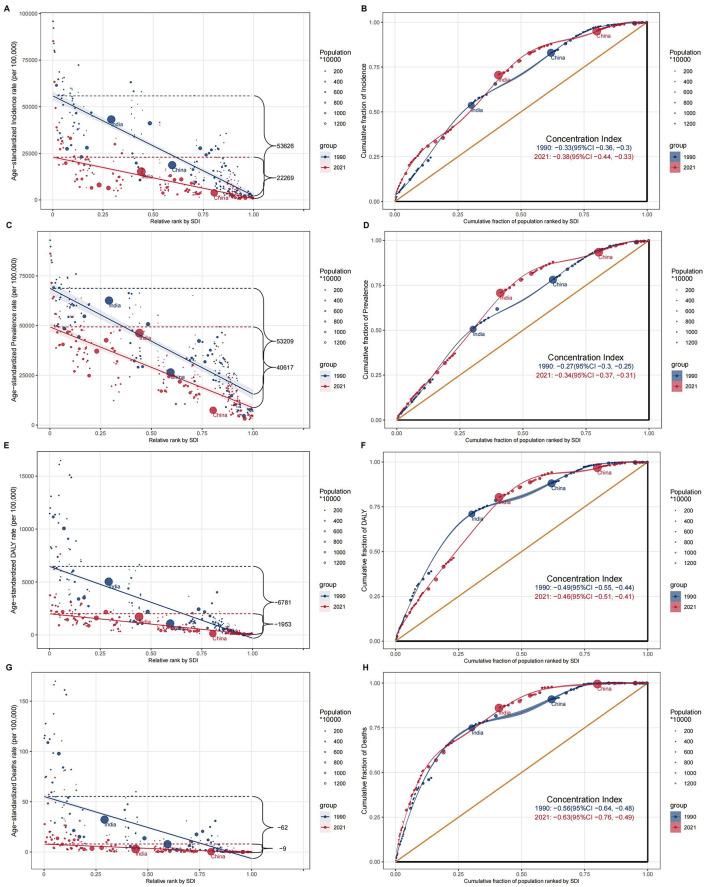
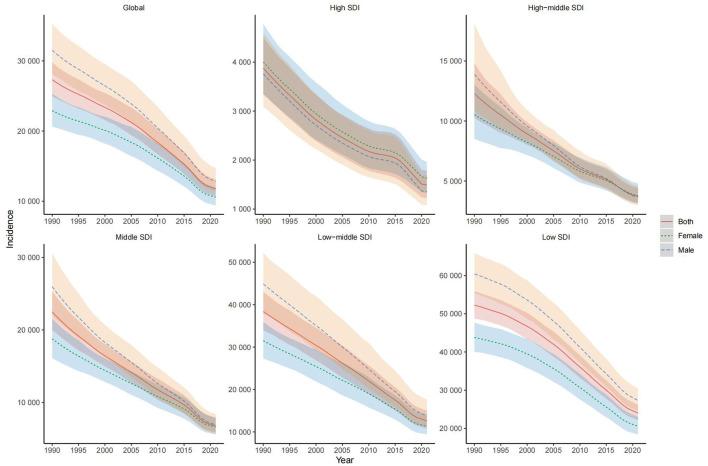
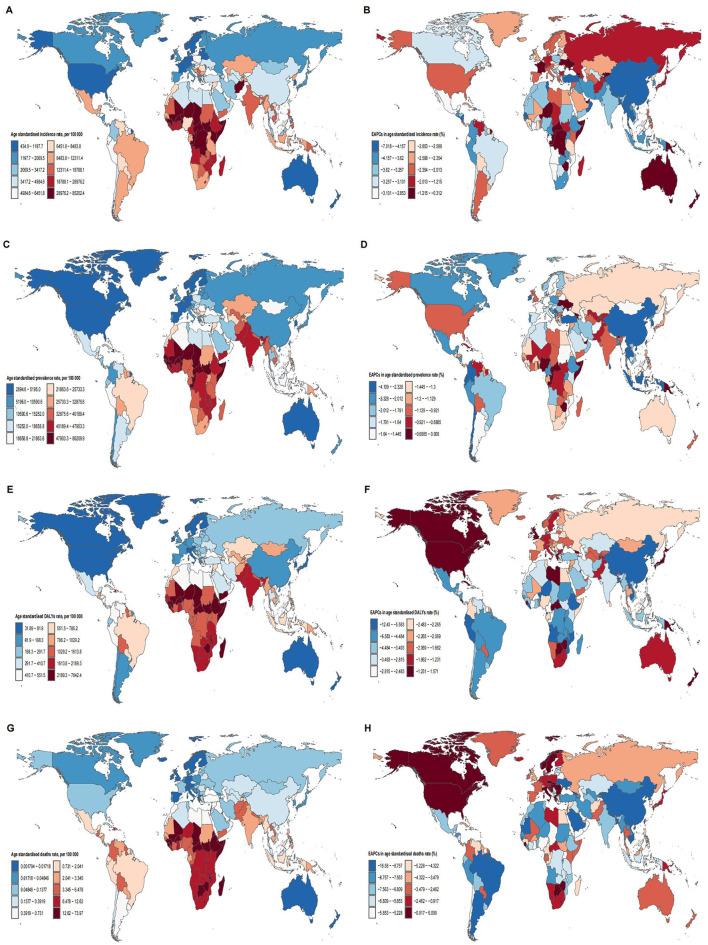
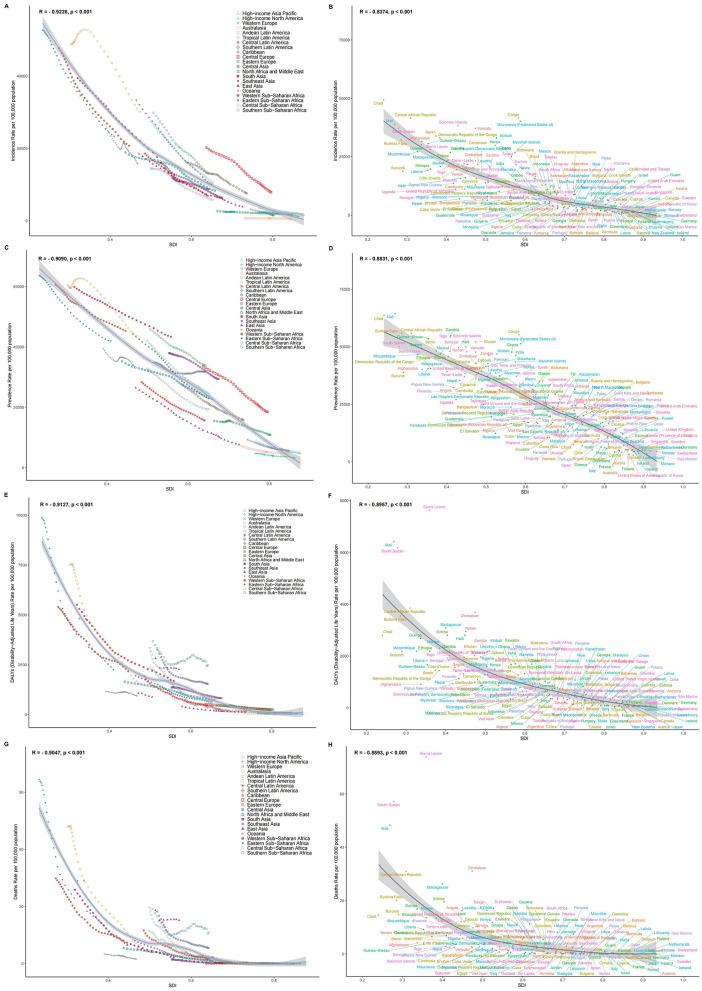
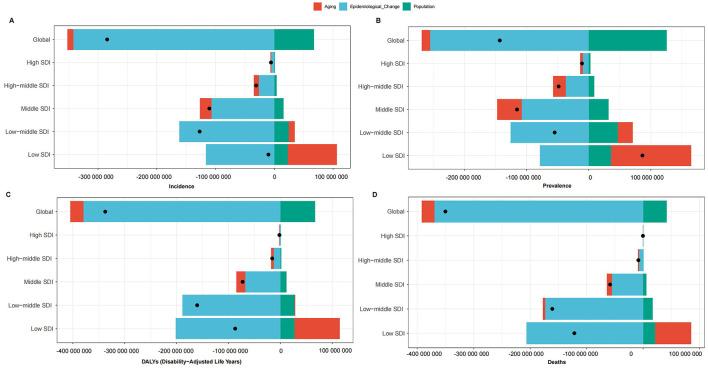
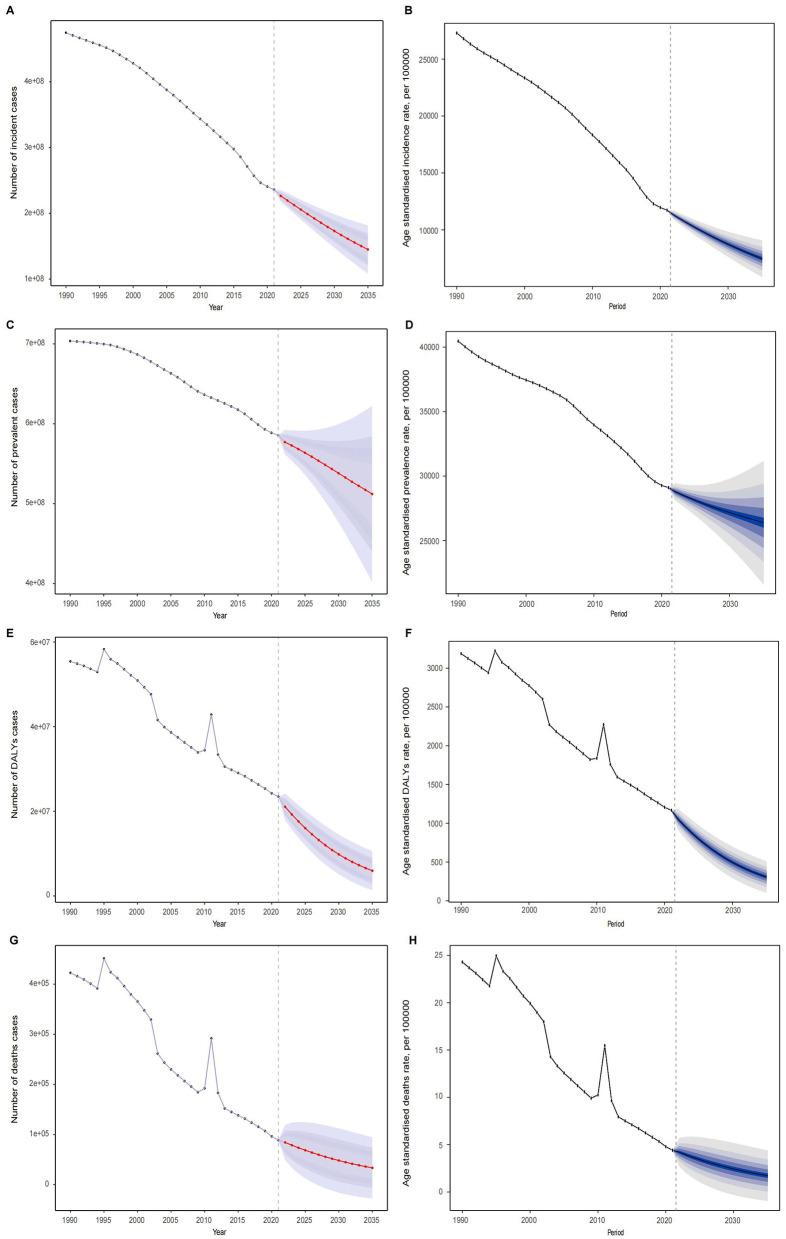
From 1990 to 2021, the global incidence of children's nutritional deficiencies decreased by 51.51%, with the age-standardized incidence rate (ASIR) dropping to 11,741.75 per 100,000. Global prevalence decreased by 18.44%, and DALYs dropped by 59.57%. Deaths due to nutritional deficiencies reduced by 80.56%. Despite these global improvements, significant regional disparities persisted. Sub-Saharan Africa reported the highest ASIR and ASPR, while high-SDI regions such as North America and Australasia exhibited significantly lower rates. Projections for 2035 indicate continued declines in global incidence, prevalence, DALYs, and mortality, with age-standardized rates expected to decrease annually. By 2035, the ASIR, ASPR, ASDR, and ASMR are projected to reach 7,469.67, 26,386.33, 306.95, and 1.73 per 100,000, respectively. However, disparities in age-standardized rates between high- and low-SDI regions are expected to persist. Health inequality analysis revealed a significant negative correlation between SDI and the burden of nutritional deficiencies, with countries in lower SDI categories facing disproportionately high burdens compared to those with higher SDI.
CONCLUSIONS
Although the global burden of children's nutritional deficiencies is projected to continue declining in both age-standardized rates and total cases, the burden remains disproportionately high in low-SDI regions. These regions face greater challenges in addressing nutritional deficiencies, and targeted interventions aimed at reducing these inequalities are essential. Addressing the significant disparities between low- and high-SDI countries will be crucial for further reducing the global burden of children's nutritional deficiencies.
背景
儿童营养缺乏是一个重大的全球健康问题,导致相当高的发病率和死亡率。本研究评估了1990年至2021年儿童营养缺乏的负担,重点关注关键指标,探讨区域差异以及社会经济因素的作用。
方法
分析了《2021年全球疾病负担研究》中204个国家和地区儿童营养缺乏的数据。计算了患病率(年龄标准化患病率,ASPR)、发病率(年龄标准化发病率,ASIR)、伤残调整生命年(年龄标准化伤残调整生命年率,ASDR)和死亡率(年龄标准化死亡率,ASMR)的年龄标准化率。使用估计年度百分比变化(EAPC)评估趋势,并进行分解分析以评估营养缺乏负担变化的驱动因素。使用贝叶斯年龄-时期-队列模型对2035年进行预测,并评估健康不平等以分析跨国健康不平等。
结果
1990年至2021年,全球儿童营养缺乏发病率下降了51.51%,年龄标准化发病率降至每10万人11,741.75例。全球患病率下降了18.44%,伤残调整生命年下降了59.57%。营养缺乏导致的死亡减少了80.56%。尽管全球有这些改善,但显著的区域差异仍然存在。撒哈拉以南非洲报告的年龄标准化发病率和患病率最高,而北美和澳大拉西亚等高社会人口指数(SDI)地区的发病率则显著较低。2035年的预测表明,全球发病率、患病率、伤残调整生命年和死亡率将继续下降,年龄标准化率预计每年都会下降。到2035年,年龄标准化发病率、患病率、伤残调整生命年率和死亡率预计将分别达到每10万人7,469.67例、26,386.33例、306.95例和1.73例。然而,高、低SDI地区之间的年龄标准化率差异预计仍将存在。健康不平等分析显示,SDI与营养缺乏负担之间存在显著的负相关,与高SDI国家相比,低SDI类别国家面临的负担过高。
结论
尽管预计全球儿童营养缺乏负担在年龄标准化率和总病例数方面都将继续下降,但低SDI地区的负担仍然过高。这些地区在解决营养缺乏问题上面临更大挑战,旨在减少这些不平等的针对性干预措施至关重要。解决低、高SDI国家之间的显著差异对于进一步降低全球儿童营养缺乏负担至关重要。

 Zotero 插件