
衰老性肌肉减少症中的运动因子和肌动蛋白
Exerkines and myokines in aging sarcopenia.
作者信息
Wang Huan, He Wenbi, Chen Peishan, Wang Haozhe, Wang Huiguo, Zhu Lin, Liu Xiaoguang
机构信息
Sport and Health, Guangzhou Sport University, Guangzhou, China.
Research Center for Innovative Development of Sports and Healthcare Integration, Guangzhou Sport University, Guangzhou, China.
出版信息
Front Endocrinol (Lausanne). 2025 Jul 29;16:1592491. doi: 10.3389/fendo.2025.1592491. eCollection 2025.
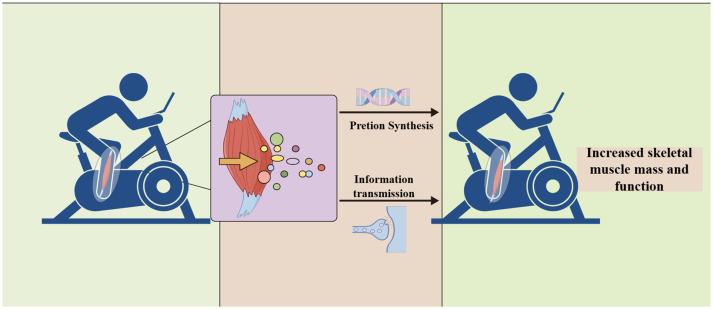
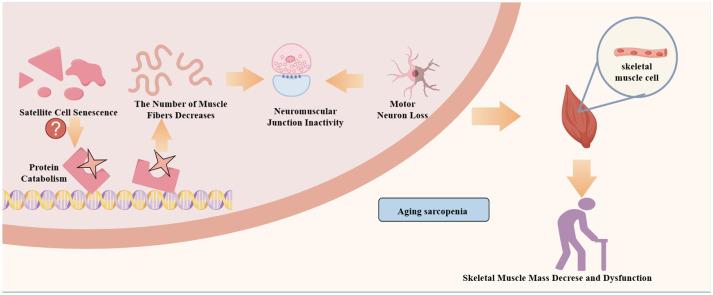
Aging sarcopenia is an unavoidable condition that affects the majority of older adults in their later years. Exercise has been extensively researched as an effective intervention for sarcopenia. In particular, the release of exerkines and myokines during physical activity has beneficial effects on the body, which, as mediators, offer a novel therapeutic strategy for elucidating how exercise enhances skeletal muscle mass and function. In this review article, we summarize how exerkines exert protective effects on aging skeletal muscle mainly through the following mechanisms: (1) mediating energy diversion to skeletal muscle, ensuring more energy supply to the muscle; (2) enhancing the activity of skeletal muscle satellite cells to promote muscle repair and regeneration; (3) upregulating the expression of genes associated with muscle regeneration and, at the same time, inhibiting the expression of those genes that contribute to the atrophy of skeletal muscle; and (4) improving the function of the neuromuscular junction to improve the neural control of skeletal muscle. These combined effects constitute the protective mechanism of myokines on aging skeletal muscle.
衰老性肌肉减少症是一种不可避免的状况,会影响大多数老年人的晚年生活。运动作为一种治疗肌肉减少症的有效干预措施,已经得到了广泛研究。特别是,运动过程中释放的运动因子和肌动蛋白对身体具有有益影响,它们作为介质,为阐明运动如何增加骨骼肌质量和功能提供了一种新的治疗策略。在这篇综述文章中,我们总结了运动因子主要通过以下机制对衰老骨骼肌发挥保护作用:(1)介导能量向骨骼肌转移,确保为肌肉提供更多能量;(2)增强骨骼肌卫星细胞的活性,促进肌肉修复和再生;(3)上调与肌肉再生相关的基因表达,同时抑制那些导致骨骼肌萎缩的基因表达;(4)改善神经肌肉接头功能,增强对骨骼肌的神经控制。这些综合作用构成了肌动蛋白对衰老骨骼肌的保护机制。


 Zotero 插件