
评估注意力缺陷多动障碍(ADHD)和自闭症对心血管疾病的因果影响以及反之亦然:孟德尔随机化研究的系统评价和荟萃分析
Evaluating the Causal Effects of ADHD and Autism on Cardiovascular Diseases and Vice Versa: A Systematic Review and Meta-Analysis of Mendelian Randomization Studies.
作者信息
Ryszkiewicz Piotr, Malinowska Barbara, Jasińska-Stroschein Magdalena
机构信息
Department of Experimental Physiology and Pathophysiology, Medical University of Białystok, ul. Mickiewicza 2A, 15-222 Białystok, Poland.
Department of Biopharmacy, Medical University of Łódź, ul. Muszyńskiego 1, 90-151 Łódź, Poland.
出版信息
Cells. 2025 Jul 31;14(15):1180. doi: 10.3390/cells14151180.
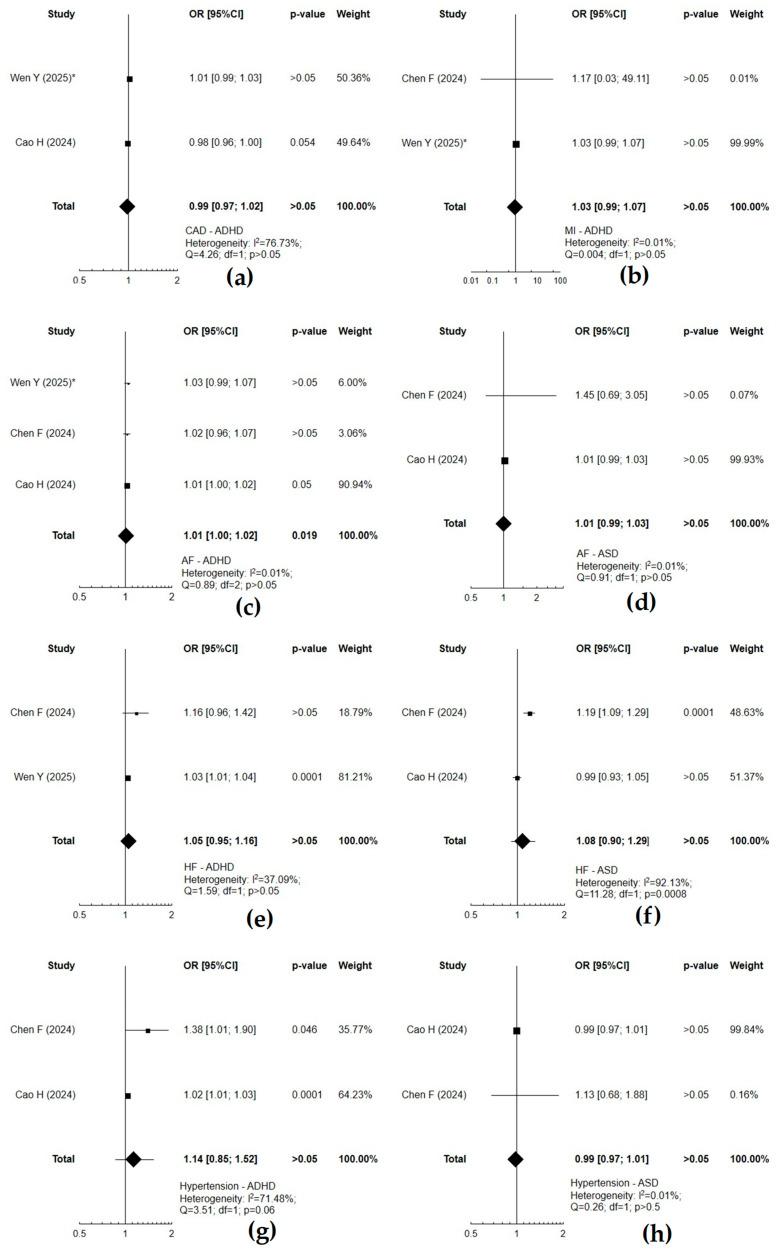
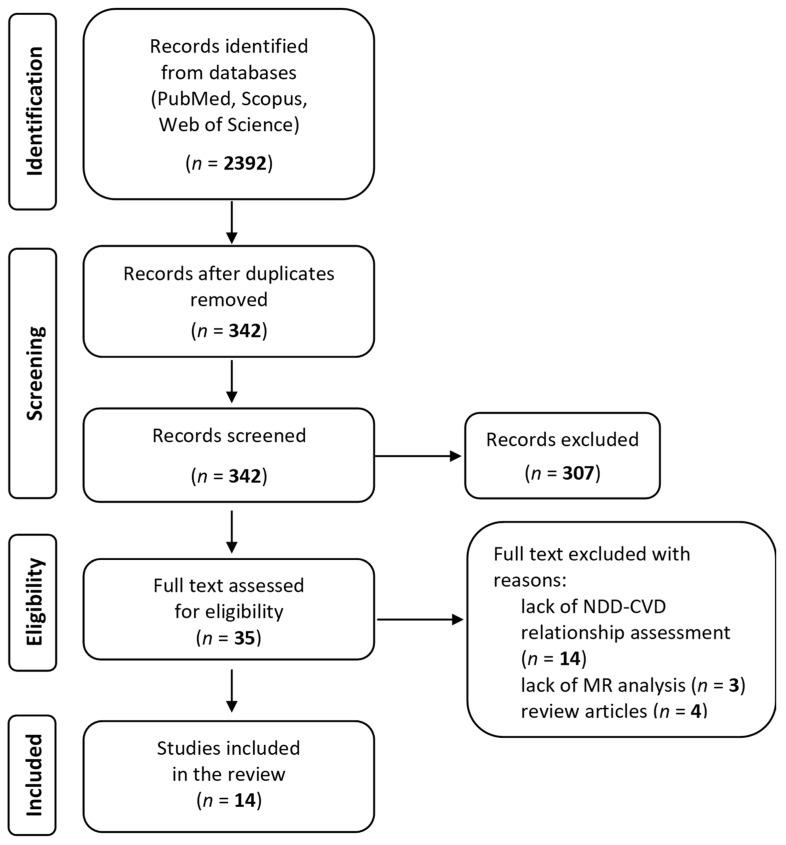
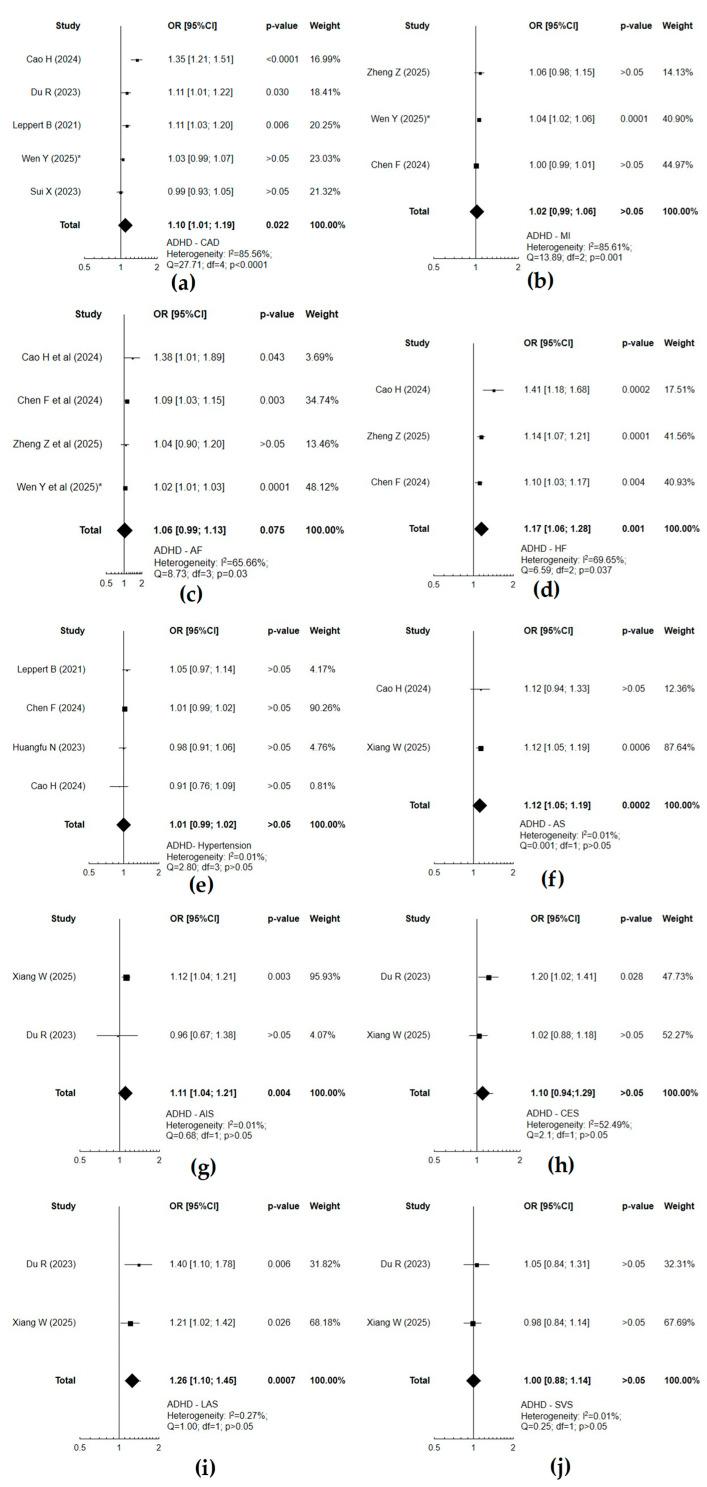
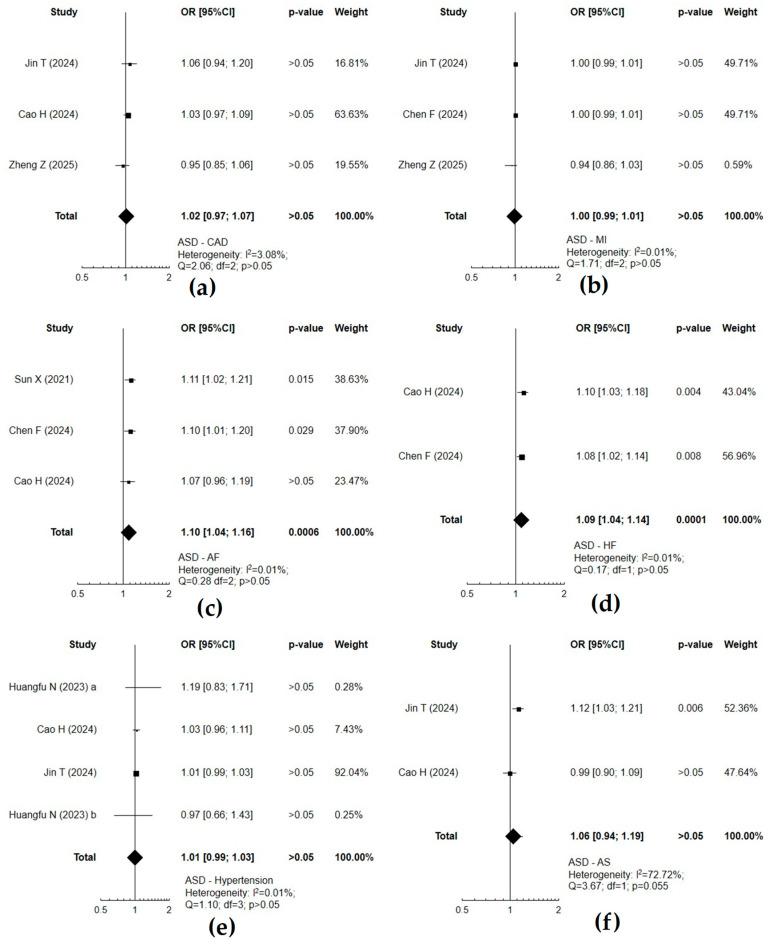
Attention-deficit/hyperactivity disorder (ADHD) and autism spectrum disorder (ASD) are neurodevelopmental disorders with lifelong functional implications. Their potential role as emerging risk factors for cardiovascular diseases (CVDs) is increasingly acknowledged. The aim of this study was to conduct a comprehensive evaluation and meta-analysis of Mendelian Randomization (MR) studies exploring the causal effects of ADHD and ASD on various cardiovascular outcomes and vice versa. Three databases were searched, study quality was evaluated using a STROBE-MR checklist, and relevant data were extracted. In total, 14 studies revealed genetic associations between ADHD or ASD susceptibility and selected CVDs and vice versa. Notably, genetic markers for ADHD were linked to an increased risk of coronary artery disease, heart failure, and various types of stroke. Genetic predisposition to ASD raised the likelihood of atrial fibrillation and heart failure. Atrial fibrillation showed a causal relationship with elevated ADHD risk. Interestingly, hypertension was not associated with ADHD or ASD at the genetic level. Further efforts are needed to fully elucidate the basis of causal links from a mechanistic perspective. Overall, the results highlight the need for cardiovascular risk assessment and management in the clinical care of individuals with ADHD and ASD.
注意力缺陷多动障碍(ADHD)和自闭症谱系障碍(ASD)是具有终身功能影响的神经发育障碍。它们作为心血管疾病(CVD)新出现的风险因素的潜在作用日益得到认可。本研究的目的是对孟德尔随机化(MR)研究进行全面评估和荟萃分析,以探讨ADHD和ASD对各种心血管结局的因果效应,反之亦然。检索了三个数据库,使用STROBE-MR清单评估研究质量,并提取相关数据。总共14项研究揭示了ADHD或ASD易感性与选定的CVD之间的遗传关联,反之亦然。值得注意的是,ADHD的遗传标记与冠状动脉疾病、心力衰竭和各种类型中风的风险增加有关。ASD的遗传易感性增加了心房颤动和心力衰竭的可能性。心房颤动与ADHD风险升高存在因果关系。有趣的是,高血压在基因水平上与ADHD或ASD无关。需要进一步努力从机制角度充分阐明因果联系的基础。总体而言,结果强调了在ADHD和ASD患者的临床护理中进行心血管风险评估和管理的必要性。
 Zotero 插件