
Incomptine A在乳腺癌小鼠模型中的抗肿瘤作用:己糖激酶II表达的损害与凋亡诱导
The Antitumor Role of Incomptine A in a Breast Cancer Murine Model: Impairment of Hexokinase II Expression and Apoptosis Induction.
作者信息
Arietta-García Angel Giovanni, Calzada Fernando, Franco-Vadillo Antonio, Barrientos-Buendía Irais Monserrat, Alarcón-Aguilar Francisco Javier, Bautista Elihú, Santana-Sánchez Paola, Ramírez-Sánchez Israel, Ordoñez-Razo Rosa María
机构信息
Posgrado en Biología Experimental, DCBS, Universidad Autónoma Metropolitana-Iztapalapa, Av. Ferrocarril San Rafael Atlixco 186, Col. Leyes de Reforma 1a Secc. Iztapalapa, Ciudad de México C.P. 09310, Mexico.
Unidad de Investigación Médica en Genética Humana, Hospital de Pediatría "Dr. Silvestre Frenk Freund", Centro Médico Nacional Siglo XXI, Instituto Mexicano del Seguro Social, Av. Cuauhtémoc 330, Col. Doctores, Ciudad de México C.P. 06720, Mexico.
出版信息
Cells. 2025 Aug 2;14(15):1192. doi: 10.3390/cells14151192.
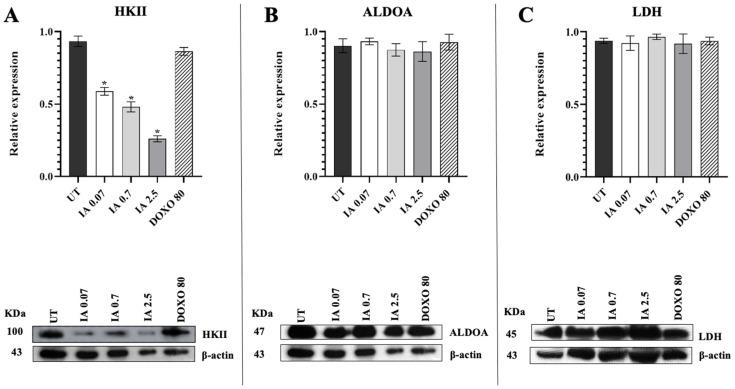
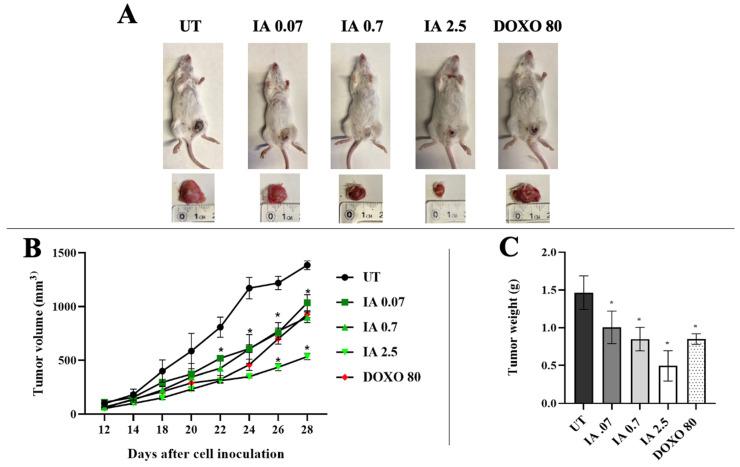
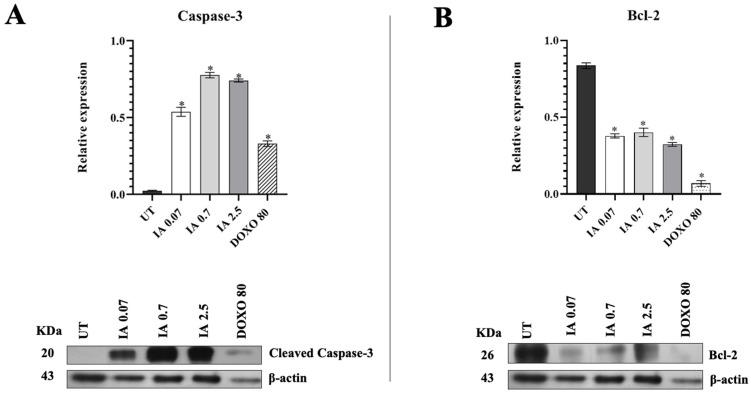
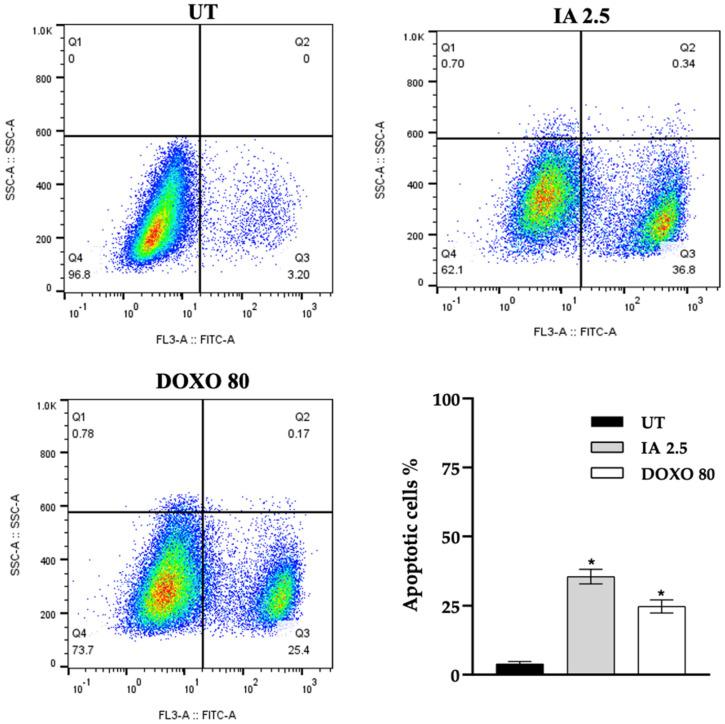
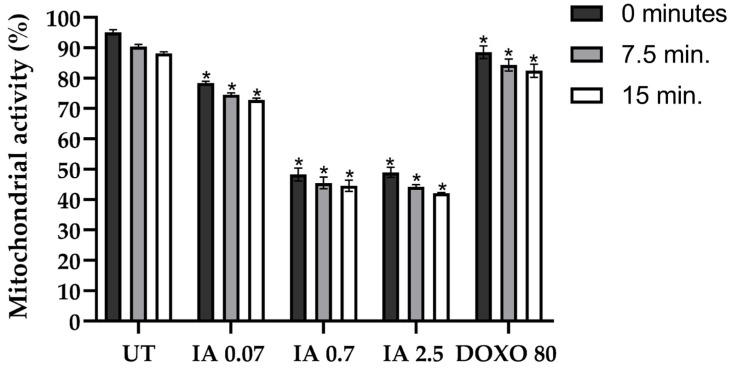
Breast cancer (BC) is the most common type of cancer in women worldwide. Hexokinase II (HKII) overexpression is associated with the proliferation and survival of tumor cells, as it inhibits apoptosis. Incomptine A (IA) is cytotoxic to breast cancer cells, likely due to a decrease in the expression of HKII. This study evaluated the antitumor activity of IA in an in vivo mouse model of BC. A model was generated from 4T1 cells and grouped tumor-bearing animals according to treatment: in IA or doxorubicin (DOXO), or untreated (UT). Comparing the body weight and tumor size between groups, tumors were analyzed using histopathological, Western blot, flow cytometry, and mitochondrial activity assays. Tumors IA-treated showed a reduction in size, weight, and number of tumor cells; the expression of HKII and Bcl-2 decreased, while that of Caspase-3 increased. IA treatment increased apoptosis and reduced mitochondrial activity in tumor cells. This data showed that IA has an impact on tumor cells by reducing tumor volume and size, increasing cell apoptosis, and decreasing mitochondrial activity, all of which could be attributed to reduced HKII expression. Therefore, IA may be a promising compound that requires further studies to elucidate its mechanism of action and analyze its possible future use in BC.
乳腺癌(BC)是全球女性中最常见的癌症类型。己糖激酶II(HKII)的过表达与肿瘤细胞的增殖和存活相关,因为它抑制细胞凋亡。Incomptine A(IA)对乳腺癌细胞具有细胞毒性,可能是由于HKII表达的降低。本研究评估了IA在BC体内小鼠模型中的抗肿瘤活性。用4T1细胞建立模型,并根据治疗方法将荷瘤动物分组:IA组、阿霉素(DOXO)组或未治疗(UT)组。比较各组之间的体重和肿瘤大小,使用组织病理学、蛋白质印迹、流式细胞术和线粒体活性测定法分析肿瘤。接受IA治疗的肿瘤在大小、重量和肿瘤细胞数量上均有所减少;HKII和Bcl-2的表达降低,而Caspase-3的表达增加。IA治疗增加了肿瘤细胞的凋亡并降低了线粒体活性。这些数据表明,IA通过减小肿瘤体积和大小、增加细胞凋亡以及降低线粒体活性来影响肿瘤细胞,所有这些都可归因于HKII表达的降低。因此,IA可能是一种有前景的化合物,需要进一步研究以阐明其作用机制并分析其未来在BC中的可能用途。



 Zotero 插件