
协同成像:联合肺部超声与低剂量胸部CT对新型冠状病毒肺炎严重程度进行定量评估——一项前瞻性观察性研究
Synergistic Imaging: Combined Lung Ultrasound and Low-Dose Chest CT for Quantitative Assessment of COVID-19 Severity-A Prospective Observational Study.
作者信息
Górecki Andrzej, Piech Piotr, Kołodziejczyk Karolina, Jankowska Ada, Szostak Zuzanna, Bronikowska Anna, Borowski Bartosz, Staśkiewicz Grzegorz
机构信息
Medical Diagnostic Center Voxel, Regional Hospital in Łańcut, Ignacego Paderewskiego 5, 37-100 Łańcut, Poland.
Department of Correct, Clinical and Imaging Anatomy, Medical University of Lublin, Chodźki 4 (CSM), 20-093 Lublin, Poland.
出版信息
Diagnostics (Basel). 2025 Jul 26;15(15):1875. doi: 10.3390/diagnostics15151875.
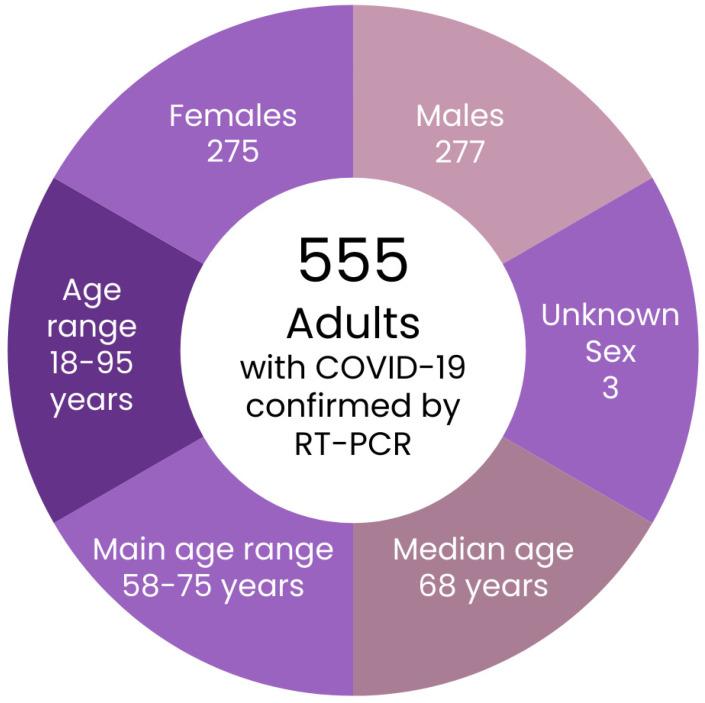
To assess quantitatively the correlation between the lung ultrasound severity scores (LUSSs) and chest CT severity scores (CTSSs) derived from low-dose computed tomography (LDCT) for evaluating pulmonary inflammation in COVID-19 patients. In this prospective observational study, from an initial cohort of 1000 patients, 555 adults (≥18 years) with confirmed COVID-19 were enrolled based on inclusion criteria. All underwent LDCT imaging, scored by the CTSS (0-25 points), quantifying involvement across five lung lobes. Lung ultrasound examinations using standardized semi-quantitative scales for the B-line (LUSS B) and consolidation (LUSS C) were performed in a subgroup of 170 patients; 110 had follow-up imaging after one week. Correlation analyses included Spearman's and Pearson's coefficients. Significant positive correlations were found between the CTSS and both the LUSS B (r = 0.32; < 0.001) and LUSS C (r = 0.24; = 0.006), with the LUSS B showing a slightly stronger relationship. Each incremental increase in the LUSS B corresponded to an average increase of 0.18 CTSS points, whereas a one-point increase in the LUSS C corresponded to a 0.27-point CTSS increase. The mean influence of the LUSS on CTSS was 8.0%. Neither ultrasound score significantly predicted ICU admission or mortality ( > 0.05). Standardized lung ultrasound severity scores show a significant correlation with low-dose CT in assessing pulmonary involvement in COVID-19, particularly for the B-line artifacts. Lung ultrasound represents a valuable bedside tool, complementing-but not substituting-CT in predicting clinical severity. Integrating both imaging modalities may enable the acquisition of complementary bedside information and facilitate dynamic monitoring of disease progression.
为了定量评估肺部超声严重程度评分(LUSS)与基于低剂量计算机断层扫描(LDCT)得出的胸部CT严重程度评分(CTSS)之间的相关性,以评估新型冠状病毒肺炎(COVID-19)患者的肺部炎症。在这项前瞻性观察性研究中,从最初的1000名患者队列中,根据纳入标准招募了555名确诊COVID-19的成年人(≥18岁)。所有患者均接受了LDCT成像,并由CTSS(0-25分)进行评分,对五个肺叶的受累情况进行量化。在170名患者的亚组中,使用针对B线(LUSS B)和实变(LUSS C)的标准化半定量量表进行了肺部超声检查;其中110名患者在一周后进行了随访成像。相关性分析包括Spearman系数和Pearson系数。发现CTSS与LUSS B(r = 0.32;P < 0.001)和LUSS C(r = 0.24;P = 0.006)均存在显著正相关,LUSS B显示出稍强的相关性。LUSS B每增加一个单位,CTSS平均增加0.18分,而LUSS C每增加一分,CTSS增加0.27分。LUSS对CTSS的平均影响为8.0%。两种超声评分均未显著预测入住重症监护病房(ICU)或死亡率(P > 0.05)。标准化的肺部超声严重程度评分在评估COVID-19患者的肺部受累情况时与低剂量CT存在显著相关性,尤其是对于B线伪像。肺部超声是一种有价值的床旁工具,在预测临床严重程度方面可补充但不能替代CT。整合这两种成像方式可能有助于获取互补的床旁信息,并便于动态监测疾病进展。




 Zotero 插件